English
 Español
 Français
 Deutsch
 Italiano
 Português
The ongoing football World Cup is an event like no other. Now, I’m not saying this just because of the sheer enjoyment in football. There’s also a common understanding that the trends at football stadiums are reflective of societal ones. In other words, we can detect the bigger picture by following what’s happening with football.
And for some, football has become soulless. Circumstances of the World Cup held in Qatar do make a great proving point for that; the existing format where games are primarily content for accumulating attention needed for advertisements further adds to it.
For now, I want to put on my pink glasses and continue standing in between all the unaffectable negatives and the trivial positives. Despite not really being into football, let alone being an active fan, as a Croat, football and the Croatian national team have always been an important point for my national identity, whatever that may mean.
They say that sports don't build character; they reveal it. So what is revealed by the Croatian national team's success in the football World Cups? In this article, I want to share a few stories that might be less familiar to a wider audience but do showcase how and why football is the most important of the least important things in life.
Croatian Football Team
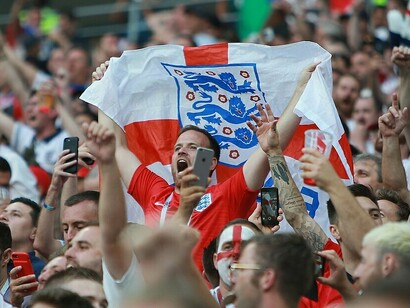
I know all football fans love their teams the best, and that all teams have their own issues, reflective of the society they represent. I also think that, from neutral viewers, a number of national teams get a lot of “sport” hate, or just real hate. E.g., it’s common knowledge that no one likes the English national team…
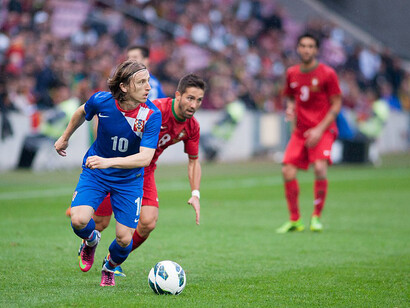
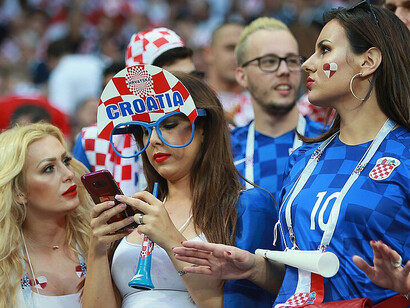
Yet, I think one of the most successful teams with not much hate received (from the outside) is indeed the Croatian national team. It might be because Croatia is a small country, so we’re always kind of an underdog; it might be because historically we had, and still have, great, classy players. Croatian teams are visually recognisable; players are team-orientated, humble, and passionate. I do think there’s some football romance left to them.
It might be strange to an outsider, but a (small) portion of Croatians have an active disdain for the national team; a larger portion, for various reasons, feels alienated from the team and the players that represent it. Disappointment is, in my opinion, more obvious because of the stark contrast of what the national team could, or "has", represented.
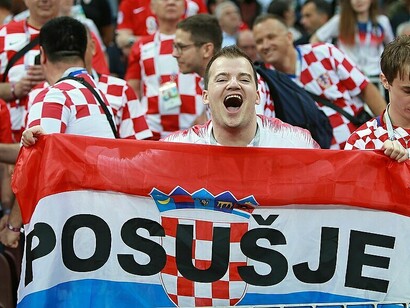
The national team was closely connected with Croatian national identity and its formation. A sense of pride and defiance has been something associated with the team since its inception.
This, some argue, started on May 13th, 1990, in Zagreb.
Dinamo Zagreb–Red Star Belgrade riots
And just to further emphasise, I really don’t want to support any “good side vs. bad side” nationalistic sentiments. Facts, and narratives that come out of them, are often selective and favour one side. Since this article is about what Croatians feel towards their national football team, I think it’s safe to assume what it’s biased towards.
Nevertheless, this incident is the hallmark of the “football stadiums reflect the society” theory. Yugoslavia was falling apart, and the tension between the Croatian side and the Serbian side was tangible. The riot between the Bad Blue Boys (Dinamo Zagreb supporters) and the militia and Delije serves as a microcosm of the future events that would unfold in Yugoslavia.
The militia, as an institutionalised force, was overwhelmingly politically aligned with the expansionist ideas from Serbian politicians at the time. Delije, the Red Star’s ultras, were led by Arkan Ražnatović, a notorious mobster and a future war criminal. Noteworthy, also in attendance among the Delije ultras was Aleksandar Vučić, current president of Serbia.
The key point for this story is the iconic jump kick made by Zvonimir Boban, future captain of the Croatian national team. Seeing a fan getting beaten by an officer, Boban intervened and kicked the officer to prevent further beatdown.
This became one of the most famous symbolic moments in Balkan football history. For this story, I’ll exclude all the shades of grey that might (or should) be mentioned.
What matters is that, for a “Croatian identity”, Boban was seen as a youthful, defiant, honourable leader of the team. Croatian national team.
No one could have foreseen the war and the horrors that would accompany it. And considering the weight of emotions from the history that transpired, Zvonimir Boban jumping into a fully armed militia remained one of the most meaningful, most impactful sports images in Croatia.
Possibly out of pride, partly out of collective trauma, and likely due to Yugoslavian football tradition, the Croatian football team was on the way to unlikely success 8 years later in France. It was Croatia's first ever international appearance in a World Cup.
Bronze 1998.
The Croatian football team that year was made from world-class players like Boban, Šuker, and Prosinečki. A lot of players were young, up-and-coming talents, and a lot of the “old” players were set for their swan song. The team was led by Ćiro Blažević, a beloved coaching figure, a definitive “man of people” personality.
Considering that the team was listed as 125th on FIFA’s rankings, beating teams like Germany and eventually the Netherlands for bronze was unprecedented. This sentiment of fighting the Goliaths on a world stage had a strong reaffirming effect. It was proof of existence and, for a country that was in a nation-defining war just 3 years ago, quite possibly the first good thing that happened after the war’s end.
The team was welcomed back by some 80000 people in the capital. Among many pop singers at the time, the singer for the event was gorgeous Severina, still the unanimous national sweetheart at the time.
I was too young to understand or care about all this. Still, I wonder if anyone 20 years younger than me will think of 2018. success with this sense of nostalgia and pride.
Exchange of generations
The following years were marked by the same national pride, or what some would call “the cult of the national team”, but without the accompanying success. A lot of players left a significant mark on the team during those years. Selfless, team-oriented players; hard workers who left all they could on the field – this was still Croatia's identity. There was a lot to be proud of football-wise, even without the success.
But times were changing, and so have sentiments towards the national team. Reality was creeping into football figures. Society didn’t need to prove its existence anymore – we had enough of it already. Our football heroes, the majority of them, were plain at best, obnoxious at times, and often closely aligned with the ruling party.
Moreover, there were no “evil Serbs” anymore to transfer our negativity to; in fact, one of our most prominent players at the time was Dado Pršo, a Croatian Serb who renounced his Serbian name. And Dado was a player who always gave his best, a charismatic hard worker, a person you’d like by your side competing against anyone.
And it goes to show the schizophrenic mental state of the nation at the time, especially for the Serbs that decided to stay in their homeland despite the hostile environment they faced there daily. I think Dado was severely wronged into thinking that renouncing his name is a good thing, albeit necessary at the time to fit in.
Best-case scenario, I like to think that this was the start of the healing process and understanding that war happened to everyone, not just Croats. Regular people, not evil, not repentful, just regular people who were living and are still living here. But at that point, we were left with each other, Croatians with Croatians… and it was horrible.
To be more specific, in the early 2000s and moving forward, the figure that shaped the looks of the national team was undoubtedly Dinamo Zagreb’s director, Zdravko Mamić.
Mamić is, as the media here euphemises these kinds of public figures, a “controversial entrepreneur". Some might say he was a criminal; some would describe him as a mobster. He was also a ruling party supporter, being one of the main supporters for Croatia’s ruling party president's campaign, Kolinda Grabar-Kitarović. Some might describe the ruling party as mobsters, too.
Mamić was well known for ensuring Dinamo Zagreb stays at the top in Croatia by any means necessary. He was not supported by Dinamo’s fans, who were alienated from the club. He was loathed by the rivals, especially the seaside part of Croatia.
Mamić is currently a fugitive living in Bosnia and Herzegovina. Allegations of bribing the officials were pale in contrast to money extortion from Dinamo and from players alike. Those players include many prominent names, but none more famous than Luka Modrić.
I don’t remember Luka Modrić.
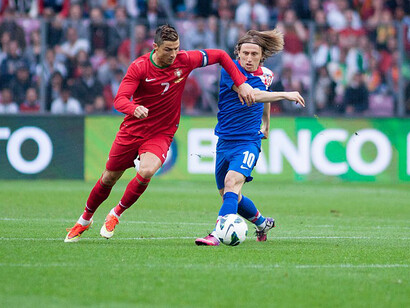
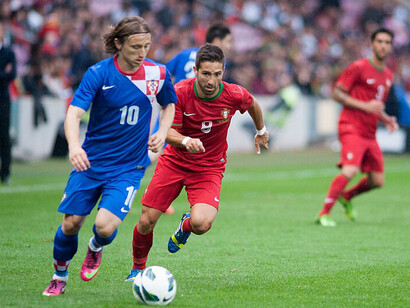
I know how glazed Luka Modrić looks. “The Maestro”, as the foreign media calls him, was set for a glorious career after Croatia traumatically lost to Türkiye at Eurocup 2008. His transfer that year from Dinamo to Tottenham was the first step towards establishing a new era of the national team.
And this transfer was the reason he was called to testify against the aforementioned Zdravko Mamić. During the trial Luka changed parts of his earlier testimony regarding contract annexes and financial arrangements tied to this transfer. Infamously, he repeated “I don’t remember” to any question incriminating Mamić.
Critics believed he was protecting Mamić, so the issue was less about legality and more about seeing a national icon being loyal to a person who was ruining the Croatian football league and, by extension, the Croatian national team.
I might be wrong, but I think this was the final stage of understanding that the national team was just a thing among many other things in Croatian society. No one really expected that level of integrity from young Luka to compromise himself and his career just for the sake of justice. I don’t think anyone then or now believes that the Croatian legal system is functional or worth self-sacrifice.
To put it bluntly, Boban had the conviction that Croatia was an idea worth risking his career for. Modrić, and all of us, knew that this was not the case. National identity for the football team became a play-act, and everyone knew it.
This defeating realisation earned Luka the title of “Pony” (and other, more vulgar ones) instead of the Magician, Maestro. A spiteful graffiti saying “Sve izgubili, dabogda” (Please God, let them lose everything – a loose translation), aimed towards the national team, made the headlines just before the 2018 World Cup. Disdain towards the national team was tangible.
Still, Luka’s redemption arc was just beginning.
“Belgrade is on fire, Slava Ukraini” from Russia, 2018.
Surely then, success at the World Cup in Russia would be able to amend the sins of our national team.
The quote from the title might be a footnote in the whole story of the Croatian football team, but I think it’s funny and telling how history does not repeat itself, but it does rhyme.
It’s funny because imagine yelling “Slava Ukraina!" after beating Russia in an elimination game in Russia right now. Domagoj Vida (who was yelling this into the camera) sure is a merry-go-lucky guy, and I think this reputation is what made the Russian public let it slide at the time.
“Belgrade is on fire” was not a nationalistic war cry; Belgrade was the name of a kafana (Balkan pub) in Kyiv at the time. Vida was probably drunk, saying he'd treat everyone with drinks once he gets back there (what a nice guy). The widely known secret was out in the field: Croatians love Serbian music; some might even say we actually love Serbs too.
It’s telling because “Slava Ukraini” is a different story and one that has already happened in Croatia. The call might be succinct and effective, but it does come with a historical baggage of being used by Nazi collaborators. It might express the need for independence, but the logic and history of it connote ethnic purity and a conviction that could lead to fascism.
The exact same thing is happening in Croatia right now with the slogan of “Za Dom Spremni” (For Home Ready). Sure, it had some older historical background, but it was used by the Croatian Nazi-affiliated puppet state. It was also used by some army units during the war in the 90s.
The ruling party solved this issue by explaining to the public the “double connotation" standard. If you yell “Za dom spremni!” in a Nazi context, you’re a baddie, and you’ll get punished. If you yell “Za dom spremni!” in a 90s context, you’re a patriot, and you’re good.
This is especially relevant because the most successful pop singer in Croatia, Marko Perković Thompson, is the mentioned Nazi regime sympathiser. Moreover, one of his most well-known songs from the war times includes the slogan. Hell, there’s even an Ukrainian version of the song.
Needless to say, Thompson never states he’s a Nazi regime lover, but he never denied it either; his songs are patriotic, but often double-connotative. We all know what they mean.
Whose national team?
How is this relatable to football?
Well, after securing silver in Russia, the Croatian public was euphoric. We sustained the cringe attack from our president, Kolinda, celebrating in the field with players, but other than that, all good. The homecoming was attended by half a million people, and that’s quite a number considering that Croatia has 4 million people total.
But on the stage, as requested by the players, was Marko Perković Thompson.
Some take no issue with this, but for some, myself specifically included, this was a defining alienating moment from the team. Supporting the team was no longer even a play-pretend game.
Despite the claims that Thompson is a representative of the majority, that’s far from the truth. If he were, he wouldn’t be such a polarising figure, as there’d be no one to polarise. Bringing Thompson to homecoming meant excluding a good portion of Croatians from the celebration.
And again, Luka Modrić is the central figure of this narrative. His life story, and how his grandpa (a civilian) was murdered in war, how Luka was a refugee, etc., are important aspects of his identity. What is less known is that his mother is Serbian.
I’m not saying this to imply that he’s a hypocrite or something. I’m pointing out this fact to highlight that Croatians and Serbs are intertwined with more than just war trauma and mutual accusations and evil-doings.
It doesn’t really matter whether you are a Croat or a Serb; during the war, you were thinking you’re defending “your own people”. The fact of the matter is that “your own people” are both Croatians and Serbs. It’s not just Modrić, or Dado Pršo, or Dražen Petrović; it's also Novak Đoković, who also has Croatian heritage. In some capacity, by hating and excluding the other side, you’re always excluding your own people. This goes for both Croatians and Serbs.
Bronze in Qatar and this World Cup
With every step forward, two are made backward. I wouldn’t necessarily say that people were bored of success, but at Homecoming 2022. There were about 100,000 people on the streets of Zagreb.
Politicians want to be closely associated with this success, as if they had anything to do with it. Passivity or even acceptance regarding this association from our players is another factor that makes it difficult or impossible to cheer for these people.
Because every so often we’re reminded that this nationalistic pride is a charade. Just last month the team’s coach, Zlatko Dalić, faced public scrutiny over reports concerning an illegal house he built in a protected coastal area. Those coincided with tabloid rumours about his private life, and the sentiment was the same: none of these people are practising what they preach.
No one knows what the newer generations of players will bring to the rich history of our team. I do know that a lot of people will not care about it, whatever the team does. Well, not exactly – we'll play-pretend we don’t care.
As they say, sports don’t build character; they reveal it. And for 90 minutes a day, I will imagine that hard work and talent are rewarded with mastery on the levels Luka shows it. I’ll believe that the team that works so hard for each other is a showcase of Croatians' camaraderie and inclusivity. I’ll act as if fair play they exhibit is proof of integrity and that winning or losing is something we can all share. It’s summer, and I’ll drink with my friends among the crowd by the seaside. I’ll enjoy the fuss the World Cup brings.
But most of all, I’ll play-pretend that I don’t care that these sentiments can’t last longer than 90 minutes.