English
 Español
 Français
 Deutsch
 Italiano
 Português
Football icons like Lionel Messi and Cristiano Ronaldo generate millions per match based on their goal-scoring prowess. But have you ever wondered where the footballs that make the game possible come from and what kind of impact they have on the people, the planet, and the economy?
Each football has a backstory. For most of us, it’s a story about teamwork, competition, and the passion of the game. But there’s another side to this narrative, one we often overlook: the hands that make these footballs, the hidden costs that don’t make it to the spotlight, and the invisible price paid by the stitchers and the planet.
Sialkot: a quiet global powerhouse
Sialkot is a name that is not commonly associated with football matches. Nonetheless, it serves as the unspoken foundation of the sport, with a legacy of producing 70% of the world’s footballs that meet the highest standards. According to the local chamber of commerce, the city manufactured approximately 43 million balls valued at $191 million during the fiscal year 2021-2022.
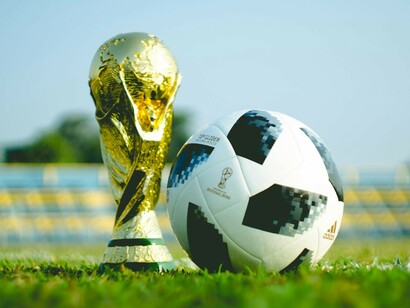
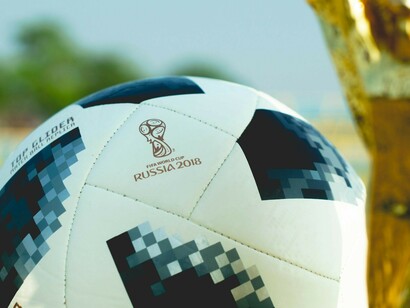
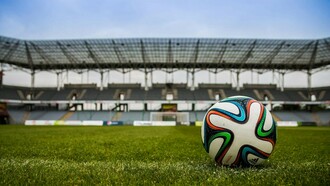
Today, the industry employs approximately 8% of Sialkot's 1 million residents. For decades, global giants like Nike, Adidas, and Umbro have relied on this small city’s products, particularly during major sporting events like the FIFA World Cup. The official ball of the FIFA World Cup 2022 held in Qatar, called the Al-Rihla (the journey), was also made here.
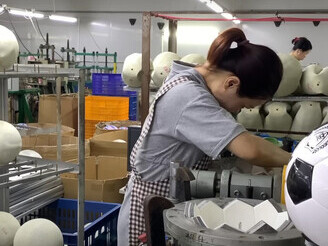
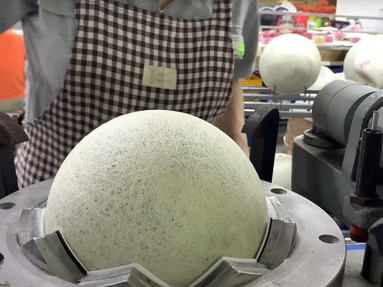
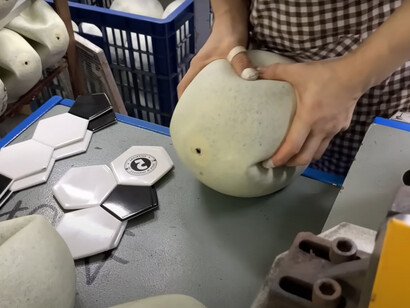
These products do not originate from large, robot-filled factories; instead, it’s the work of highly skilled people, many of whom stitch footballs by hand. These artisans dedicate extensive hours to meticulously perfecting each ball. Nonetheless, their remuneration is lamentably disproportionate to the substantial profits generated by the industry.
The faces behind the footballs
In the narrow alleys of Sialkot, workers bend over synthetic leather panels, meticulously sewing them with remarkable precision. For the majority, this is a question of survival rather than a career choice. The workers are often paid per ball, earning as little as $5 a day or even less. This income, while essential for their households, barely scratches the surface of what’s needed to lift their families out of poverty.
Historically, the football industry in Sialkot faced global outrage over its use of child labour. The Atlanta Agreement of 1997 brought significant reforms, pushing factories to stop employing children. In addition, Pakistan instituted the Independent Monitoring Association for Child Labour (IMAC), which performs frequent inspections of factories to make sure that no children are involved. Beginning July 1, 2024, the federal government also raised the minimum salary for workers by 15.6%, from Rs 32,000 to Rs 37,000 per month (US$132).
Moreover, some brands have also taken rigorous initiatives to combat child labour. For example, Adidas has established a surveillance system, and its subcontractor Forward Sports sends officials to the stitching factory to ensure that no underage workers are employed there.
However, the problem didn’t disappear; it shifted. Now, adult workers shoulder the burden, and the systemic issues of exploitation remain largely unresolved. Certain small enterprises opt not to participate in the system, potentially resulting in child labour. Given the complexity of the supply chain, it is challenging to spot labour rights abuses in the first place.
Moreover, stitchers in Sialkot are often considered temporary workers and lack access to formal employment contracts. Under the Industrial and Commercial Employment (Standing Orders) Ordinance of 1968, every employee must obtain a written order outlining their terms and conditions of service. However, this is rarely the case with informal football stitchers. Also, workers experience erratic pay reductions, terminations, layoffs without a formal contract, and any accompanying social security benefits.
Reports indicate occurrences of power disruptions, the presence of hazardous chemical compounds, and contamination of water sources. Stitching presents challenges and may lead to oedema and bodily discomfort. The scope of social security protection in Pakistan is restricted, as the Compulsory Group Insurance program only extends coverage to permanent employees.
Many workers need access to sick leave and medical care, along with an awareness of their rights and the conditions of the contract they sign. The diverse production structures within the football manufacturing sector complicate the maintenance of adequate safety standards.
Workers routinely get less than the legally mandated minimum wage. Considering the present economic crisis and growing inflation in Pakistan, the minimum pay is far less than what is needed to pay for basic needs. There have been documented cases of forced overtime employment in football supply chains, raising questions regarding overtime and timely payments as well.
Lastly, women, who make up a significant portion of this workforce, are particularly vulnerable. Many work from home to manage domestic responsibilities alongside stitching. While some progress has been made, such as the introduction of stitching centres providing better working conditions, the pay and opportunities for these women remain painfully inadequate.
Environmental costs: a silent crisis
Globally, the annual output of footballs surpasses 40 million units, but the human cost of it is only one part of the equation. The ecological impact of football manufacturing is an often-overlooked subject. The materials used to make footballs, including synthetic leather, rubber, and adhesives, all come from fossil fuels.
Each ball carries a considerable carbon footprint, stemming from both its production and transportation. The French Agency for Ecological Transition (Ademe) and the Ufolep sports club project that each football may emit between 2 and 7 kg of CO2, despite the final product's weight of 450 grammes. The Adidas World Cup ball, which contained a microprocessor at its core, demanded even more resources and manufacturing time.
According to Vista, footballs produce 27,000 tonnes of waste annually. While some wind up in landfills, most are dumped into the sea. In her photography project, Penalty, Mandy Barker made a global call on social media for people to send her footballs that had been washed up on the beach. Over the course of four months, 89 public participants collected 992 marine trash balls from 144 different beaches spanning 41 islands and countries.
Factories in Sialkot contribute to pollution, with untreated industrial waste often contaminating local water supplies. Also, the journey from the city’s workshops to professional football arenas in Europe and America is extremely long and complicated, having adverse effects on the environment. As the industry scales up to meet growing global demand, these environmental impacts are becoming harder to ignore. Without widespread adoption and stronger regulations, the environmental toll of football production will continue to rise.
Glimmers of change
Despite the challenges, there are signs of hope. Some factories in Sialkot have adopted fair trade practices, offering slightly better wages and benefits like healthcare and childcare facilities. These changes are the result of pressure from international organisations and consumer advocacy.
Similarly, there’s growing interest in making football production more sustainable. Brands are experimenting with biodegradable materials and production methods that minimise environmental harm. For instance, Rebond, a French firm, is working to make soccer balls less environmentally harmful than those usually loaded with petrochemicals using recyclable and bio-sourced materials. The FIFA Quality Programme also sets technical and industrial standards which ensure long-term sustainability of the balls.
In addition, ADB is helping Pakistan's Punjab government improve infrastructure and services, promoting the growth of Sialkot as a commercial hub. The city is experiencing a considerable improvement in the quality of life, the creation of jobs, and the enhancement of its competitive edge as a result of this help. However, these efforts remain isolated, often driven by smaller companies or niche markets. For real change to occur, major players in the industry need to step up.
Looking ahead: a call to action
The story of Sialkot’s football isn’t just about a city in Pakistan; it’s a reflection of how deeply interconnected our world is. The choices made in one corner of the globe have ripple effects that reach far and wide.
Imagine a future where every football is a symbol of empowerment—crafted by workers who are paid fairly and produced using sustainable materials. This vision isn’t out of reach, but it requires commitment from everyone involved: manufacturers, brands, consumers, and policymakers.
For brands, this means rethinking their supply chains and prioritising the well-being of workers. For governments, it means enforcing labour laws and environmental regulations. And for consumers, it means making informed decisions and holding companies accountable.
Next time you’re buying a football, consider asking, Who made this? What were the working conditions like? How was this ball produced, and at what cost to the environment? These enquiries may seem insignificant, but they are part of a bigger movement toward transparency and fairness.
Often referred to as "the beautiful game," football shouldn't violate human rights or harm the environment. There is a story behind every goal and every ball kicked. Let's make sure that these are stories we can be proud of.
When you watch a football game next time, think about how the ball travels from a worker's hand in Sialkot to the field. We can build a more equitable and sustainable future for the sport we all love by acknowledging their unrecognised achievements.