English
 Español
 Français
 Deutsch
 Italiano
 Português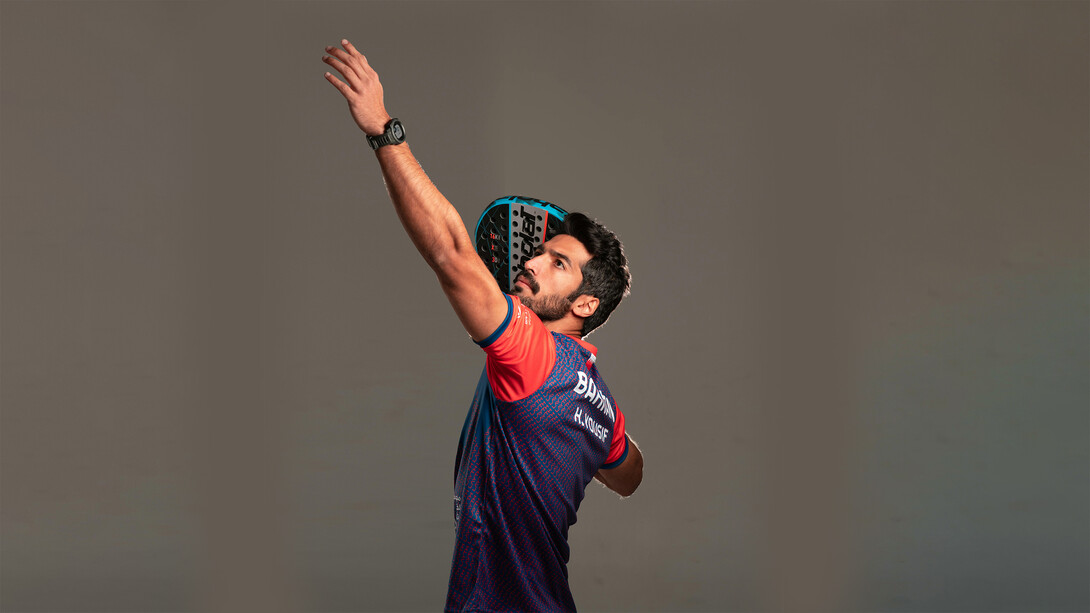
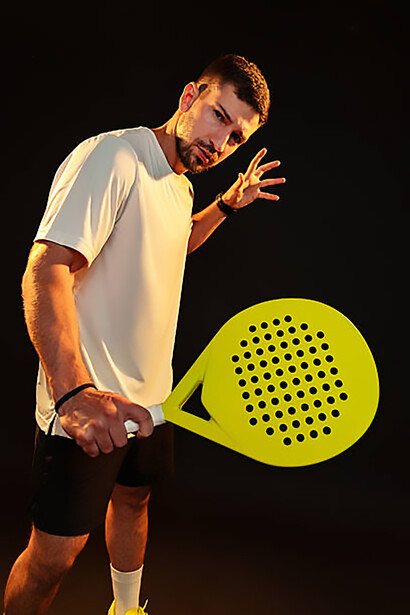
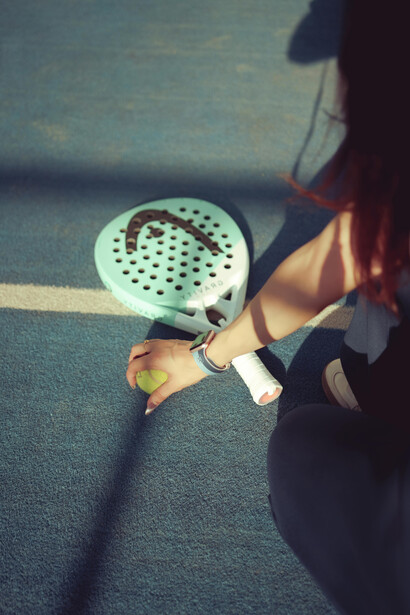
There is a sport sweeping through cities from Madrid to Dubai, from Buenos Aires to Riyadh. Glass courts have appeared on rooftops, in luxury resorts, and inside gleaming new fitness clubs. Padel—a racket sport played in an enclosed court with walls that are as much a part of the game as the racket itself—has grown faster than almost any other sport in recent history. It is social. It is accessible. It does not demand elite athleticism. And that, precisely, is where the conversation gets interesting.
This is not an argument against Padel. It is something more probing than that. It is a question about what happens to a man—his instincts, his disposition, his character—when he spends hundreds of hours inside a system that is structurally engineered to punish one of his most natural impulses: the impulse to hit hard.
The physics of restraint
To understand the argument, you first need to understand what Padel actually demands of its players. Unlike tennis, where power is an asset, or squash, where aggression can be channeled into a relentless pace, Padel's enclosed walls fundamentally alter the reward structure of the game. A hard smash does not end the point. It returns. The wall absorbs the force and gives it back, often at an angle that punishes the aggressor. In Padel, the harder you hit, the more likely you are to lose.
What the game rewards instead is patience, positioning, soft hands at the net, and the careful placement of a ball that floats rather than flies. The premium is on restraint, on reading the space, on moving elegantly into position rather than overpowering an opponent. These are not trivial skills. At the professional level, they represent genuine mastery of a complex, three-dimensional problem.
But here is the question that deserves to be asked openly: what does a man become after thousands of hours in an environment that consistently, reliably, and systematically penalizes his aggression?
The man doesn't just learn not to smash. He learns not to want to smash. That is a deeper intervention than strategy.
Conditioning, not strategy
There is a meaningful distinction between strategy and conditioning. A strategist chooses restraint. He could hit hard, but he calculates that softness serves him better in this moment. His aggression remains intact, held in reserve, available when called upon. The conditioned man is different. He no longer experiences the aggressive impulse with the same clarity or intensity, because that impulse has been associated—through thousands of repetitions—with failure and lost points.
Behavioral psychology is unambiguous on this point. When an instinct is consistently punished, it does not simply become suppressed as a conscious choice. It begins to atrophy. The nervous system stops generating it at full intensity. This is not weakness; it is adaptation. The human organism is extraordinarily efficient at eliminating responses that the environment marks as counterproductive.
What Padel does, at a neurological level, is run an extended aversion protocol on one of the most fundamental masculine instincts—the drive to apply force decisively. Play long enough, and the smash does not merely become a bad tactical decision. It stops feeling natural. It stops feeling right. And that shift, quiet as it is, matters.
The recalibration illusion
Defenders of the sport will argue—and they are not entirely wrong—that serious Padel players express a different kind of ferocity. Their intensity is channeled into positioning, into anticipation, into the psychological chess match of controlling the net. Watch a high-level match, and you will see men moving with precision, reading the geometry of the court, and competing fiercely within the constraints the game provides.
But this is precisely where the argument sharpens. The competitive intensity visible in professional Padel is real. The question is what it is made of. Positioning executed with great concentration is still positioning. Movement refined through long practice is still movement. What is absent is consequence to the body of the opponent—there is no physical threat, no primal resolution, no moment where force meets force and one man's will overcomes another's.
What one observes in the high-level Padel player is not ferocity redirected. It is the residue of masculine competitive identity trying to express itself through the only channel the game permits—and that channel is, by design, dainty. The movements are elegant. The touch is soft. The game resolves through placement, not power. It is, in the most precise sense of the word, a dance. A skilled, demanding, genuinely technical dance—but a dance nonetheless.
A dancer is not a fighter. Both may be athletes. Both require years of dedicated practice. But no one confuses one for the other, because the energies they embody are categorically different. The fighter occupies a world of consequence and physical confrontation. The dancer inhabits a world of grace and controlled expression. Padel, for all its competitive framing, belongs to the second world.
A mirror, not a cause
It would be intellectually lazy to suggest that Padel is manufacturing soft men from whole cloth. The more accurate and more interesting claim is that Padel is the perfect habitat—that it has spread so rapidly precisely because it fits, like a tailored garment, the shape of a man that contemporary culture has already been producing through other means.
The environments that once demanded the development of masculine hardness have been disappearing steadily for decades. Physical labor has been automated. Combat and competitive contact sports have declined in participation. Rites of passage—those structured moments where a young man was expected to absorb discomfort, demonstrate courage, and prove his capacity for controlled aggression—have largely dissolved without replacement. What has filled that vacuum are activities that are social, accessible, technically interesting, and physically comfortable. Padel fills that description with extraordinary precision.
The men most drawn to Padel are, broadly, educated urban professionals in their thirties and forties—men who are physically capable, intellectually engaged, and competitive by temperament but who live in environments that have no practical use for raw physical aggression and actively discourage its expression. Padel offers them a place to compete without requiring them to confront anything that truly challenges their comfort. They can win and lose within a system that never actually demands their full force. It is a competition with the edges filed down.
Padel offers men a place to compete without requiring them to confront anything that truly challenges their comfort.
What is actually at stake
This is not nostalgia for a more violent world, and it is not an argument that men should be hitting each other more often. Those would be crude misreadings of the point. The argument is more precise and, in some ways, more uncomfortable than either of those positions.
The capacity for controlled aggression—the ability to generate, contain, direct, and deploy force with intention—is not merely a physical attribute. It is a psychological one. It shapes how a man holds himself in difficult conversations, how he responds to genuine threat, and how he navigates the moments in life that require him to impose his will on a resistant situation. A man who has never been in an environment that demanded he develop this capacity, or whose environments have consistently penalized its expression, is not a more evolved man. He is a less complete one.
The worry is not that men are playing Padel. The worry is that Padel has become one of the primary competitive outlets for a generation of men and that its structural logic reinforces, rather than counterbalances, a broader cultural pattern of aggression-aversion. When the game you play for five hours a week consistently teaches you that softness is rewarded and force is punished, and when that teaching aligns with what your workplace, your social environment, and your culture are simultaneously telling you—the cumulative effect is not trivial.
Character is shaped by environment. That is not a controversial claim. It is one of the most consistently validated insights in both psychology and philosophy. The environments we choose, the constraints we accept, the systems we submit ourselves to for thousands of hours—these things leave marks. They shape instinct, refine temperament, and, over time, define who we are and how we move through the world.
The question worth sitting with
None of this is to say that a man who plays Padel is soft. Individual character is far too complex to be determined by a single variable. There are men who play Padel regularly and carry themselves with complete authority, genuine courage, and a well-developed relationship with their own aggression. The sport does not determine the man.
But the sport does participate in his formation. And that participation deserves scrutiny rather than the uncritical celebration that tends to accompany anything that is new, popular, and socially polished.
The question worth sitting with—particularly for men who have made Padel their primary competitive outlet—is a simple one. Not whether you are good at the game. Not whether you enjoy it. But whether the man you are becoming through the hours you spend inside that glass court is the man you intend to be. Whether the instincts being reinforced are the ones that will serve you when the situation you face cannot be resolved with soft hands and elegant positioning.
Padel is a fine sport. The glass courts are beautiful. The social dimension is genuine. The technical challenge is real. None of that is in question.
What is in question is whether a generation of competitive men—men who might otherwise have been developing a fuller range of their capacity—have found, in Padel's elegant and forgiving geometry, a place to feel competitive without the discomfort of being truly tested. A place where the man is still there but expressed in the softest possible way the game allows.
That is a question only the men playing it can answer. But it is a question worth asking.