English
 Español
 Français
 Deutsch
 Italiano
 Português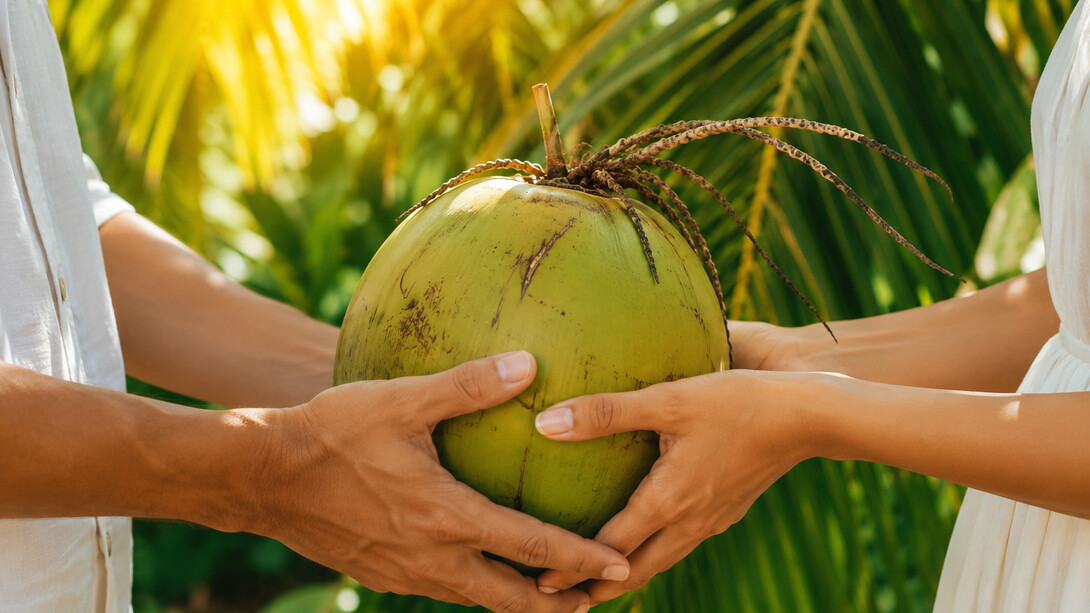
One quiet evening after dinner, I heard a soft knock at the door, so timid it felt as though the person outside feared even being heard. I wasn’t expecting visitors at that hour. When I opened the door, a young couple stood there. The man stepped forward while the woman lingered shyly behind him. I had never seen them before, yet I invited them in without hesitation. In my mind, I guessed they wanted to get married. Why else would they come?
In the early 1990s, after nearly a decade in the so-called lucky country, I had been appointed by the federal government as a civil marriage celebrant. In Australia, a legal marriage must be conducted by either a religious or civil celebrant. My duties were to handle the paperwork, provide pre-marital counselling, and perform ceremonies in accordance with the Marriage Act.
It was an honourable appointment, as I was only the second Vietnamese person entrusted with this role, so I approached it with care and humility. People often came seeking advice, sharing their anxieties and hopes as they stood before one of life’s biggest decisions. I listened without judgement, and their stories always warmed me.
Sensing the unease on their faces, I invited them to sit on the couch. Then I asked gently:
“What can I do for you two?”
The young man spoke first, his voice hesitant.
“We’ve come here out of the blue to ask for your help. We sincerely apologise for our impoliteness.”
“Never mind,” I said. “You’re already here. Just out of curiosity, how did you find me?”
“A friend gave us your address.” He scratched his head.
I wondered who that friend might be but nodded anyway. Hadn’t I been appointed to help the community, not interrogate how they found me?
The young woman remained silent, huddled in her seat, keeping a small distance from her companion. One hand twisted nervously at her dress; the other clutched a plastic bag. Her face wasn’t striking, but it was gentle, noticeably dark, framed by long black hair tied neatly back.
Catching my glance, the young man explained quickly:
“She is my wife. She’s not Vietnamese but from the Philippines. We met at one of the refugee camps there. She doesn’t speak Vietnamese, and she’s very shy.”
Suddenly, I felt a fondness for her. That characteristic reminded me of Vietnamese girls I had known long ago. I nodded, then asked:
“How did the two of you meet?”
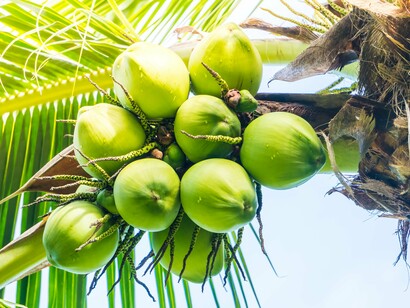
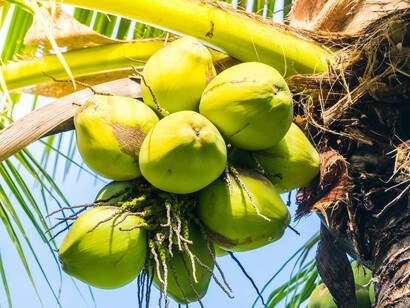
“When I was in the camp, she was a local hawker. Every morning, she carried coconuts in two bamboo baskets just like the street vendors in Vietnam to the camp fence and sold them to the Vietnamese refugees. I had no money; I just stood there watching her split coconuts quickly and skilfully. I craved one. The coconut, not her!” he added quickly, smiling. “But that was enough to make her blush and avoid my eyes. When everyone else had gone, she opened one just for me.”
“And then?”
“I returned daily to where she sold coconuts. We were separated by the barbed-wire fence. She always gave me one without asking for any money.”
“Did you two talk to each other?”
“I barely knew any English then. Just a few words. But in my heart, I knew she liked me.”
I wasn’t sure who fell in love first, but one thing was clear: love strikes like a bomb, and the heart is blind. Sweet words aren’t always necessary.
“How long did you stay in the camp?” I asked.
“Nearly two years.”
“You must have eaten a lot of coconuts from that girl. From my memory, the camp rules prohibited such relationships – too complicated.”
He scratched his head again.
“When I met the Australian immigration delegation for my resettlement interview, I told them I had a local girlfriend living outside the camp. They wanted details, so I told them the coconut story. They shook their heads and said ‘true love’ wasn’t that simple. They told me we had to go our separate ways if I wanted to leave the camp.”
“That’s cruel,” I said, thinking of the many passionate romances I had witnessed in the Galang refugee camp – love stories with no or unhappy endings.
He paused, then looked straight at me.
“Both my head and my heart told me I couldn’t leave her behind. I begged them. I said I would stay in the camp until they changed their mind.”
He was kind and honest – the typical southern Vietnamese lad, straightforward and decent. He reminded me of a boat skipper from one of my failed escape attempts, who pulled out at the last moment because he couldn’t bear to leave his wife behind, like the star-crossed lovers of an old folktale.
He cleared his throat.
“Fortunately, one of the officers was female. She intervened and offered a solution: she would note in my file that the Filipino girl was my fiancée, so I could sponsor her later if we still loved each other. I was over the moon! Otherwise, how could I ever repay my debt in this lifetime?”
“You surely have plenty of lifetimes to repay your debt. How long did she wait to come here?” I smiled.
“Five years. I worked and saved every cent to send to her. Her family was extremely poor, even poorer than mine back in Vietnam. Her mother died when she was young, and her father raised her alone.”
My eyes welled up. Even after years in prosperous Australia, talk of poverty still tugs at my heart.
“Now that you’re legally living together,” I said, “I’m afraid I’m of no use to you. I only marry people who aren’t already married.”
He hesitated.
“My wife wants to bring her father over here, but we don’t know the migration paperwork and can’t afford the cost. Our friend said you help compatriots in need. And my wife sings karaoke very well!”
I smiled again. She wasn’t really a compatriot – Vietnam and the Philippines are worlds apart, and her singing talent was an unusual qualification for immigration help.
“Singing in English?” I asked.
“No, in Filipino. I’ve heard it so often I can sing a bit myself.”
I burst out laughing. Living in Australia but singing songs not in English but Filipino! Their bond was tight as glue, true lovebirds. I wondered whether coconuts had anything to do with it. Turning to the young woman, I said:
“I’ll help you with the paperwork.”
Her face lit up. She murmured her thanks, then handed me the plastic bag she had been clutching. Inside were sponge cakes.
“She made them herself,” her husband said. “They taste like our Vietnamese bánh bò. It’s the only cake she knows how to make. Please accept them – it would make her happy.”
I hadn’t eaten bánh bò in a long time. Anyone from the South would know this humble rice-flour cake: simple, filling, comforting. It reminded me of a story a friend once told:
“The best bánh bò are made by Mrs Ba, sold at Ninh Kiều Wharf in Cần Thơ Province. She lives far away. Every morning, she rows her small dinghy across the wide Hậu Giang River to sell her cakes. Sometimes she sings folksongs to entice customers. Her cakes and sweet voice hooked Mr Ba. He married her. Years later, he would grumble to his drinking mates: ‘She promised if I married her, she’d look after me for life!' Who knew I’d be up before dawn grinding rice, chopping wood, and scraping coconuts to help her make sponge cakes? That is bloody hard yakka!’”
I squinted at the young man and joked:
“Cakes are fine, but no coconuts, thank you. I don’t want to owe someone a love debt.”
In life, we sometimes encounter love as strong as steel, even when it begins with something as small and simple as a coconut.