English
 Español
 Français
 Deutsch
 Italiano
 Português
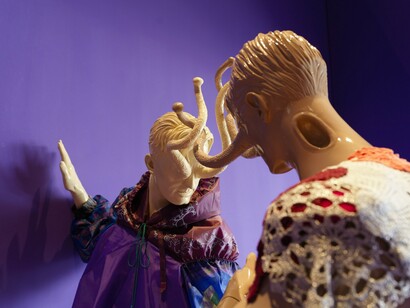
In Glumpert, Austrian designer Peter Fellner combines sustainable material strategies with a conscious, queer symbolism. From used everyday objects such as embroidered pictures, crocheted doilies, scarves, and umbrellas, he creates garments whose traces remain visible and carry a narrative, identity-forming message. Even in the material selection and pattern-making process, the boundary between function and meaning is shifted: ordinary objects gain new appreciation, take on a new form, and create new realities.
The symbolism of the snail permeates the collection as an emblem of fluidity – a queer role model from nature. Fellner also uses this symbol to establish a safe space and simultaneously decelerate the fashion market: a zero-waste pattern-making technique emerges that performatively makes identity visible and shifts the focus on heteronormative dress codes. Here, clothing is not only worn but also displayed, discussed, and negotiated. The sustainability strategy "repurpose" focuses on used materials and thus represents ecological responsibility and a political message: objects, people, and living beings that are considered "disregarded" find new appreciation.
Fellner's work lies at the intersection of design, body politics and queer aesthetics: a hybrid of art and fashion that makes contemporary criticism visible and opens up space for diversity.