English
 Español
 Français
 Deutsch
 Italiano
 Português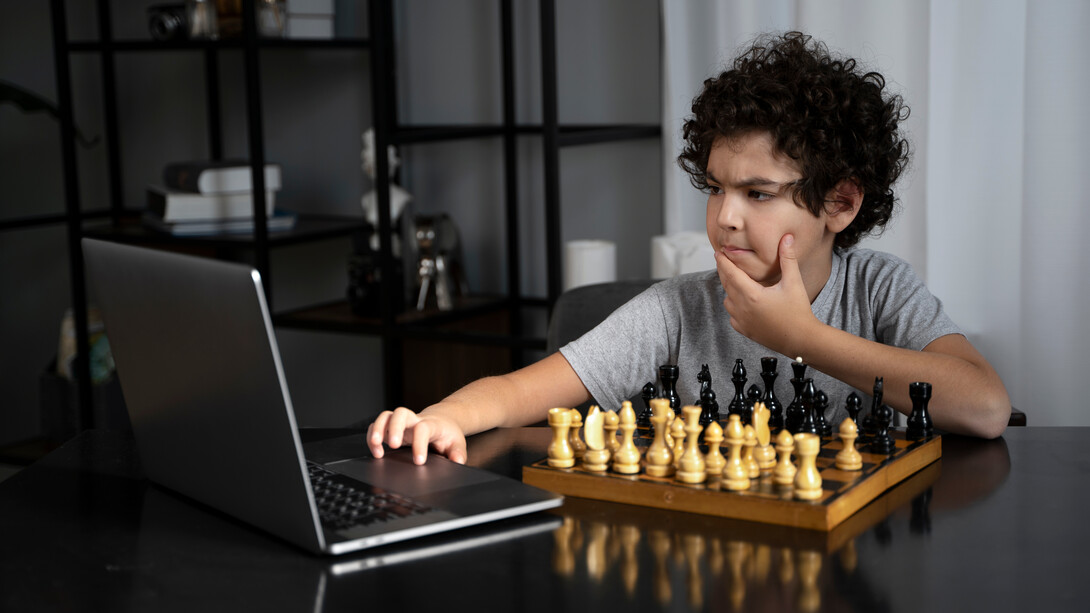
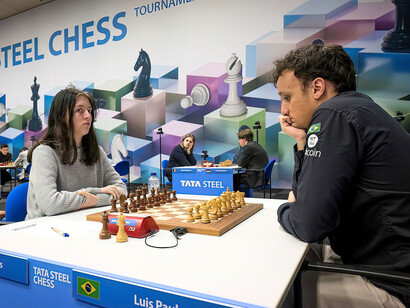
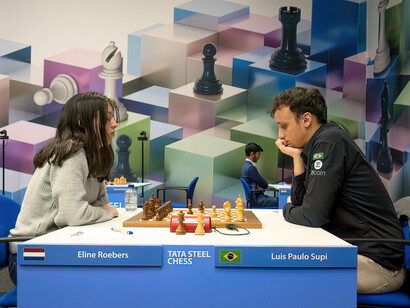
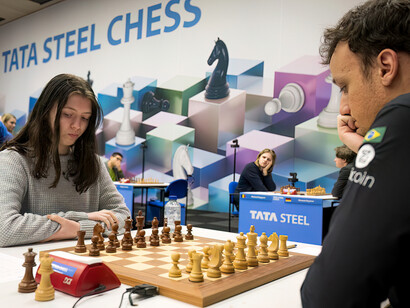
There’s something quietly electric about sitting across from another human being, a chessboard between you, the pieces arranged like a promise. The air shifts. Time slows. You’re not just playing a game—you’re entering a centuries-old conversation.
Chess, after all, has always been more than a game.
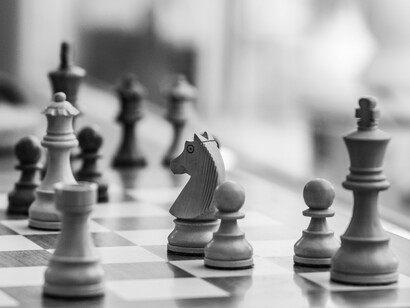
Its origins trace back to 6th-century India, where it was known as chaturanga, a strategic war simulation representing infantry, cavalry, elephants, and chariots. From there, it traveled through Persia (where it became shatranj), into the Islamic world, and eventually into medieval Europe—evolving along the way.
By the late 15th century, the modern rules we recognize today had taken shape, including the powerful movements of the queen, transforming the game into something faster, sharper, and far more dynamic.
And yet, whether played in a royal court or a noisy café, chess has always been about one thing: the human mind.
That’s what makes the contrast between playing a real opponent and facing an AI so fascinating.
The human game: theater of the mind
When you play someone in person, you’re not just calculating moves—you’re reading a story. Your opponent hesitates. They tap a finger. Their eyes linger just a bit too long on your knight.
Suddenly, the board isn’t silent anymore; it’s alive with tells, rhythms, and emotion. A well-timed bluff—like sacrificing a piece—can feel like a dramatic monologue. A mistake can reveal itself in a flicker of frustration.
Consider the legendary rivalry between Garry Kasparov and Anatoly Karpov during the Cold War. Their matches weren’t just technical battles; they were psychological wars. Games stretched for hours, even days, with tension thick enough to cut. Every move carried not just strategic weight, but emotional consequence. Who would crack first? Who would hold their nerve?
In human chess, imperfection is part of beauty. You might miscalculate, overlook a tactic, or fall into a clever trap. But so might your opponent. The game becomes a dance of mutual vulnerability, where intuition, creativity, and even courage matter as much as raw calculation.
And then there’s the joy of unpredictability. A beginner might stumble into brilliance. A master might experiment with an unconventional opening just to see what happens. There’s room for personality—for flair.
You don’t just win. You outwit.
The machine game: precision without pulse
Now sit down across from an AI.
No eye contact. No hesitation. No tells.
Just a quiet, relentless intelligence humming beneath the surface.
The turning point in this relationship came in 1997, when Deep Blue1 defeated Garry Kasparov in a historic match. It was the first time a reigning world champion lost to a computer under standard tournament conditions. The moment felt seismic—not just for chess, but for humanity’s understanding of intelligence itself.
Deep Blue didn’t “think” like a human. It calculated—millions of positions per second—evaluating possibilities with cold, mathematical precision. Where a human might rely on intuition or pattern recognition, the machine relied on brute-force analysis.
Fast forward to today, and engines like Stockfish2 and AlphaZero3 have reached levels of play that are, quite simply, superhuman. AlphaZero, in particular, stunned the world by teaching itself chess from scratch and developing a style that seemed almost… creative. It favored long-term sacrifices and dynamic play, echoing human intuition but executed with machine perfection.
Playing against AI can feel like trying to outthink a force of nature.
You make a move. It responds instantly—no hesitation, no doubt. You try a trick; it sees through it. You set a trap; it sidesteps effortlessly. There’s no ego to exploit, no nerves to rattle. Just optimal play, move after move.
It’s humbling. Sometimes brutally so.
Fun vs. mastery: why we play both
So why do we still play humans when AI exists? Because the goals are different.
Playing a person is about connection. It’s about shared experience, storytelling, and the subtle art of mind games. Even online, when you can’t see your opponent, there’s still a sense of presence—a real person on the other side, making choices, taking risks.
Playing AI, on the other hand, is like training with a perfect mirror. It exposes your weaknesses with ruthless clarity. There’s no hiding from your mistakes. Every oversight is punished, every inaccuracy highlighted.
If human chess is jazz, AI chess is classical music—structured, precise, and technically flawless.
But here’s where it gets interesting: modern players often blend both worlds.
Grandmasters regularly use engines like Stockfish to analyze games, uncover new ideas, and prepare for opponents. Entire opening repertoires are now shaped by AI insights. Moves once considered “unthinkable” have become standard because engines proved their hidden strength.
In a way, AI hasn’t replaced human chess—it has expanded it.
The emotional checkmate
Still, there’s one thing AI can’t replicate: the feeling of a real checkmate against a real person. That moment when your opponent leans back, exhales, and nods in quiet resignation. The handshake. The shared recognition of a battle fought and finished.
No engine, no matter how advanced, can give you that.
And maybe that’s the point.
Chess has survived for over a thousand years not because it’s unbeatable, but because it’s endlessly human. Even as machines surpass us in calculation, they can’t replicate the experience of being in the game—the tension, the doubt, the thrill of a risky move.
So play both.
Challenge an AI and marvel at its brilliance. Let it sharpen your skills, push your limits, and reveal the deeper layers of the game.
But don’t forget to sit across from another person, set up the board, and begin again—piece by piece, move by move, story by story.
Because in the end, chess isn’t just about finding the best move.
It’s about finding your move.
Notes
1 IBM’s computer checkmated a human chess champion in a computing tour de force at IBM.
2 Strong open-source chess engine at Stockfish.
3 AlphaZero at Chess.com.