English
 Español
 Français
 Deutsch
 Italiano
 Português
Youth sports have become obsessed with two things: money and talent.
Huge commercial interests, seeing the global rise in kids chasing glory and success in professional sport, are capitalizing on often gullible, over-zealous sporting parents with high expectations and lofty aspirations for their little super-stars.
Add to that, the search for the next big thing, the next golfing “Tiger,” the next footballing “Beckham,” and the next swimming “Ledecky” has resulted in a rapid increase in the formation of elite junior sports academies and high-performance sporting schools all over the world, all promising to provide 6-year-olds with a clear pathway to the top.
Yet, there’s a sporting epidemic across the globe: it’s called Drop Out!
The number of kids who are walking away from traditional forms of organized competitive sport has never been higher. Talented teens, fed up with the way the experience of sport is being delivered, simply vanish from fields, pools, courts, and arenas and look for other passions, other interests, and other relationships.
The research on this teenage exodus is clear.
They had too much, too hard, and too soon: sport for them, from a very young age, was always about the measurables, the data, the win/loss records, and the scores. By the time they’ve turned 13, they’ve been categorized and classified as talented or untalented and their sporting destiny is predetermined by the cold, hard measurement of their physical capabilities against statistically significant norms.
However, one nation has decided to dare to do it differently.
At a time when most of the world’s sporting superpowers have their eyes firmly focused on measuring speed, endurance, agility, power, flexibility, and strength, Norway is valuing far more important and far greater elements of human sports participation.
Norway’s sporting success story, now boasting consistently remarkable Olympic medal victories over the past decade, is built on solid foundations of fun, of friendships, and of family. They’ve made a philosophical and practical shift from thinking of kids as runners or swimmers or footballers or basketballers to kids who just play sports. And it’s that one word—“play”—that makes all the difference.
Is Norway really doing something special?
If you take a moment to investigate the Norwegian sporting landscape, you’ll find some impressive stories:
Norway topped the medal table at three consecutive Winter Olympics—2018, 2022, and 2026 (Milan Cortina)—winning 41 medals and 18 gold at the 2026 Games, both all-time records for a single nation at a single Winter Olympics.
There is a 93% youth sports participation rate in Norway, which is nearly 40% higher than the United States, achieved through a magic mix of keeping participation costs low (under $1,000 per child annually), making junior sports focused on local competition and avoiding the talent trap of worshipping early sports specialization.
In youth sport in Norway there is no scorekeeping until age 13 and no national championships for children. There are no online rankings listing the performances of young athletes and in fact, posting youth game results online can result in a fine.
Norway maintains over 70% participation rates into the teenage years—the age at which most other nations see the steepest dropout. Johannes Høsflot Klæbo, who won six gold medals at Milan Cortina 2026, reportedly only entered the performance system at age 15, after a diverse sporting childhood.
The wonderful thing that Norway is doing is this. I’ve been involved in sport for over 30 years. We—as in the sports industry—have known the importance of avoiding early specialization, of reducing the focus on so-called “elite ten-year-olds,” and the overemphasis on scores and scoring in youth sports, but we’ve lacked the political will and courage to implement the changes that we’ve known needed to be made in the interest of kids everywhere.
Norway can stand tall as being brave enough to put the mental, emotional, and physical well-being of their youth ahead of any aspirations of international sporting glory—yet, in doing so, they’ve achieved exactly that. By de-emphasizing the counting culture that drives junior sport around the world, they’ve created a participation-centered sporting nation where success has become a consequence of doing the exact opposite of what the rest of the world calls a Performance Pathway model.
Not all that’s counted counts
Modern sport is driven by numbers. Everything is data-driven, measurement-focused, and statistics-led. We turn on the TV and flick and click to our favourite sports show; we want to know who scored, how many they scored, when they scored, and if those scores were higher or lower than their season averages and career bests.
But sport at its best isn’t about percentages: it’s about people.
It’s less about heart rate as measured by a smartwatch and more about heart, emotions, passions, feelings, and most of all, love.
If they love what they do, they will do what they love
All of us fall in love. Sometimes we fall in love with another human being who just “gets” us. Sometimes we fall in love with collecting books or stamps or Hollywood memorabilia. We fall in love with music or art or travel: falling in love is about as human as it gets.
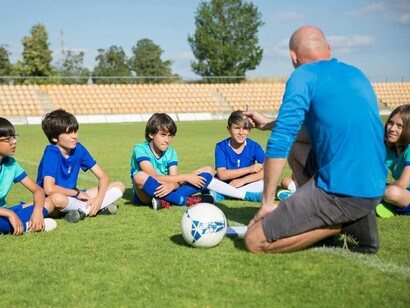
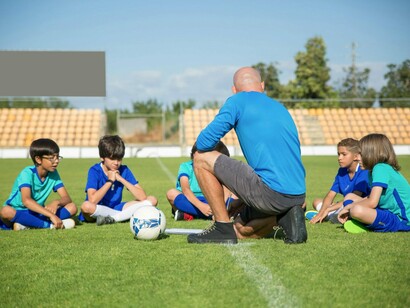
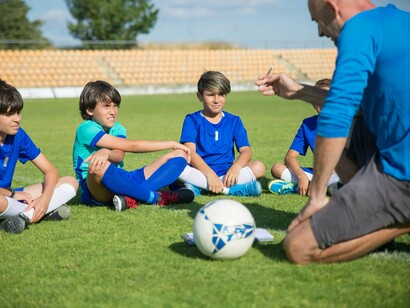
This is what the Norwegians understand. If we provide kids with the opportunity to fall in love with the experience of sport—with just playing sport with their friends—with enjoying the opportunity to move, to learn, to grow, to feel sport—then the chances are that they will want to keep feeling it.
There is only one child who cannot improve at sport: that’s the child who is no longer coming. This simple, obvious but overwhelmingly important statement should be the underpinning philosophy behind all national sporting programs.
Winning isn’t the primary goal: getting them to come back next week is.
So ask yourself, why do kids keep coming back? Why does anyone do anything for that matter?
Because it’s fun. Because we’re learning. Because we’re improving. Because our friends are doing it with us. Because we feel like we belong. Because we feel like the only thing that’s being measured isn’t our talent – it’s our attendance. The greatest victory of all in kids’ sports is retention.
So where to from here for your nation and your sport?
There are three ways to “do” sport:
The old way—which we know is not working. Sport in some of the biggest sporting markets, including Canada, the USA, China, Germany, and the UK, has become almost a luxury item for most families, with the cost of participating in junior sport skyrocketing in recent years. Plus, the overemphasis on junior talent and youth talent identification programs with kids who still think becoming a superhero when they grow up is a possible career choice is outrageous, ill-informed, and just does not work.
The Nor-way—yes, the Norwegians have been courageous, intelligent, and innovative, and their system works…for them. You can’t copy something that works in one place and make it work as well somewhere else—i.e., out of the context that created it.
Your way—the evidence is clear. The research has been done. The medal tables and participation rates and dropout statistics do not lie. All that you need to do is change your thinking.
Start with your own kids. Stop looking at them and thinking about them as the “next great thing” and just see them and hear them for who they are irrespective of what they do on a sporting field.
Get out and coach a local junior team in your city. Put fun, friendships, and learning at the cornerstone of your coaching philosophies and practices. Be the coach that creates an engaging, enjoyable experience for every kid you coach—not just for the biggest, strongest, tallest, and most talented ones.
Every great change in human existence has grown from people like you and me deciding to be the change that’s needed.
If ever we needed to be those people, it’s right now.
Notes
Life in Norway. Norway’s Record-Breaking Winter Olympics In Numbers, David Nikel, February 24, 2026.
Huddle Up (Substack). How Norway’s Youth Sports Model Built A Winter Olympics Dynasty, Joe Pompliano, February 19, 2026.
The Physical Movement (Substack). Top Articles of 2025: Youth Sport in Norway, December 2025.
Team Genius. Norway Youth Sports Model.
BritBrief. How Norway’s focus on fun in youth sports leads to Olympic dominance and healthier children, February 2026.