English
 Español
 Français
 Deutsch
 Italiano
 Português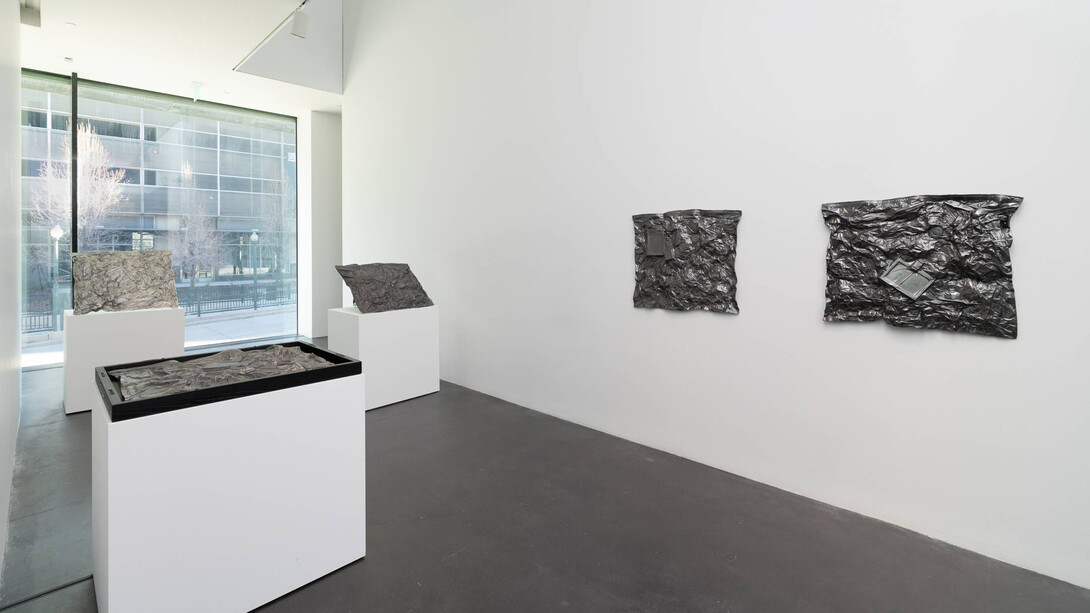
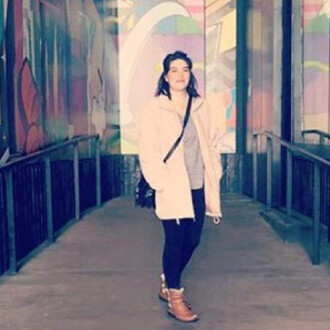
Sammy Seung-min Lee explores sculpture, bookbinding, and installation in her interdisciplinary practice. Shaped by her nomadic youth and bicultural identity, she creates assemblages that bridge spatial, temporal, and socio-cultural divides. Lee’s materials — from paper to architectural elements — and her adaptation of traditional techniques reimagine the relationship between the East and the West and connect tradition with contemporaneity.
Lee’s solo exhibition at MCA Denver, Becoming motherland probes complex personal dynamics of diaspora, moving and migration through playful and poignant works that explore notions of nostalgia, longing, memory, utopia, and home. In recent years, Lee has used a distinctive paper-casting technique to create skin-like forms that echo everyday objects like luggage and table-ware. Her “paper-skins” are a material that embodies memory, vulnerability, and resilience. They anchor her practice and serve as both shield and porous barrier, mediating between interior and exterior worlds while grounding explorations of migration, identity, and belonging.
Becoming motherland reflects on both a personal and artistic return. After thirty-two years in the United States, Lee spent a year in Seoul as a Fulbright U.S. Scholar. Living once more in Korea — while no longer fully Korean, nor ever fully American — Lee was confronted with profound questions of home, belonging, and identity. The MCA Denver exhibition will highlight her expansive use of materials, showcasing new works made following her Fullbright experience, ranging from cast aluminium sculptures, photography, video, textile, and mixed media installations. The exhibition will also feature karaoke-based programming that will invite the public to participate.
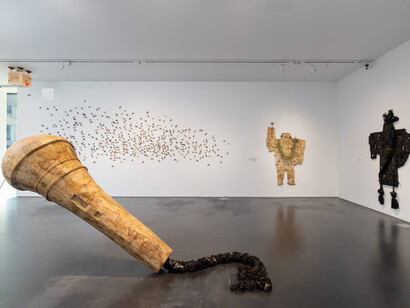
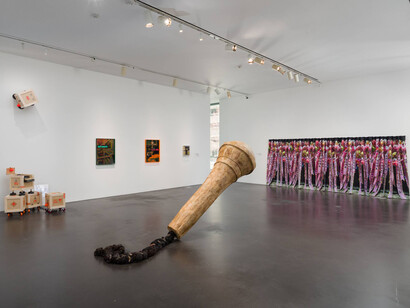
Allusions to travel abound in Lee’s work. The 70lbs topography models (2025) are aluminium sculptures cast from vacuum bags of luggage contents, including personal ephemera like photo frames, and clothing and footwear. Displayed in shifting degrees of horizontality, the sculptures suggest the topography of landscapes and terrain, both personal and geological. Memorializing objects from the transitory phase, perhaps from a trip moving from one place to another, underscores the significance of a seemingly mundane journey that may have lasting impact on the traveler’s life. The photographic textile work, Accolade (2025), shows commemorative ribbons ubiquitous in Korean culture that mark important life events like business openings, graduations, and funerals with phrases of congratulations, well wishes, and condolence. In this work, Lee replaces those phrases with variations of her anglicized name retranslated into Korean, memorializing the many stages in her transition from Korea to the United States, including legally changing her name. Together, these ribbons commemorate the multiplicitous and layered nature of identity.
Some artworks in Becoming motherland examine the duality of the term “motherland”, as both a person and place tethered to our sense of belonging and home. New works like Nagging (2025) recall Lee’s memories of both her own mother and her childhood in Seoul, suffusing loving, yet chiding, advice with the backdrops of Seoul’s urban landscape. Lee noticed a similarity between the messages on LED bus boards around Seoul that advised riders on where to reload their metro cards and proper etiquette on board, with the caring yet slightly overbearing advice from her own mother on the appropriateness of her appearance and personal hygiene. Others like Lee’s Mamabot series from 2020 – 2021, for example, consists of various framed photographs from the artist’s and her children’s childhood shaped into robotic forms, then covered in paper-skins. These works reflect on the also automatic function of caring for children with the implication that all of these responsibilities must continue even while weathering other life changes like settling in a new place or fostering a career in a new city.
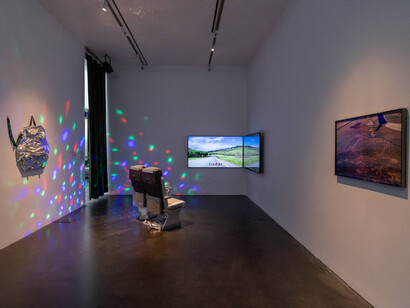
Navigating and fostering a sense of belonging between your place of origin and your current residence can be a complex and imperfect experience. Lee’s recent video Moonlight in Colorado (2024) and the surrounding gallery adorned with allusions to a karaoke room is inspired by an old American folk song beloved by postwar Korean generations (including her mother’s). The work includes a karaoke video with intentionally mismatched subtitles. It is a layered portrayal of utopia, home, longing, humor, and playful cultural critique. Lee shares “The visuals are mismatched with the lyrics. The translations are intentionally off. The result? Viewers are left a little lost, a little amused, a little disoriented. That, to me, captures the immigrant condition. It’s a ballad wrapped in irony — just like memory.”
Together, the works presented in Becoming motherland serve as both a meditation on the longing for home and a proposition that home is a complex notion that is never fixed, but constantly reshaped through memory, material, and community.