English
 Español
 Français
 Deutsch
 Italiano
 Português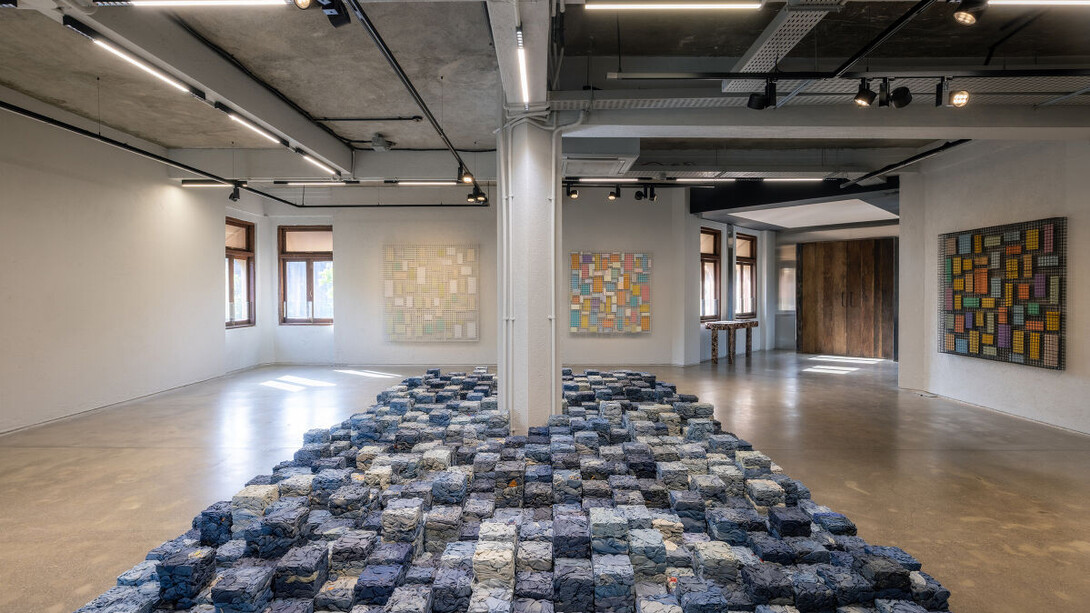
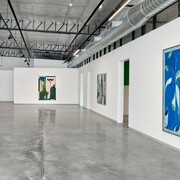
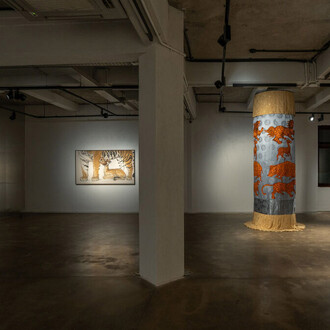
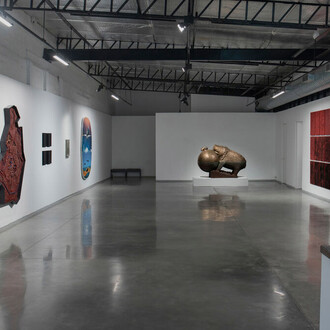
Nature Morte is pleased to present Re/iteration, a solo exhibition by Manish Nai. The exhibition brings together new bodies of work that extend the artist’s long-standing engagement with material and process, shifting their roles from functional objects to sculptural forms.
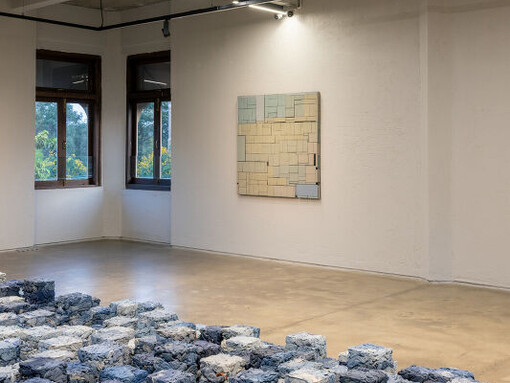
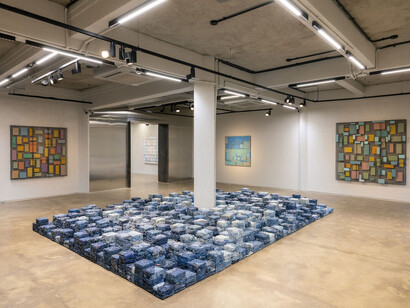
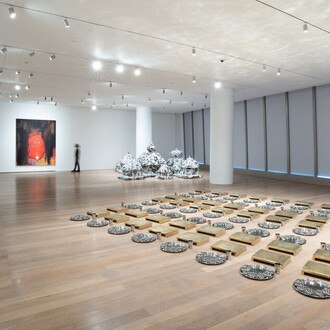
At the centre of the exhibition is a large-scale installation of nearly 800 compressed fabric blocks of used denim jeans, a material and method the artist has developed over the past decade. Originally developed as durable workwear, denim carries histories of labour, endurance, and use. Over time, it has become a global symbol for fashion and culture. In this work, compressed used jeans bring these layers together, shifting from garment to sculptural form. Made from used denim jeans, the blocks transform soft, worn textiles into dense, geometric units. Their surfaces retain the traces of use such as fading, stitching, and wear, while their arrangement builds a larger field of repetition and structure. This process reflects Nai’s ongoing interest in how materials shift under pressure and time.
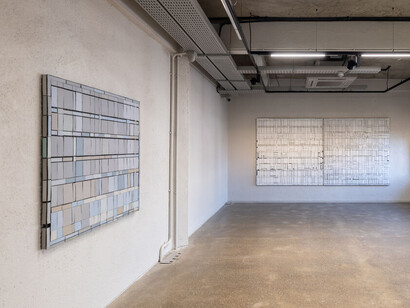
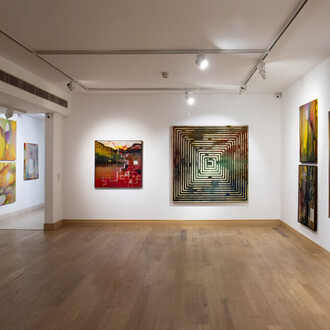
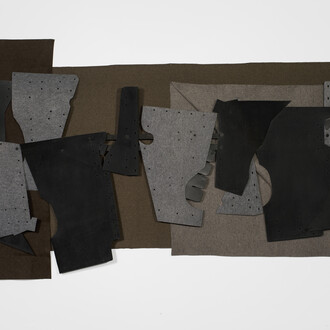
Alongside this, two new series of work incorporate painted aluminum sheets mounted on multiple steel mesh, drawing from the artist’s long observation of billboard structures and temporary constructions in cities. Inspired by materials commonly found on construction sites and temporary urban structures, these surfaces carry the marks of use and the passage of time such as rust, dents, scratches, and paint residue, which the artist deliberately preserves. In parallel, his painted aluminium pieces inspired by billboard structures focus on what remains after images are removed: fragments, grids, partial images, and interrupted surfaces that continue to exist over time.
Throughout this exhibition, Nai focuses less on the narrative and more on the process and on what already exists within the built environment. Rather than concealing the elements of weathering, the works amplify them, allowing time and use to remain visible on the surface and become the content of the works. An exploration of how material changes over time, his process is rooted in repetition and physical engagement, where transformation happens through pressure, layering, and reconfiguration. What emerges is a body of work that reflects the rhythms of the city: a constant cycle of building, erasure, and reappearance. In Nai’s work, we find a quiet but precise reflection on how the city accumulates, erases, and remakes itself over time.