English
 Español
 Français
 Deutsch
 Italiano
 Português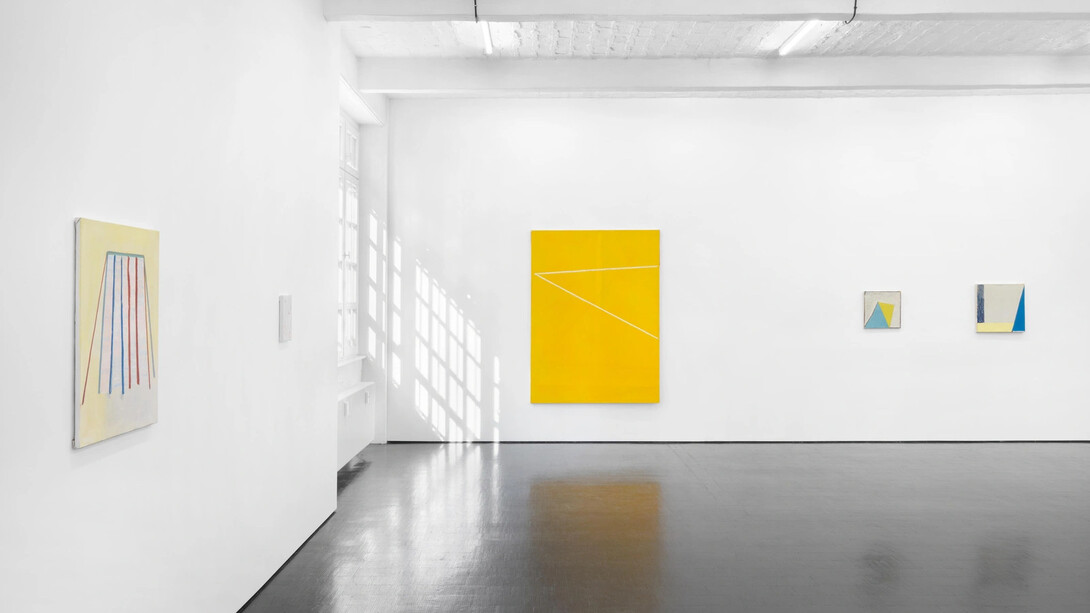
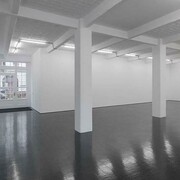
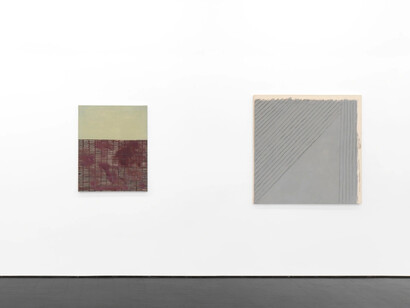
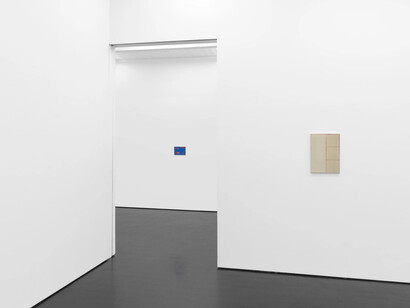
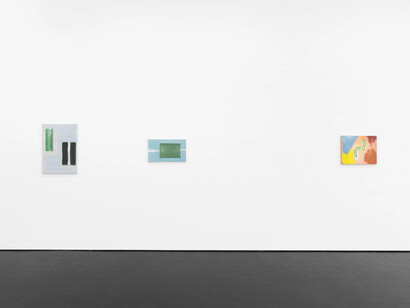
Trautwein Herleth is pleased to present an exhibition of paintings by Raoul De Keyser (1930–2012). Spanning nearly four decades of the artist’s oeuvre, the exhibition gives insight into De Keyser’s dedication to his medium, demonstrating the evolution of approaches employed by the artist to explore the possibilities of painting’s foundational elements: the relations between object, space and color.
De Keyser’s work, in its deceptive straightforwardness, exudes a deeply empathetic contact with everyday life and imparts human experience into what are ostensibly abstractions. In his earliest works, De Keyser painted cropped and simplified landscapes, most of which were characterized by some imposition of humanity–windows, door handles, fences, and, perhaps most famously, the painted chalk lines of soccer fields. Over the years, these references were reduced to their most elemental forms, embodying an experiential rather than pictorial attitude towards representation. The exhibition follows De Keyser’s path from 1974 to 2011, a year before his death.
His work evidences the artist’s attention to his surroundings, which are considered and reconsidered as they are translated into paintings. Their specificity and self-reflexivity allow them to communicate sensations without trying to call them out by name. De Keyser’s approach, which he never allowed to codify into something that could be described as having an artistic signature, is felt in his paintings. They float in the exceedingly narrow overlap of representation, abstraction and materiality, never coming to rest at any position. Rather, they embody a way of experiencing life, a desire to look from a position of curiosity rather than knowing. De Keyser continually reimagined motifs and methods, offering a meditation on the act of painting itself. His works possess an uncanny ability to provoke existential inquiry, inviting viewers—much as he himself did—to approach each painting with renewed attention.
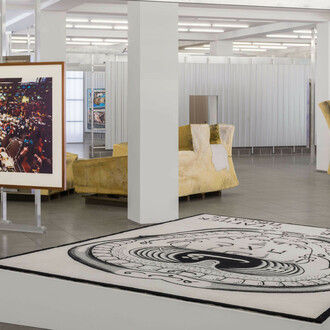
![Various artists, [ materialistin ], exhibition view. Courtesy of Hamburger Bahnhof](/attachments/fd8f4fd76b73be0a02d398535c29d017e1309b65/store/fill/330/330/3f54331fd7869a13166dfe67a9e91306c6e180b2e29b9fd308d958b87ad2/Various-artists-materialistin-exhibition-view-Courtesy-of-Hamburger-Bahnhof.jpg)