English
 Español
 Français
 Deutsch
 Italiano
 Português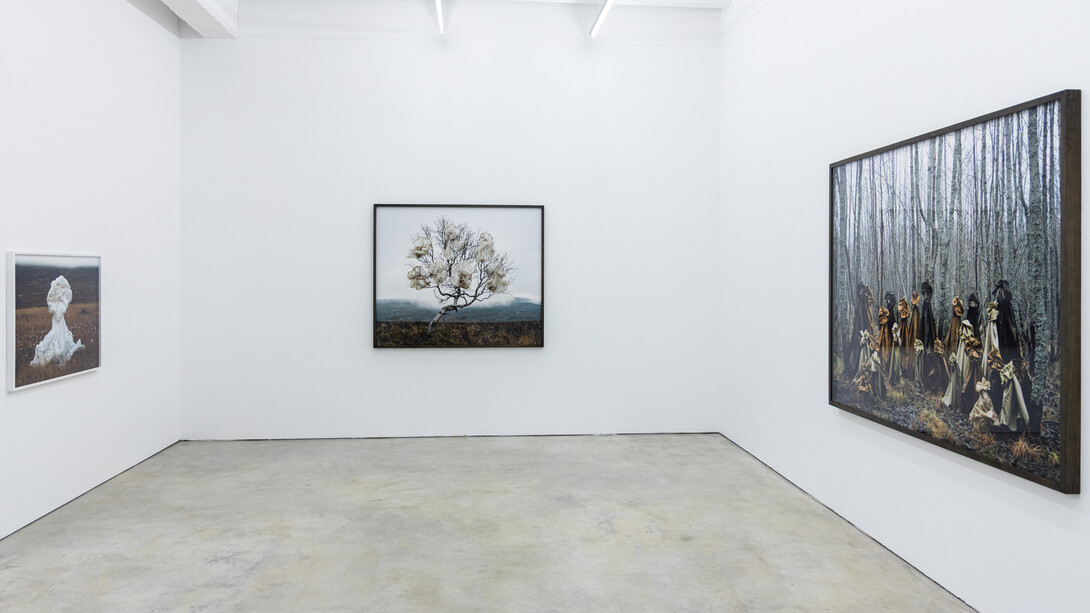
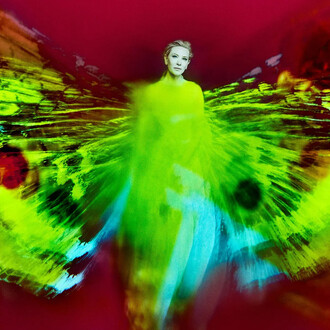
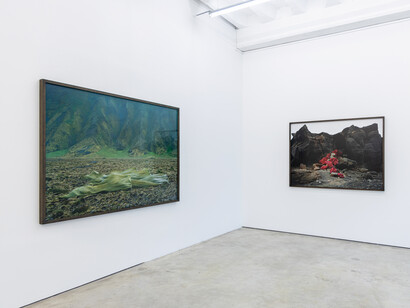
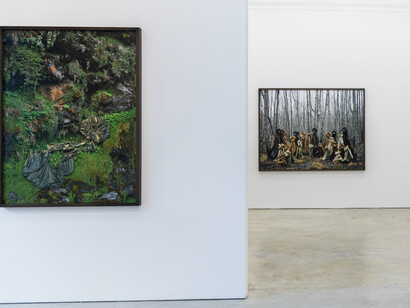
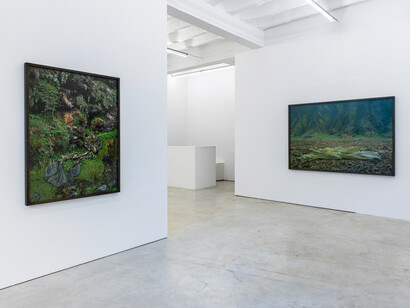
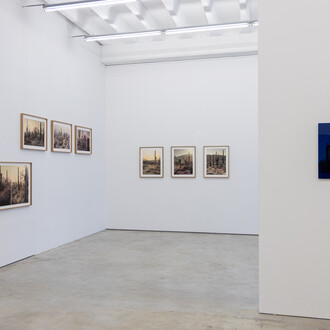
Persons Projects is proud to present a solo exhibition of new works by Finnish artist Riitta Päiväläinen from the Helsinki School. The series, titled Phantasma, was created in the dramatic, isolated landscapes of Iceland and Lapland. Phantasma evokes the fleeting, ghostly presence of her textile installations, capturing ephemeral moments where memory, imagination, and nature converge.
Since 1997, Päiväläinen has photographed and produced site-specific fabric installations within natural environments. She has developed a singular visual language, creating delicate, temporary interventions in remote, pristine places seemingly untouched by human activity. She selects her locations with care, choosing forests, valleys, or riverbanks as the stage for her work. Using second-hand clothing and found fabrics, she constructs temporary organic sculptures that engage with the landscape, forming fragile shelters and intimate spaces that evoke childhood memories and invite reflection on our relationship with nature.
The installations are temporary, existing only briefly in the landscape before being carefully dismantled. Their memories are preserved through a single photograph that captures their delicate presence, with the artist patiently awaiting the perfect interplay of light, wind, and atmosphere. These images transform ephemeral gestures into enduring works of art, revealing a poetic tension between the familiar and the unfamiliar, between personal history and collective memory. The fabrics, imbued with traces of human experience, are woven seamlessly into the terrain—sometimes camouflaged, sometimes accentuating the essence of the landscape.
The artist was born in a small village in central Finland, home to approximately 150 inhabitants. She spent the first sixteen years of her life immersed in dense forests and a landscape largely devoid of open horizons. By building shelters in the woods and outlying brush areas, she recreates memories of her childhood experiences. These photographs are constructed to reflect her sense of freedom and adolescent play. These recollections allow her to reconnect with her younger self and her memories of unity with nature.
In the Phantasma series, the isolated and elemental landscapes become a stage for Päiväläinen’s ongoing exploration of fabric as a raw material. She uses textiles to domesticate untamed places, crafting imagined dwellings for unseen inhabitants. Muted earth tones, mossy greens, volcanic blacks, and snow play a central role in her work. Fabrics are carefully selected to either harmonize with the environment, allowing installations to blend subtly or contrast sharply, generating a visual dialogue with the terrain. This deliberate approach to color enhances the poetic interaction between fabric and landscape, emphasizing both the fleeting camouflage of her shelters and their delicate, short-lived presence within the vast Icelandic wilderness.
Her work utilizes materials such as used clothing, kimono obis, long ribbons, and textiles sourced from second-hand fabric shops. For Päiväläinen, used clothing is central to her practice. It reflects not only her commitment to sustainability but also her fascination with the histories, memories, and human traces embedded within the fibers. Each piece carries its own story. By weaving them into her installations, she creates a dialogue between past and present. Her intention is to invite viewers to follow the echoes of absence and reflect on the fragile, fleeting harmony between humans and their environment.
Päiväläinen’s work can also be situated within the broader tradition of land art. Like early land artists such as Robert Smithson or Richard Long, she engages directly with the landscape. Yet her approach is subtle and intimate rather than monumental. Instead of large-scale interventions, she emphasizes ephemerality, carefully arranging fabrics and waiting for the perfect conditions to capture a single photograph.
As Päiväläinen explains: “Nature holds significance through the human capacity to engage with it as a source of imagination, dreams, and creativity. I approach landscapes as mise-en- scènes, mental, subconscious, and personal mindscapes. Through my photographs, I seek to give voice to silent places.”
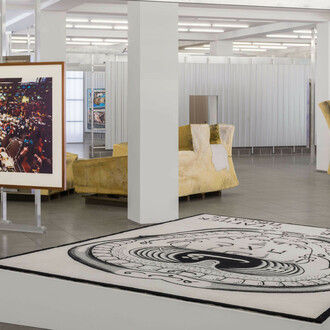
![Various artists, [ materialistin ], exhibition view. Courtesy of Hamburger Bahnhof](/attachments/fd8f4fd76b73be0a02d398535c29d017e1309b65/store/fill/330/330/3f54331fd7869a13166dfe67a9e91306c6e180b2e29b9fd308d958b87ad2/Various-artists-materialistin-exhibition-view-Courtesy-of-Hamburger-Bahnhof.jpg)