English
 Español
 Français
 Deutsch
 Italiano
 Português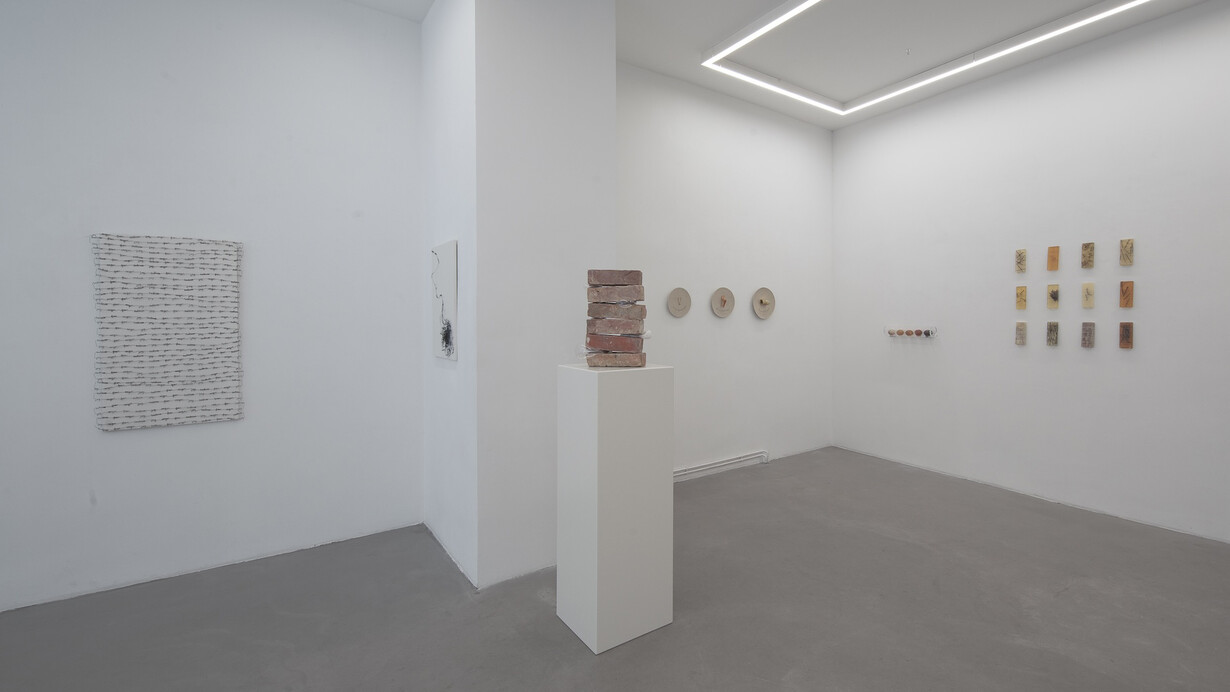
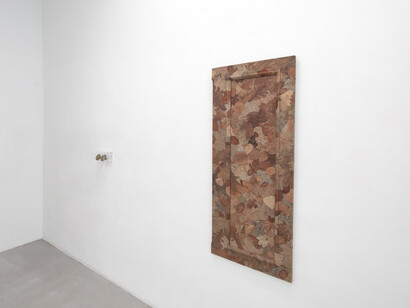
With patience and diligence, Xuejing Wang devotes herself to everyday objects and discarded materials, breathing new life into them. Inspired by Eastern philosophies and aesthetics, used tea bags, fruit peels, dried leaves, bricks, and wood receive a new existence through meditative, handcrafted processes of assembling, stitching, and layering. In her work, material that appears fragile is transformed into objects of remarkable durability, while hard materials treated with fine sutures take on a subverted meaning. Across her practice, Wang questions the invisible physical and emotional labour embedded in everyday life: the injuries sustained, the traumas inherited, the effort that passes unseen.
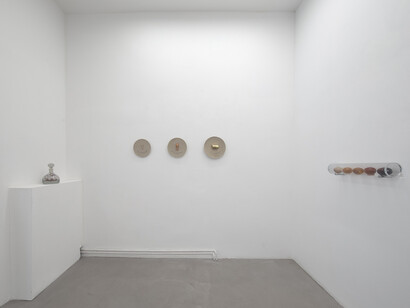
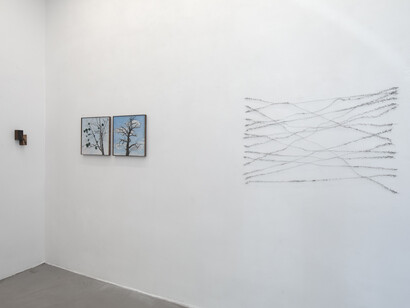
In Antifragile, the home recurs as a structural metaphor: not simply for shelter, but for the self, the accumulation of all core formative experiences one has built in. Windows, trees, bathroom curtains, dining tables, and brick walls appear throughout the exhibition as universally recognisable objects, thresholds between the intimate and the shared. Seemingly familiar, they are rendered strange and new through Wang’s transformative processes. Bricks stacked and threaded with blown glass maintain their balance through compression; metal wire moves between brushstroke and written script across painted canvas; blocks of wood are split open and stitched closed again; a shower curtain striped with handwritten text pressed into metallic foil becomes a record of internal weather. These materials undergo stress, deformation, and accumulation and continue to grow.
At the core of Antifragile is a redefinition of fragility itself. Where fragility is conventionally understood as vulnerability, as weakness, Wang reclaims it as a condition of transformation. Drawing on Buddhist practices of repetition, writing, and circular form that she turned to in her youth as structures of stability against insecurity, she transposes these rhythms into her sculptures and paintings. Glass, which shatters daily, is held and elevated; what was once discarded becomes enduring; the broken is stitched back together, not to conceal the wound, but to hold it as form. Having relocated from China to Berlin, Wang found in the city’s landscapes and relative freedoms a new access to nature and to herself, an environment that allowed her practice to move outward from the strictly personal toward something others might inhabit too. Antifragile does not describe healing. It proposes something more elusive: the capacity to be changed by what one cannot control, and to find within that change a new order.
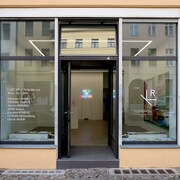
For Antifragile, Wang structures the gallery as a house, divided into three distinct spaces that together constitute an emotional and psychological cartography of domestic life. The front room, which Wang designates as the “unbearable lightness of being,” operates as living room and bedroom simultaneously: a site where the material weight of everyday existence is held in tension with the fragility of interior feeling. A transitional middle space assumes the function of a kitchen, where objects associated with nourishment, routine, and inheritance accumulate as carriers of meaning that exceed their domestic use. The back room embodies a bathroom: the most private space of the body, its threshold marked by a shower curtain stitched from chewing gum wrappers, each inscribed with passages from the Diamond Sutra by the artist’s own hand, forming a membrane between interiority and the world beyond. Across all three rooms, the familiar is estranged, and the domestic is revealed as the primary site through which experience, memory, and selfhood are constructed.
Antifragility is not resistance but continuing to stand through change.
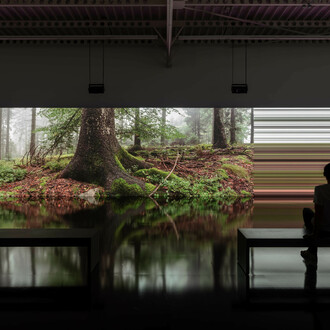
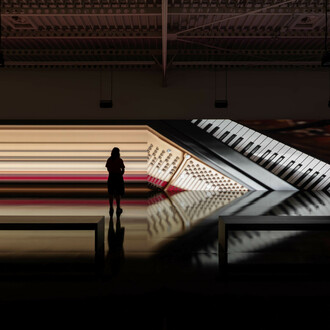
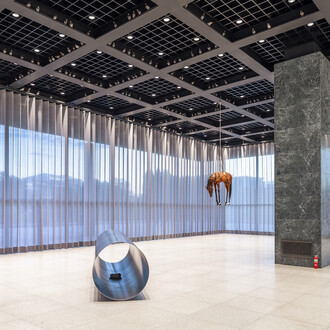
![Various artists, [ materialistin ], exhibition view. Courtesy of Hamburger Bahnhof](/attachments/fd8f4fd76b73be0a02d398535c29d017e1309b65/store/fill/330/330/3f54331fd7869a13166dfe67a9e91306c6e180b2e29b9fd308d958b87ad2/Various-artists-materialistin-exhibition-view-Courtesy-of-Hamburger-Bahnhof.jpg)