English
 Español
 Français
 Deutsch
 Italiano
 Português
Alice had always liked to think of herself as tidy. Tidy room, tidy grades, tidy future. Even her handwriting was neat and round, shaped by years of school exercises that told her how to form each letter. There was a comfort to following the instructions correctly. You always knew what you would get.
At least, she used to know.
But lately, she had the unsettling feeling that the ground beneath her life had tilted, ever so slightly, like a picture frame knocked askew. Nothing dramatic—nothing anyone else would notice—but it was enough to make her feel as though she were walking through the world at the wrong angle.
It started the morning she woke up and didn’t quite recognise herself. She stared at her reflection in the bathroom mirror, toothbrush dangling from her lips, and thought: Something has changed. Only she couldn’t name what it was.
Her mother called this “teenage hormones.” Her father called it “growing up.” Alice didn’t think it was either of those things. Growing up suggested a sort of gentle, steady stretching toward the sun. But what she felt was more like shrinking and expanding all at once, as if her insides kept shifting to make room for a version of herself she didn’t yet understand.
School didn’t help. Friends who once felt familiar now seemed like actors repeating lines she no longer found interesting. Teachers asked what she wanted to study next year, what she wanted to be, where she wanted to go, and who she wanted to become. They said it with the same tone they used when they read instructions off worksheets.
Alice had no answers. She wasn’t sure she even had the questions in the right order.
One afternoon, after a particularly overwhelming careers assembly, Alice decided to walk home through the old botanical gardens rather than take the usual route. She didn’t know what pulled her there—only that she felt an urge to be somewhere quiet. Somewhere green. Somewhere she could hear herself think, though she wasn’t entirely certain she wanted to.
The gardens looked different in the late afternoon light. The tall glasshouses glowed like lanterns. Leaves shimmered. Flowers leaned toward her, brushing her sleeves like curious hands. Something about the place felt suspended—untouched by the quick blur of normal life. As if time, here, had chosen to rest.
Alice stepped off the path, drawn toward a large arched greenhouse she hadn’t visited in years. A sign near its entrance read:
INSECT HABITAT RESTORATION—CLOSED TO PUBLIC
Strange, she thought. The door was slightly open.
She hesitated. She wasn’t usually the kind to ignore rules, but today… she didn’t feel like the usual Alice.
She slipped inside.
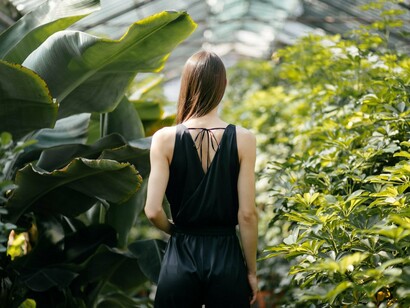
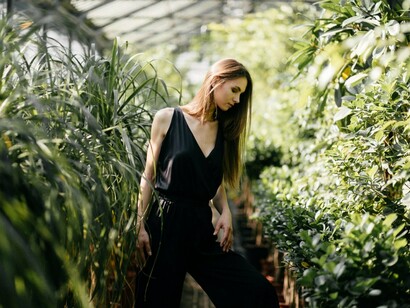
The air was warm and heavy, scented with damp soil and sweet leaves. Plants towered above her—ferns, hanging vines, and enormous mushroom-like fungi spread across rotting logs. It felt like stepping into a forgotten forest, the kind that grows after people have left.
Alice took a careful step deeper into the greenhouse. Another. The silence was soft, like thick moss.
Then she saw him.
A man sat cross-legged on a raised platform of wood, beneath the long arching leaves of a banana plant. Not a gardener—she could tell instantly—but some sort of researcher or volunteer, though his appearance was nothing like the neat uniforms she had seen earlier.
He wore a loose navy shirt, creased at the elbows. A coil of smoke curled from an incense holder beside him, rising upward in perfect loops. His hair was silver—not old-man silver, but the odd, gleaming silver of someone who had stepped out of a story. He did not look startled by her presence. In fact, he looked as though he had been expecting her.
“Who are you?” he asked.
Alice’s breath faltered.
It wasn’t the words—the question was ordinary enough—but the tone. Calm, curious, unhurried. As though the answer mattered far more to him than to anyone else who had ever asked it.
And to her surprise, it was the exact question she had spent weeks trying not to ask herself.
“I—well…” Alice swallowed. “I’m not sure right now.”
The man tilted his head. “Not sure? A common condition. People often mistake it for a problem.”
Alice frowned. “Isn’t it a problem? Not knowing who you are?”
“That depends,” he said. “Not knowing can be very honest.”
She didn’t know what to say to that.
He nodded toward a wooden crate near him. “Sit, if you want.”
Alice sat.
For a while, they said nothing. Smoke drifted through the warm air, swirling into gentle shapes. Alice watched one loop of smoke expand, then dissolve like a memory slipping through her fingers.
The man finally spoke. “When did you start feeling uncertain?”
Alice stared at her hands. “Lately everything feels like it’s… shifting. I used to know what I wanted. I used to know what I liked. Even who I was. But now… it’s like I wake up every morning as a slightly different version of myself.”
“A slightly different version.” The man nodded slowly. “How terrible.”
Alice looked up, startled.
He gave a small smile. “Terribly wonderful, I mean.”
“That’s not how it feels,” she muttered.
“No,” he said. “It rarely does while it’s happening.”
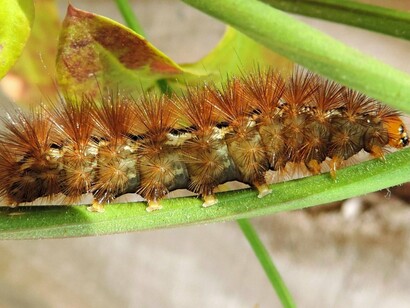
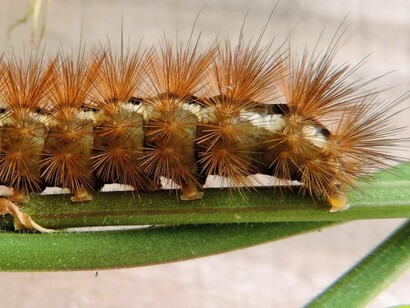
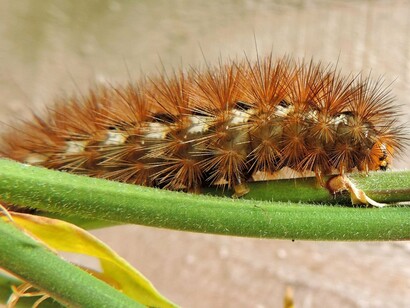
The air filled with the scent of eucalyptus. Somewhere near the back of the greenhouse, the hum of insects stirred. Alice noticed a large caterpillar inching along a branch above them—green, plump, and determined.
“Most creatures,” the man said, following her gaze, “do not worry about who they are. They wake, they eat, they become. Without fuss. Without fear.”
“Becoming sounds frightening to me.”
“Of course it does,” he agreed. “Becoming means leaving something behind. And humans”—he tapped his temple gently—“tend to form very strong attachments to their earlier versions.”
Alice looked at the caterpillar. It reached the edge of the leaf, paused, and then—unexpectedly—curled backward, as though reconsidering its next move.
“What about that caterpillar?” she asked. “Doesn’t it get frightened? It’s going to change into something completely different. Doesn’t it worry about losing itself?”
“Perhaps,” the man said. “But it changes anyway.”
“How can it not be scared?”
“Because it trusts the process.”
Alice didn’t think trust was something she had much of at the moment—not in herself, not in her future, and definitely not in the shifting, unfamiliar person she felt she was becoming.
The man picked up a small twig and began tracing patterns in the soil. “You know, people often talk about identity as though it is a fixed object. A trophy. A final state. Something you discover once and then place on a shelf.”
“That’s what everyone keeps telling me,” Alice said. “My teachers keep saying I need to choose a path. A career. A version of myself.”
“And how does that feel?”
She laughed—an unexpected, sharp sound. “Terrifying.”
“Good.”
Alice blinked. “Good?”
“Identity is not chosen like an outfit,” he said. “It is grown. And growth is never tidy. If it were tidy, it would not be growth.”
Alice thought about her tidy room. Her tidy homework. Her tidy plans for the future that now felt like stiff clothes she had outgrown.
She thought about how often she had felt wrong lately—not in the way she looked or acted, but in the feeling that she was living inside a skin that no longer fit.
“Do you know what frightens you most?” the man asked gently.
She hesitated. “What if I become someone I don’t like?”
The man exhaled a thin ribbon of smoke. “Then you un-become her,” he said simply. “You grow again.”
Alice stared.
He added, “You are not limited to one self. You are permitted many.”
She didn’t realise she had been holding her breath until she let it out.
The caterpillar above them had stopped moving. It hung from the underside of the leaf now, attached by a delicate thread.
Preparing, Alice realised, for the next stage.
The man noticed her watching. “Becoming yourself is not a single event, Alice. It is a lifelong series of transformations. Some subtle. Some monumental. All necessary.”
“But what if I choose wrong?”
“There is no wrong,” he said. “There is only the next right-for-now.”
Alice felt warmth rise in her chest. A loosening.
No one had ever told her that before.
They always talked about the future as if it were a narrow tunnel she had to squeeze through. As though choosing one thing meant shutting the doors on all the other possible versions of herself.
She looked at the man again. “Why did you ask me who I was?”
His expression softened. “Because you looked like someone who needed to ask herself.”
Alice lowered her eyes. He was right.
She had spent so long trying to hold onto the version of herself she understood that she hadn’t allowed space for the version who wanted to change.
“What if I don’t recognise myself someday?” she whispered.
The man smiled. “Ah. But recognising yourself is less important than meeting yourself.”
A quiet calm settled over the greenhouse. Alice felt it sink into her bones.
For the first time in weeks, she didn’t feel afraid of not knowing. Instead, she felt… curious.
“What should I do now?” she asked.
The man tapped the wooden platform. “Step back into the world. Grow. Shed. Become. And when uncertainty comes—and it will—remember this place.”
Alice stood, feeling lighter and heavier all at once. Transformed, but not yet sure into what. Maybe the not-sure part was the point.
As she reached the door, the man called out softly, “Alice.”
She turned.
“You do not need to know who you are to start becoming her.”
She nodded. “Thank you.”
The silver-haired man dipped his head. “Go well.”
Alice stepped outside. The air felt cooler, crisper, more real somehow. The path through the botanical gardens stretched ahead of her, glowing gold beneath the late-afternoon sun.
She didn’t know exactly who she was in that moment, or who she would be tomorrow. But for the first time, the uncertainty didn’t feel like a threat.
It felt like possibility.
And as Alice walked home, she realised something quietly extraordinary.
She wasn’t the same girl who had entered the greenhouse.
She wasn’t meant to be.
She was becoming.