English
 Español
 Français
 Deutsch
 Italiano
 Português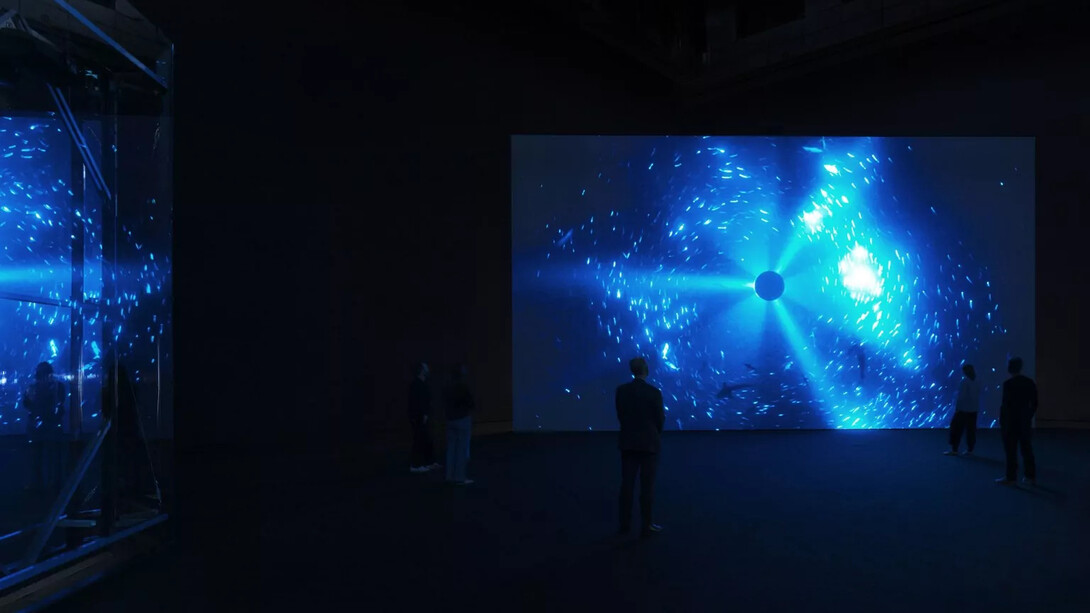
A dazzling light shines through a rotating Fresnel lens in the depths of the Pacific Ocean, gigantic submerged glaciers tower above the viewer, and divers float seemingly weightless in Mexican cenotes—the solo exhibition Midnight Zone by the French-Swiss artist Julian Charrière (b. 1987) presents a fascinating investigation into the mysterious world of water.
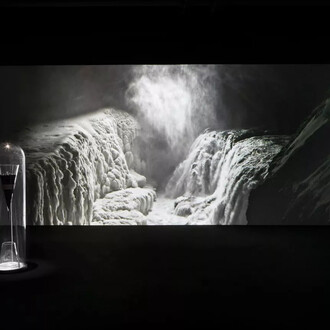
Julian Charrière’s multimedia works consistently combine art, environment, and science. At the heart of the exhibition is the most important element for life on Earth: water. It is the basis of our planet’s biosphere, the habitat of countless organisms and, at the same time, a highly contested resource. Thus, the exhibition highlights not only the sensual and metaphorical aspects associated with water but also a number of the political issues that surround it, such as water pollution and acidification, the melting of glaciers and polar ice caps due to the human-induced climate catastrophe, or the threat to the seabed posed by deep-sea mining.
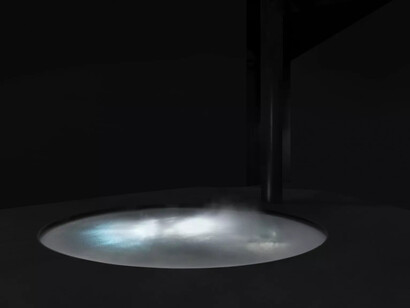
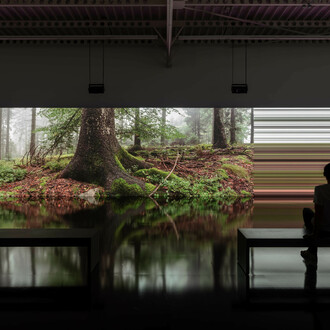
“Midnight zone,” the scientific term for the part of the ocean between 1,000 and 4,000 meters below the surface that is completely devoid of light, lends the exhibition its title and serves as its conceptual point of departure. The video installation of the same name shows rays of light transmitted by a turning Fresnel lens—once commonly used in lighthouses—as it is lowered into the jet-black water of the Pacific Sea. Swarms of various fish species are magically attracted to the light and circle the lens, revealing a wealth of lives in the process. It is a descent through which Charrière invites us to consider the rich biodiversity of places still largely unknown and the urgent need to protect them.
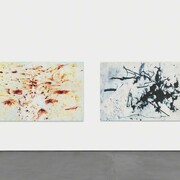
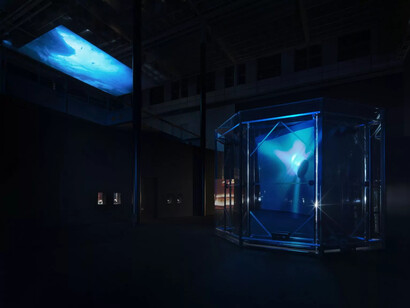
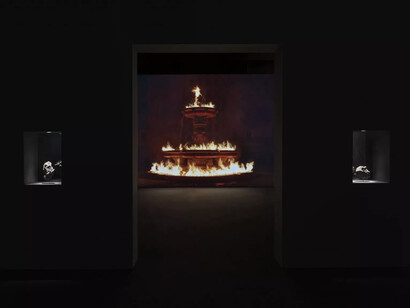
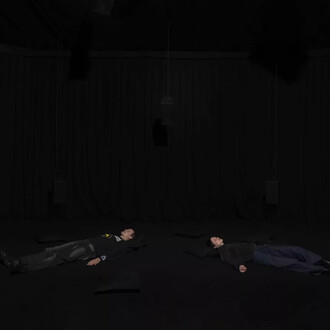
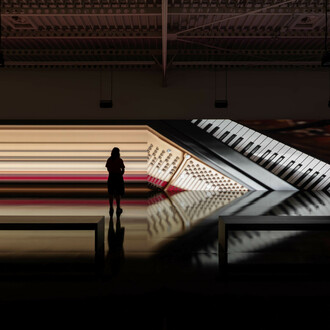
Julian Charrière: Midnight zone is the largest solo show to date by the internationally renowned artist. The exhibition, realized in cooperation with the Museum Tinguely in Basel, Switzerland, stages an immersive experience through a scenography developed especially for the Kunstmuseum Wolfsburg, in which image, sound, and body merge. The examination of the significance of water, oceans, and the biodiversity that occupies their depths can be encountered in a multisensory way, mediated through the artist’s transformative use of video, sound, sculpture, photography, and installation.
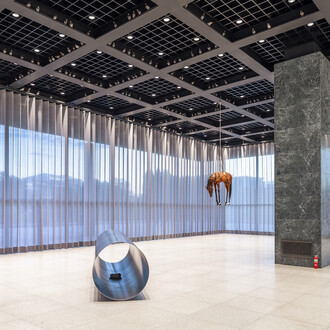
![Various artists, [ materialistin ], exhibition view. Courtesy of Hamburger Bahnhof](/attachments/fd8f4fd76b73be0a02d398535c29d017e1309b65/store/fill/330/330/3f54331fd7869a13166dfe67a9e91306c6e180b2e29b9fd308d958b87ad2/Various-artists-materialistin-exhibition-view-Courtesy-of-Hamburger-Bahnhof.jpg)