English
 Español
 Français
 Deutsch
 Italiano
 Português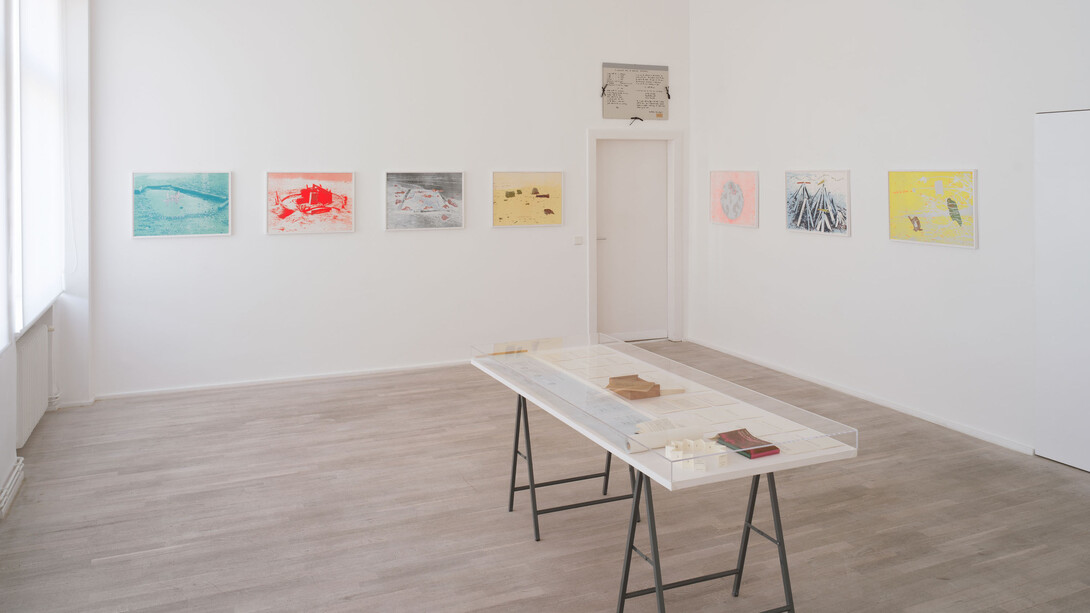
What the visitor knows is enough. Accepting ‘knowing what one knows’ but also ‘knowing what knowing is’ such is the spirit of permanent creation.
(Robert Filliou/Joachim Pfeufer in Le poipoidrome ambulant 00, 1975)
I thought of measuring things according to the criterion of the moment. For example, my height is of sixty-odd tomatoes, and I am 111,225 Copenhagen– Paris train trips old.
(Robert Filliou in an interview with Irmeline Lebeer-Hossmann, 1976)
“Robert Filliou is one of the greatest artists of the 20th century. Perhaps it takes the 21st century to realize this.” These clear words were written by the curator Anders Kreuger about the “playwright, poet, artist and thinker” Robert Filliou. In 2017, Kreuger curates an important retrospective at M HKA in Antwerp titled The secret of permanent creation, accompanied by an outstanding publication. It is the fourth retrospective devoted to Filliou since 1984 and the first after twelve years. Despite the fact that Filliou’s activities as well as his retrospectives after his death in 1987 date long time back, Kreuger notes that “it never felt as if we were working with historical material. Filliou’s thought and work speak directly to us today.” He emphasizes Filliou’s contemporary importance: “He is a voice for our time, speaking of the political and poetic economy, of curiosity and research as more than ‘a privilege for those who already know.’” Kreuger summarizes what makes Filliou so singular, “he is trying out new names for what he is doing and making. Instead of making art, he speaks of Permanent Creation, the Genial Republic of Research.” Kreuger calls this extraordinary capacity of Filliou “systematically free thinking.”
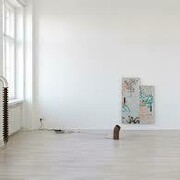
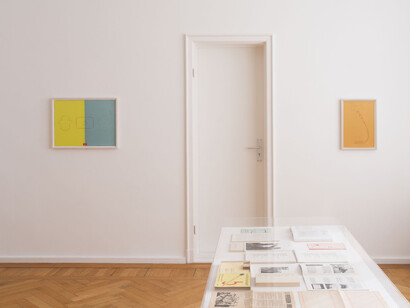
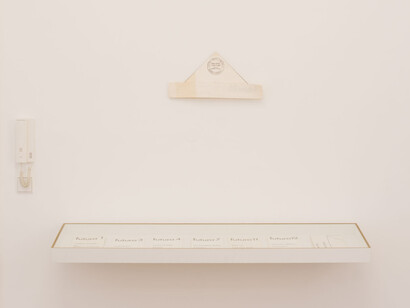
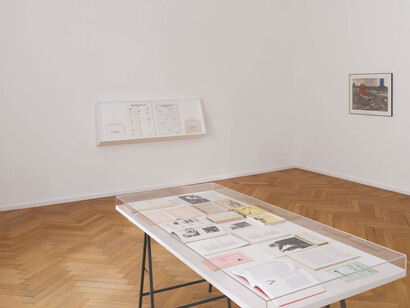
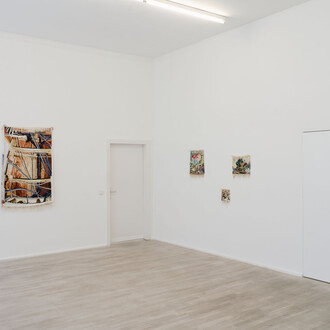
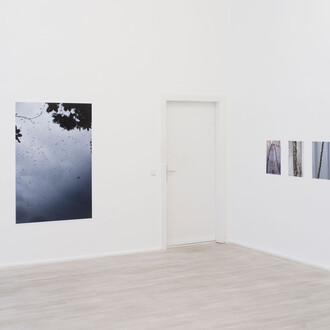
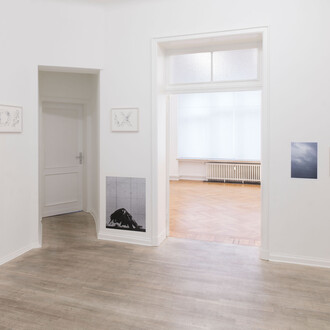
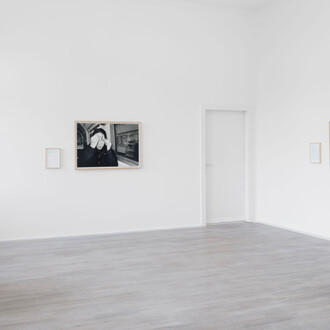
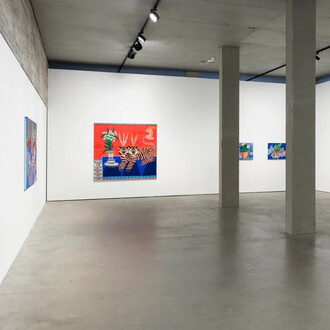
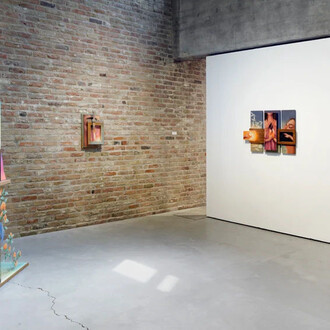
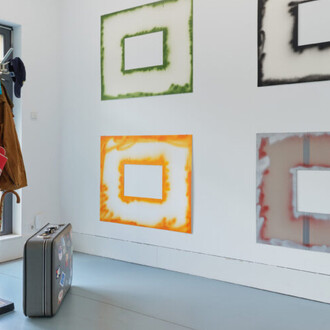
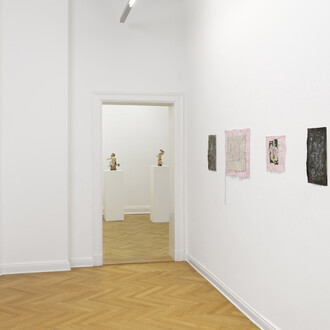
how to see is a new exhibition series at Galerie Barbara Wien. It opens on March 7, 2026, with works by Robert Filliou. We will present a selection of original works, prints, multiples, books, texts, and ephemera. In addition, we will screen his film Porta Filliou, produced in 1977 during an Arton’s residency in Calgary by Filliou together with Marcella Bienvenue and Clive Robertson. Porta Filliou functions as a video supplement to Filliou’s book Teaching and learning as performing arts (1970). Visitors will also be able to listen to the work Whispered history of art (1963). We aim to offer with this show an informative yet entertaining introduction to the art and innovative thinking of Filliou.
With the exhibition series how to see we want to provide contextual and documentary introductions to artists and their concepts. We will show material from the gallery, from the bookshop, and from the graphics cabinet. Both out-of-print and still available books and texts can be studied and acquired. There will also be posters and invitation cards. The title how to see can be understood in two ways: as a reflection on the viewer’s perception – how do we see the artist or his concepts today? – and as an invitation to engage with the artist’s own perception – how does the artist see the world?
As a brief introduction to the first part of how to see, we would like to point to a few key ideas of Filliou that can be explored within the exhibition: Filliou worked towards a new understanding of what art could be. He used chance and play to create sculptural platforms, challenging both the role of art and its status as a finished product. For Filliou, the artwork was not the end of a creative process, but its beginning. As a participant in the Fluxus movement in the early 1960s, Filliou began questioning the boundaries of art and revealing the conventions and structures of institutions, while simultaneously offering alternative models of artistic production and exchange. It is worth noting that his artistic career, as well as the career of Niki de St Phalle, Daniel Spoerri or Dieter Rot, began in the early 1960s with an exhibition at Galerie Køpcke in Copenhagen, founded by the German-Danish artist Arthur Køpcke. The influence of Køpcke on the concepts of the artists he showed in his gallery should be more in the focus of art historians.
One example of such a counter-model is the platform The poipoidrom conceived by Filliou together with the architect Joachim Pfeufer in 1963 as “a functional relationship between reflection, action and communication.” A central aspect of the work is the activation and encouragement of the public: “There is nothing to ‘learn’ to get with the actions and the reflections of the Poipoidrome. What the visitor knows is enough. Accepting ‘knowing what one knows’ but also ‘knowing what knowing is’ such is the spirit of permanent creation.” (Robert Filliou / Joachim Pfeufer, Le poipoidrome ambulant 00, 1975).
Poipoidrom is among the first works in which Filliou articulated his key concept of “Permanent Creation.” Filliou writes: “I got interested in Permanent Creation, and I use this word frequently rather than using the word art, because I practice art as creativness…” (Robert Filliou, The eternal network presents, 1984/85, p. 52) Another counter-model is his invention of Art’s birthday. Filliou, born on the 17th of January 1926, declared, on the 17th of January 1963 that art had been born exactly 1,000,000 years earlier when someone dropped a dry sponge into a pail of water. Ten years later, he celebrated art’s 1,000,010th birthday at the Neue Galerie in Aachen. Since then, the January 17 has been celebrated annually as Art’s birthday, a fixed date to reflect on the meaning of art and on the measurement of time.
The “Principle of Equivalence” is another of Filliou’s most challenging concepts. In 1968 following an invitation of Alfred Schmela, his gallerist in Cologne, he articulated what he considered a central element of “Permanent Creation”, the “Principle of Equivalence”: “Well made / Badly made / Not made.” As he explains: “In terms of Permanent Creation, I suggest that these possibilities are equivalent.” The principle reveals the depth of Filliou’s engagement with Zen Buddhism, which he encountered while working for the United Nations in South Korea between 1951 and 1954. This philosophy profoundly changed his life and formed his later artistic way of thinking.
(Text by Barbara Wien)