English
 Español
 Français
 Deutsch
 Italiano
 Português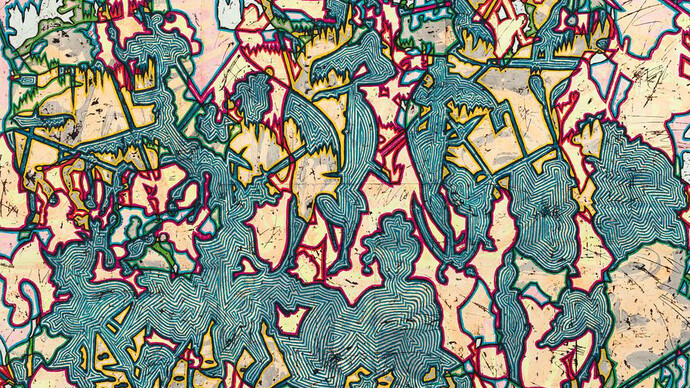
What happens after I catch them and listen to their stories?
I am safe. I am seen. I will be remembered.
And that may be all there is. For any of us, alive or dead.(Kay Bolden, “The art of catching ghosts”)
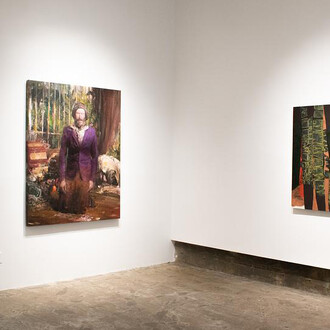
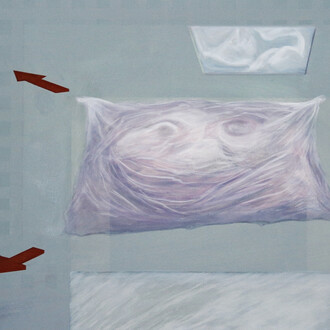
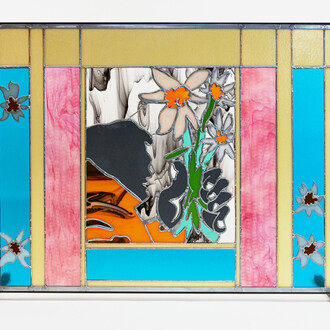
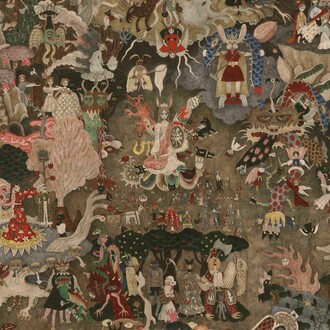
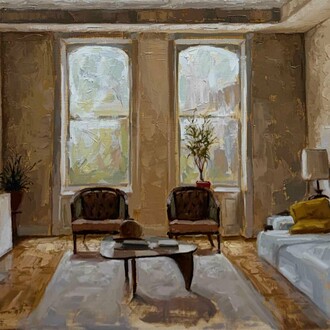
Slag&RX New York is pleased to present Chasing ghosts, Bo Joseph’s debut exhibition with the gallery. Through paintings, works on paper, and sculptural wall reliefs, the exhibition examines cultural objects across time and geography as vessels of history shaped by cycles of loss and reclamation.
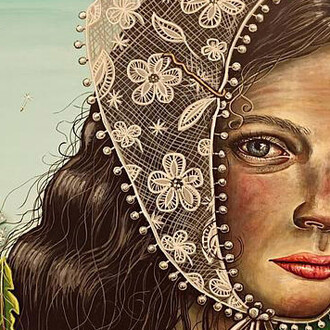
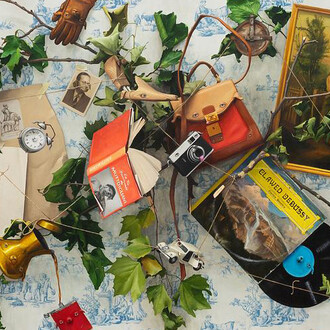
For Joseph, artmaking is akin to chasing a ghost - an effort to apprehend intangible presence, residual energy, and inherited meaning embedded in cultural icons. Drawing from auction catalogs, digital museum archives, colonial-era interiors, and his own photographs, Joseph abstracts and reconfigures imagery from African, European, Islamic, Native American, and other global traditions. Through cycles of tracing, layering, washing, scraping, and repainting, presence and absence are held in tension as images emerge, erode, and reconstitute themselves. Abstraction becomes a connective bridge between symbols and icons, allowing meaning and common ground to surface across cultures and generations.
These labor-intensive, process-based methods function as ritualized acts of cultural reckoning, engaging histories of loss, appropriation, and survival. They democratize cultural hierarchies by reducing everything, from a Dogon mask to a Roman sculpture, to the same linear treatment, creating an equivalency of units. By using water to literally wash away imagery, Joseph both simulates cultural entropy and excavates buried connections between seemingly disparate traditions.
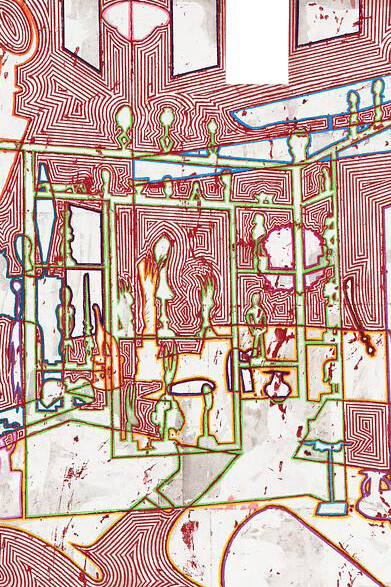
The exhibition includes Holding spaces: self-appointed custodians, Joseph’s large-scale work on paper first exhibited at the Brooklyn Museum. The work reinterprets photographs of modernist and colonial-era interiors displaying collections of tribal art and other cultural symbols, such as those associated with Helena Rubinstein, Peggy Guggenheim, and Wifredo Lam, unified through abstraction. Joseph transcribes and layers these interiors in oil pastel onto paper patchworks, then subjects them to scraping, coating, and rinsing before reworking the surface into an abstract field of free association.
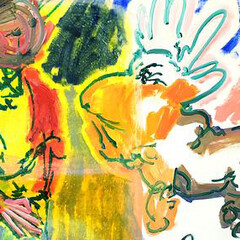
Joseph’s paintings on paper mounted on canvas extend this approach through intuitive layering of imagery drawn from his studio archives. Using water-soluble tempera, acrylic washes, and resist techniques, he builds images that are partially dissolved and transformed into negative impressions of their original forms. The washing away of imagery leaves traces and stains that erode the original image while simultaneously transforming it into a negative silhouette of what once was.
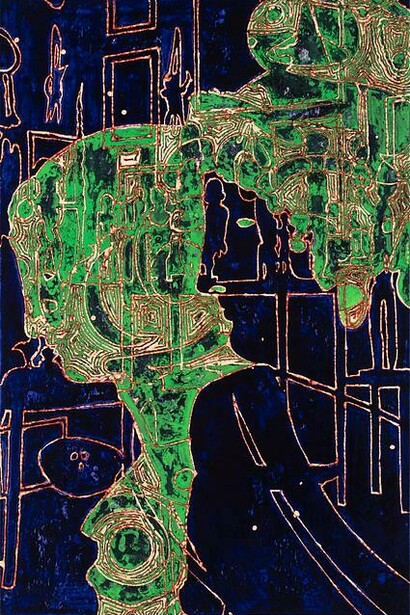
The two newest paintings in Chasing ghosts translate layered imagery drawn from Western historical sources into materially complex compositions that reflect on cultural displacement, complicity, and survival. Executed on a patchwork of cloth and finished in oil, the works employ processes of layering, erosion, and chance to evoke history as an unstable, sedimented field - one in which dominant regimes are symbolically absorbed and neutralized. Bright color and radiating line act as both visual counterpoint and connective force, offering an inviting surface through which deeper questions of power, memory, and cultural transformation quietly unfold.
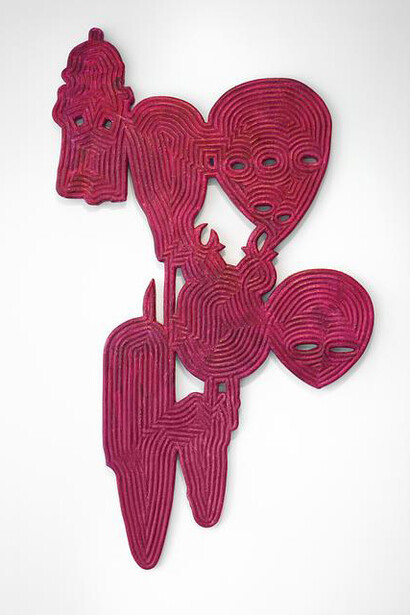
Completing the exhibition is Joseph’s ongoing series of wall reliefs, begun in 2020. Like the works on paper and canvas, these reliefs continue Joseph’s use of cultural composites, now taking the form of mask-like silhouettes. The sculptural works depict composite forms drawn from historical, religious, and ritual objects across global cultures and are fabricated from foam, fiberglass, resin, and finished with an iron oxide coating or with casein, a milk-protein medium with medieval origins. Several of these works explore Jungian archetypes such as Catching Ghosts: Personae. These works examine the concept of the social mask - the public face individuals present to the world as a mediator between inner self and external environment. By overlapping the imagery, their cultural specificity becomes universal, inviting viewers to encounter reflections of themselves within the silhouette.
Together, the works in Chasing ghosts create a space for reflection. By centering absence, erasure, and transformation, Joseph invites viewers to confront how cultural symbols persist, mutate, and demand remembrance through cycles of loss and reclamation. Like ghosts, they call to be seen and remembered.