English
 Español
 Français
 Deutsch
 Italiano
 Português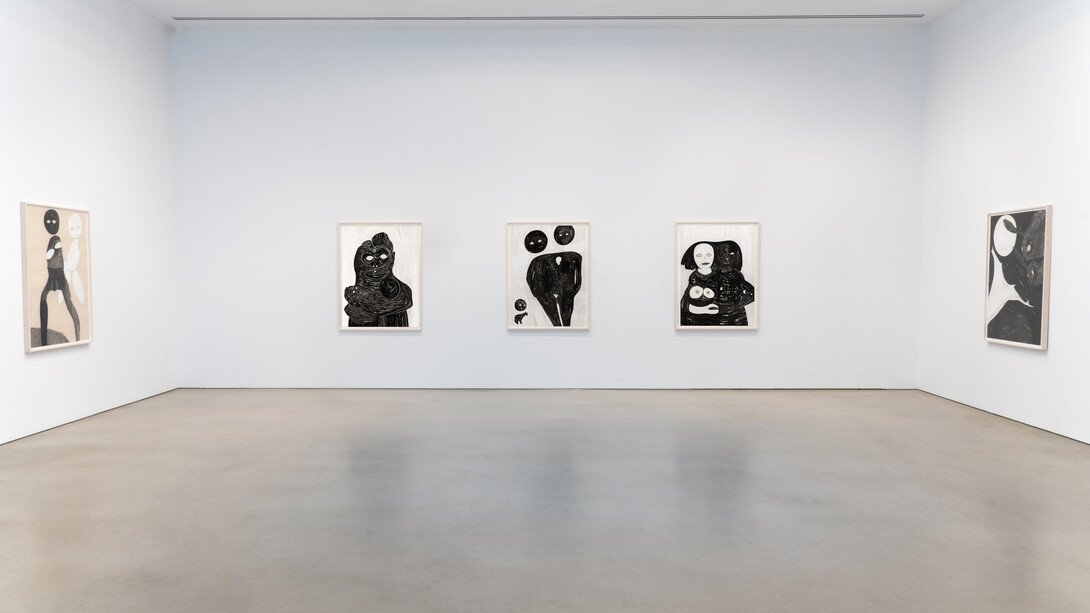
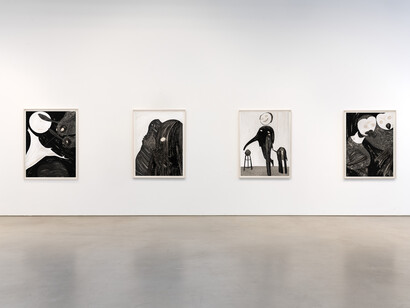
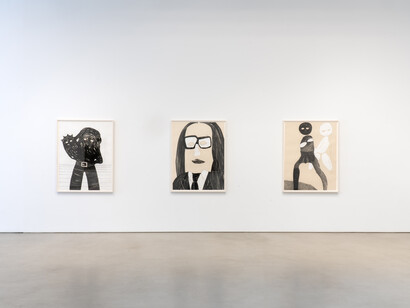
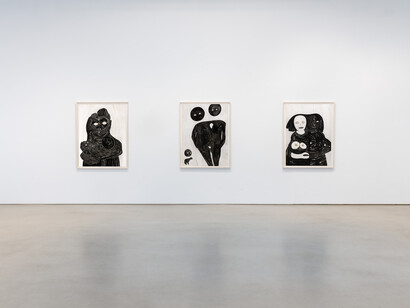
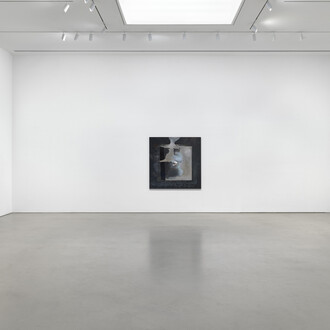
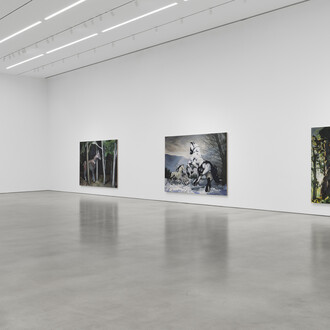
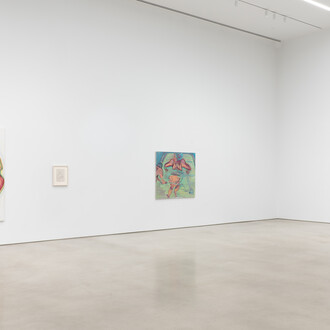
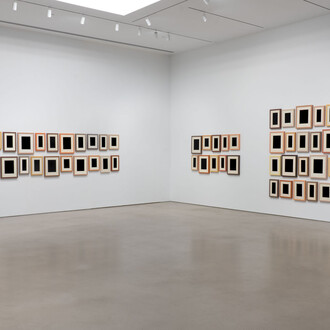
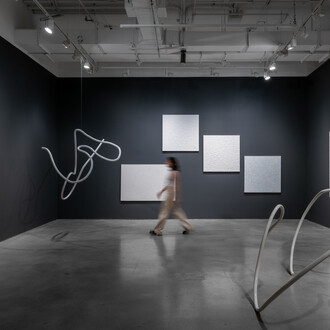
Petzel is pleased to present Need, an exhibition of new works on paper by Nicola Tyson, opening Thursday, March 12, and on view through April 25, 2026, at 520 West 25th Street, marking Tyson’s first drawing exhibition since her 2017 retrospective, Beyond the Trace, at The Drawing Room in London. Tyson’s new body of large-scale drawings represent a significant return to charcoal after several decades working predominantly in graphite, underscoring drawing as a central and sustained component of her practice, parallel to her work in painting.
Having not worked with charcoal since the late 1990s, Tyson now revisits the medium on an expanded scale, combining charcoal with black and white pastel and conté applied to sanded paper. The gritted surface, designed specifically for charcoal and pastels, can hold more powder than traditional paper, resulting in a fluid, more painterly feel, that registers the variety of rich textures and tones, from the smoky transparent black of charcoal to the cool, velvet opacity of pastel. Texture and touch are foregrounded, with marks that appear both deliberate and provisional.
Drawing for Tyson is an intuitive and immediate act, often executed without premeditation. It has long functioned as the foundation of her practice, a space where gut feeling precedes language and images unfold without fixed intention. Across this new body of work, Tyson moves with a playfulness and humor that belies a deeper exploration of relationships—between people, animals, the self, the medium, and the viewer, and how much we need each other. In Paired (2026), two black circular heads hover above their conjoined body rendered as a visceral expanse of layered blacks, floating within a chalky white ground and accompanied by a small, cat-like creature. In Motherload (2026), a figure rendered deliberately and aggressively in black pastel gazes intently at the viewer while cradling a fearful youngster beneath its disc-like breast, compressing tenderness and threat into a single charged image. Together, these works articulate a psychological terrain in which intimacy, vulnerability, dependency, and need circulate freely, subverting fixed roles and hierarchies.
Throughout Need, portraiture functions not as confession but as inquiry. Mining the genre of self portraiture, Tyson deploys a brutal, investigative, and intentionally gender-destabilizing humor. Frequently depicting animals and objects as psychological extensions of herself, and eschewing motherhood with its societal assumption of ultimate female fulfillment, these recurring motifs underscore the exhibition’s central concern: the complexity of human interdependence and the psychic negotiations that accompany it.
Tyson began her artistic practice in the 1980s as an avowed feminist, seeking to foreground underrepresented forms of female subjectivity as she developed her own distinctive figurative language, creating images that are unfettered yet precise, expansive and particular, and resistant to idealization. The reassessment of women artists marginalized throughout the 20th century forms an important contextual backdrop for Tyson’s practice. Encountering the work of Maria Lassnig in her late 30s proved revelatory for Tyson, who recognized a kindred approach in Lassnig’s use of the self as a site for investigating the possibilities and parameters of female agency and creative authority, whilst engaging concurrently with the contemporary arguments around the medium of painting itself and its continued cultural vitality and relevance.
Tyson’s drawings have been widely included in institutional exhibitions and publications. In addition to her 2017 Drawing Room survey in London, Tyson’s drawings have been presented at Petzel on multiple occasions, including a landmark solo exhibition of works on paper in 2016 that was accompanied by a catalogue. Early charcoal drawings by the artist are held in the collection of The Museum of Modern Art, New York, and were featured in A decade of collecting: recent acquisitions in contemporary drawing (1997).