English
 Español
 Français
 Deutsch
 Italiano
 Português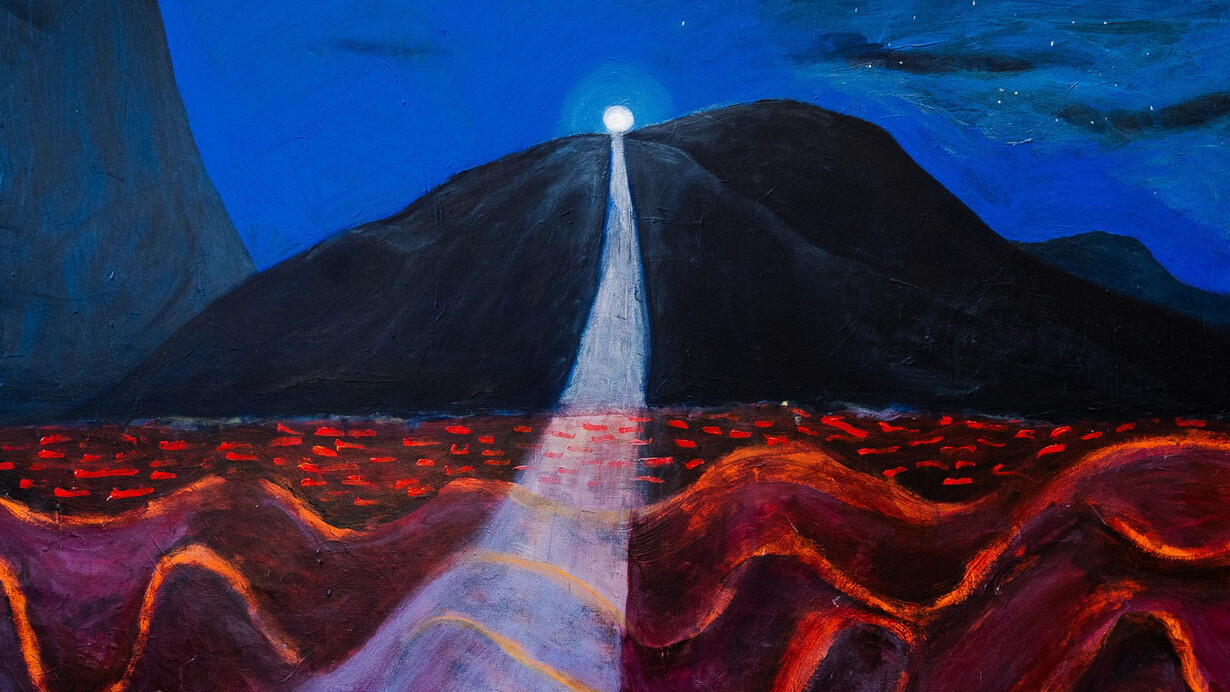
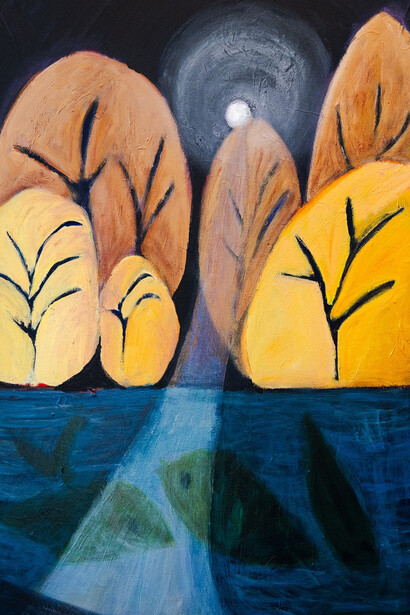
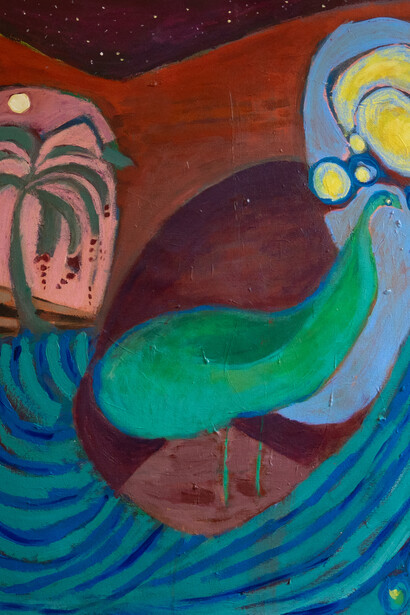
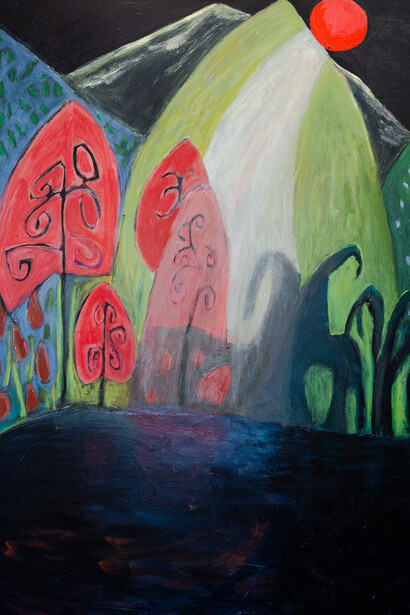
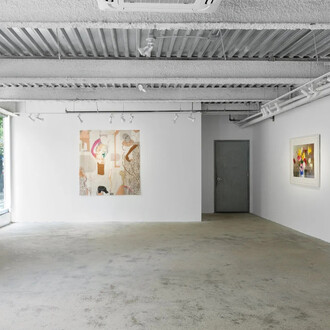
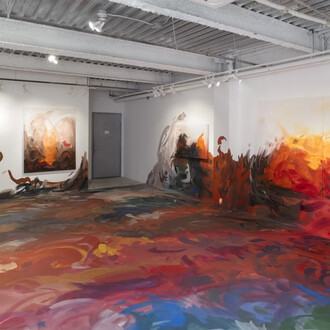
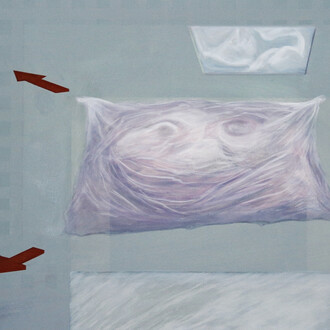
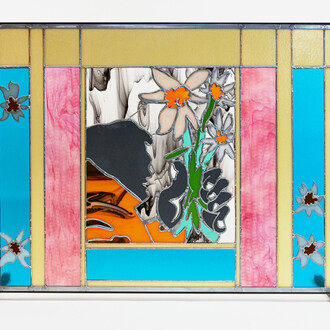
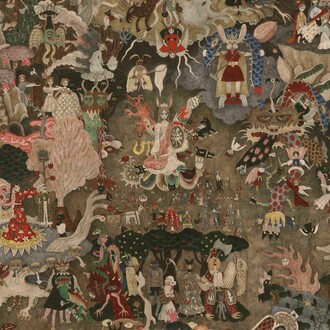
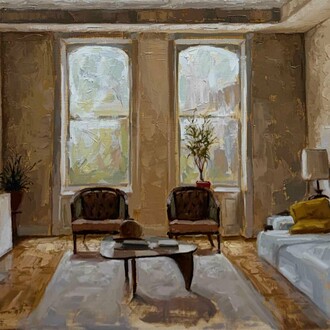
Kaliner is pleased to invite you to Jocelyn Fine’s second solo exhibition with the gallery And the moonbeams kiss the sea. The exhibition presents Fine’s new series of works that portray deeper connection between human beings and nature. Referring in her work to Spiritual Ecology and probing the places where the body ends, and nature begins, Fine’s layered landscapes are explorations of the universal human condition that binds us to one another and to the world that we inhabit together.
Fine draws on the philosophy of Spiritual Ecology, which affirms the deep connections among living beings and challenges the notion that humans exist apart from nature. Within this framework, which the artist finds comforting amid climate change unfolding around us, her landscapes move beyond physical place to become living presences imbued with spirit. Seeking to give form to these forces, the artist introduces subtle anthropomorphic elements—a forest that seems to carry emotion or a landscape in quiet dialogue with the moon—allowing natural and human forms to merge and echo one another. Through this language, her work invites viewers to recognize these emotional resonances within themselves and in the memories of their encounters with the natural world.
In Fine’s paintings, the boundary between body and landscape becomes fluid, shaped by gesture, movement, and a sense of underlying vitality. Forms appear animated by the same energies that move through both nature and human life, revealing unexpected affinities between the two. They portray the essence, or pulse, of the natural landscape and play with anthropomorphism, grafting natural elements and shapes onto human-like forms, trees emoting, landmasses pictured in conversation with the stars and moon, or tree bark that might be mistaken for human skin. By highlighting these parallels, the works suggest a shared pulse linking human experience with the rhythms of the natural world, opening space for renewed understanding, empathy, and respect.
The exhibition title is borrowed from Love’s philosophy by the 19th-century English Romantic poet Percy Bysshe Shelley, that describes interconnections in nature, where everything is meant to meet, mingle, and connect—an idea that deeply resonates with Fine’s practice. The poem suggests that the way nature relates to itself is a model for how love between humans is meant to work. Each pair in nature shows two separate things actively seeking connection rather than remaining isolated. Nature, in this vision, is not a static backdrop but a living network of relationships.
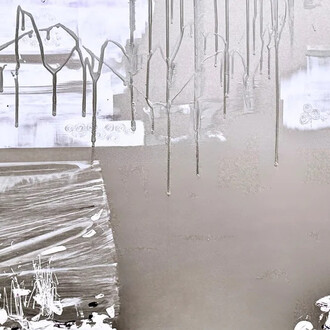
By personifying natural elements with verbs like “mingle,” “kiss,” and “clasp,” the poem turns physical processes into emotional gestures, which are noticeable in this series of works. It makes a river joining the sea feel like a lover’s embrace, or moonlight touching the ocean feel like a tender kiss. Similarly, in her paintings What lies beneath the skin and touching silence, Fine blurs the line between the natural world and human feeling: water, light, and landscape relationships mirror lovers’ path emotionally and physically. Like in Fine’s paintings, the poem points out that connection is built into the fabric of existence. The nature itself is always in relationship. Than how can we, as humans, refuse to enter into loving relationship with each other?