English
 Español
 Français
 Deutsch
 Italiano
 Português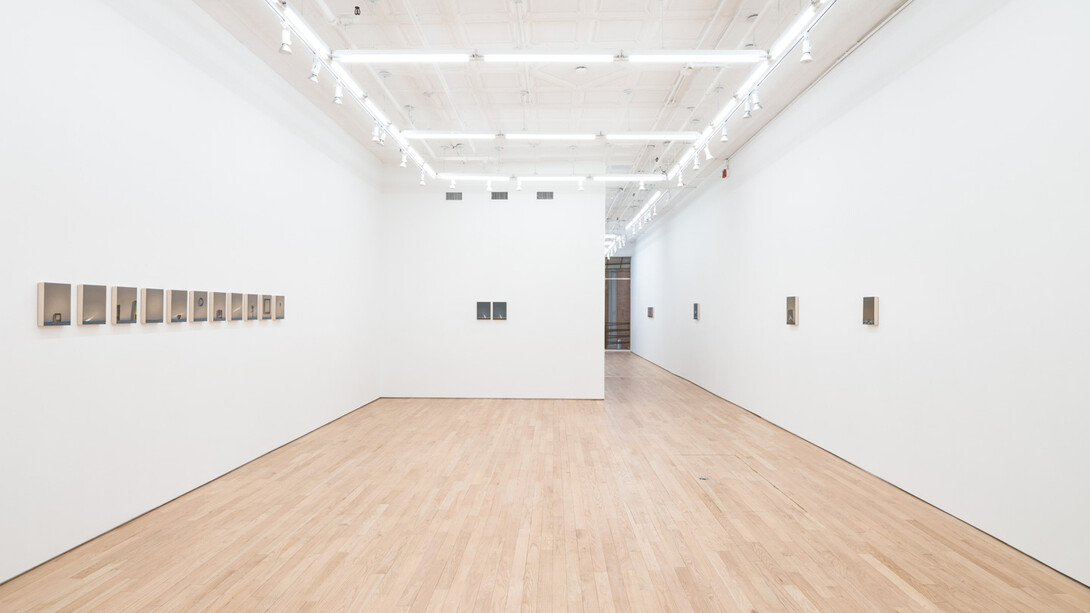
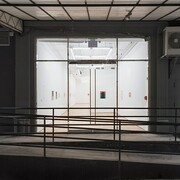
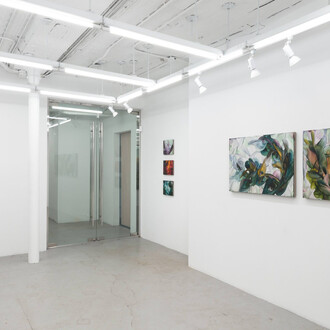
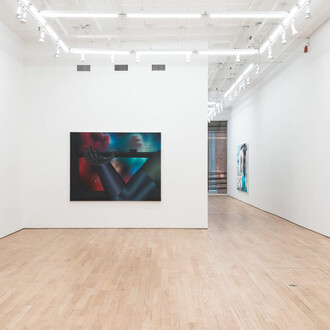
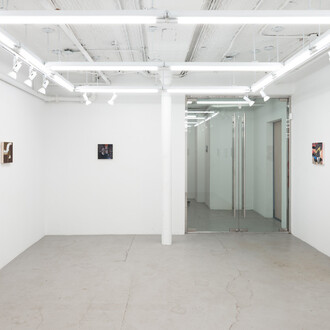
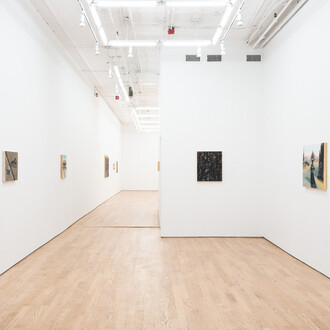
Nicelle Beauchene Gallery is pleased to announce The gifts, New York-based artist Quentin James McCaffrey’s second solo exhibition with the gallery.
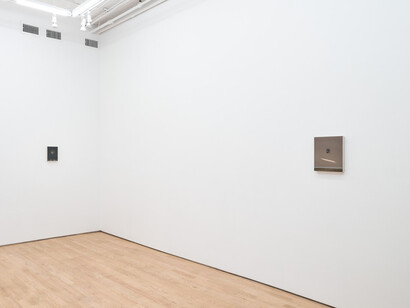
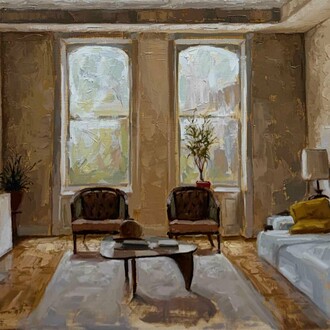
There’s tension in the value of a mirror. In equal measure, a mirror’s presentation of verisimilitude, its reflection of light and expansion of perceived space becomes wound up in more skeptical kinds of looking; desire muddles apparent truths. In The gifts, Quentin James McCaffrey continues to assess questions of vision, time, and genre through painting. Across small-scale, oil on canvas works, the artist configures an array of motifs—mirrors, rugs, bouquets, and miniature paintings—within immaculately constructed interiors. McCaffrey’s interiors shy away from purely domestic connotations, edging toward more psychological and spiritual registers. These views are seen—perhaps with a looking glass—from within and from without.
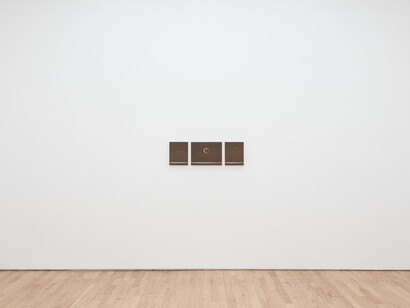
As a formal strategy, acts of doubling recur throughout The gifts. Diptychs and triptychs, hung a few inches apart, allow McCaffrey to toy with expanded metaphors of space and time while also encouraging a more deliberate study from the viewer. Two diptychs in the exhibition, each titled Sunbeam, nearly duplicate the same image: twin shards of light slice the horizon of a baseboard. Revealed in the artist’s doublings is less so his skill in exact replication than that which might exist between two very like things. Mere seconds or several years can result in time passed.
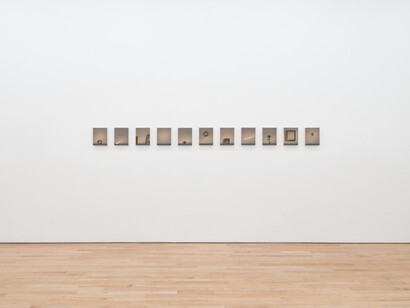
Such temporal contradictions call to mind Magritte’s Empire of light cycle, and for the viewer pulled between McCaffrey’s panels, Magritte’s toiles découpées (as in The eternally obvious, 1930). McCaffrey’s largest work to date and the exhibition’s eponymous painting comprises eleven individual panels spaced evenly across a long wall. With a metronomic quality, The gifts unfolds as a filmic index of time and its objects: the occupations of a metaphysical inheritance. Like its title suggests, The gifts for the artist are more than material.
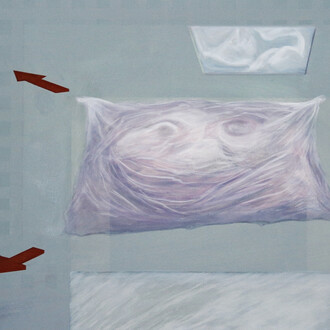
The mirrors throughout McCaffrey’s paintings are large and small, plane and convex, gilt and of a certain age. Some rest on the floor—such as in the central panel of the triptych Mirror with sunbeams—leaning against the wall to perfectly reflect its bare opposite. A room within a room. In other moments, like Mirror with view, McCaffrey pushes trompe l'oeil toward a reflected exterior, with windows and doorways that open to crepuscular skies over a land beyond. Here forms a kind of geo-spiritual presence the French poet Yves Bonnefoy might classify as l’arrière-pays, or the hinterlands: it’s a fraught horizon, an inaccessible place. Neither here nor there, the artist guides us towards an “elsewhere in the absolute.”