English
 Español
 Français
 Deutsch
 Italiano
 Português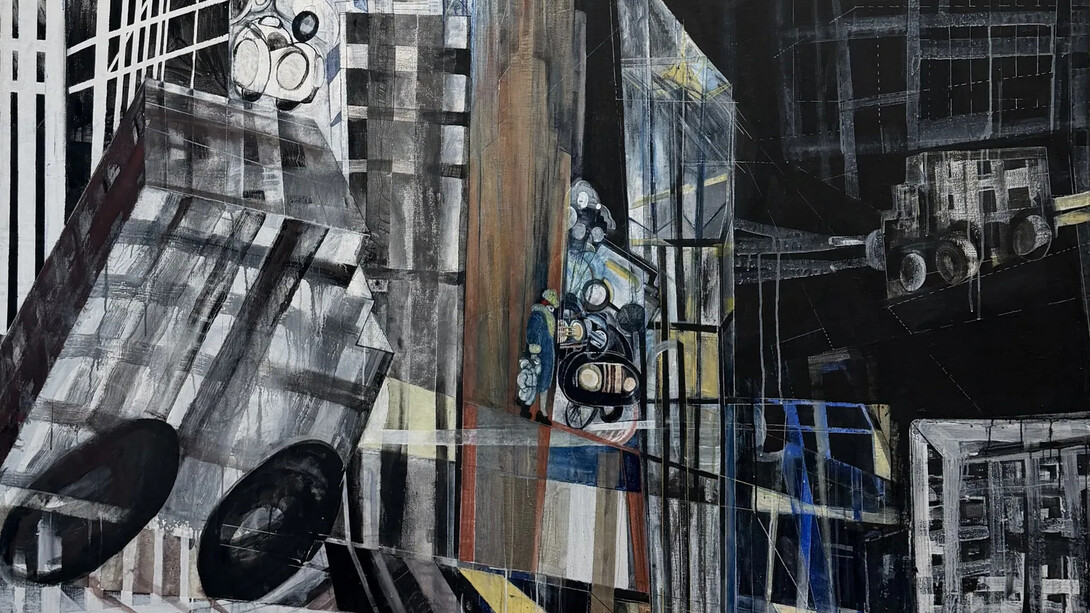
Nathalie Karg Gallery is pleased to present a major multi-level exhibition exploring the intersection of the human body, industrial landscapes, and the "living" machine. The presentation features a landmark solo survey of the late Cuban master Agustín Fernández on the ground floor, leading to a contemporary dialogue between Jenny Snider and Dorian Gaudin on the second floor.
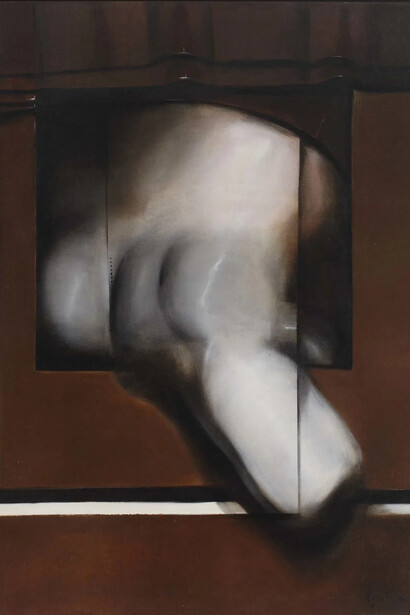
The exhibition begins with an expansive look at the visceral, precision-based world of Agustín Fernández (1928–2006). Spanning several decades, this survey tracks the artist’s evolution toward his iconic fusion of the organic and the industrial. His "armature" paintings—characterized by metallic sheens, buckles, and surgical straps—investigate the boundary between human form and mechanical hardware, establishing the psychological and formal foundation for the exhibition.
In the stairwell, a large-scale work on paper by Fernández serves as a conceptual bridge. By stripping the "armature" back to its essential gestural lines, this piece transitions the viewer from the dense materiality of the ground floor toward the open, rhythmic energy of the contemporary works above.
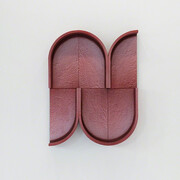
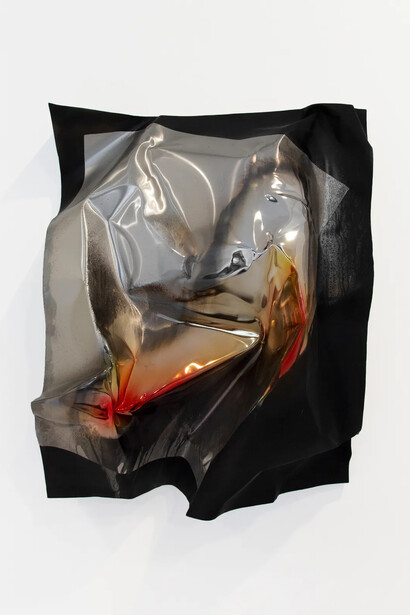
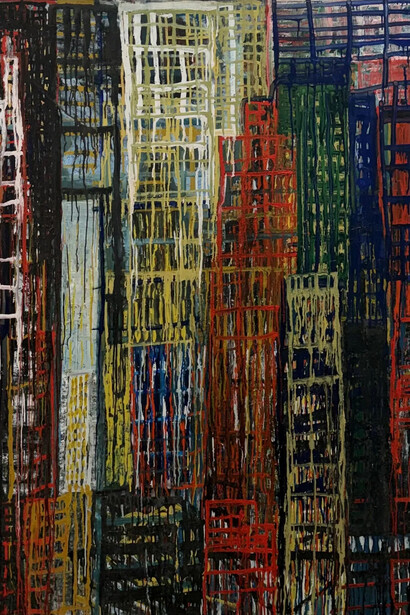
On the second floor, the exhibition shifts into a dynamic conversation between painter Jenny Snider and sculptor Dorian Gaudin. Snider’s "townscapes" introduce a lyrical, narrative shorthand; her depictions of urban environments capture the movement and memory of the city through a filmic lens, offering a humanized counterpoint to the rigid structures downstairs. Gaudin’s metal wall works translate the metallic motifs of Fernández into raw, three-dimensional physical gestures.
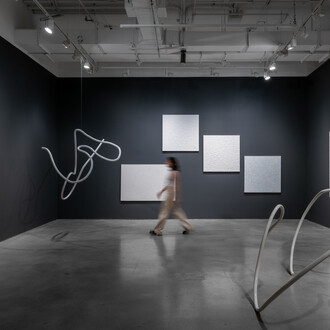
The floor is anchored by a kinetic sculpture by Gaudin. This moving work acts as the exhibition’s "engine," bringing industrial themes to life. Its unpredictable, stuttering choreography explores "organic mechanics," turning the gallery into a theater of movement that bridges the gap between Snider’s painted rhythms and the frozen metallic structures of Fernández.
By leading with the historical weight of Fernández and culminating in the literal motion of Gaudin’s sculpture, the exhibition functions as a vertical evolution, moving from the psychological armor of the past into the active machinery of the present.
![Kerstin Hans, Sommardyner [Summer dunes], exhibition view. Courtesy of Nathalie Karg Gallery](/attachments/13bcc0eaedcc4a99fb5c95fbfc961458e2fb6300/store/fill/330/330/c0097e0cfec49176da8b36de6e9e7d2a8bcdd07db7913bb1bf9c418f726b/Kerstin-Hans-Sommardyner-Summer-dunes-exhibition-view-Courtesy-of-Nathalie-Karg-Gallery.jpg)