English
 Español
 Français
 Deutsch
 Italiano
 Português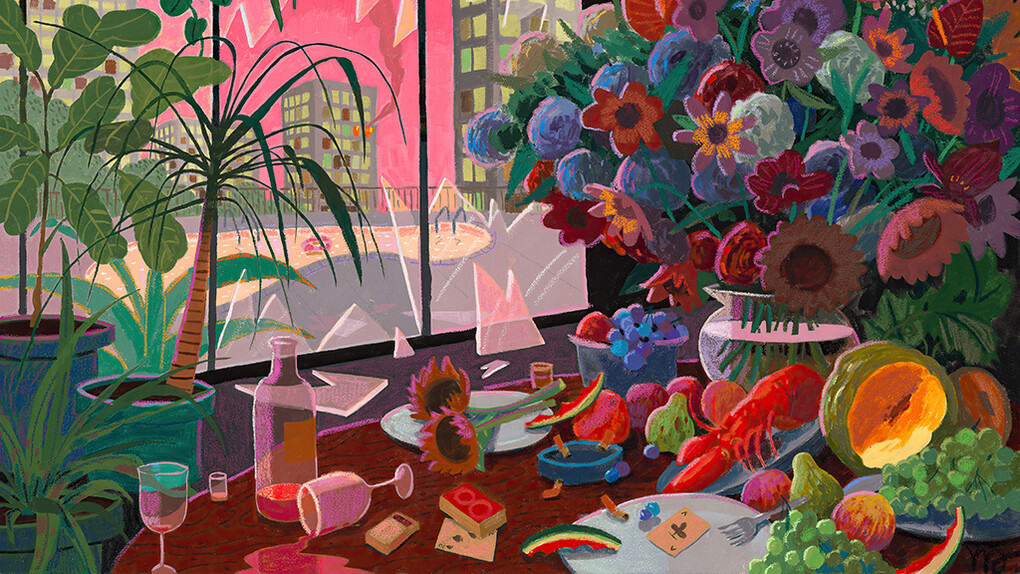
Hashimoto Contemporary is pleased to present After the dinner party, a solo exhibition by Los Angeles-based artist Nicholas Bono Kennedy. In his inaugural NYC solo exhibition, the artist continues his ongoing exploration of connection and community in the modern world.
In his previous solo exhibition, Dinner party while the world burns (2024), the artist grappled with the tension between making vibrant, joyful paintings while living in a world that can often feel heavy and overwhelming. In After the dinner party, the artist shifts from the intensity of the gathering itself to the quieter emotional space that follows.
During his research for this exhibition, Kennedy discovered the work of German physiologist Ewald Hering, a 19th-century theorist who developed Opponent Process Theory, a proposal that we perceive color in opposing pairs, with one activating as the other recedes. In the 20th century, psychologist Richard Solomon expanded the theory to explain emotional responses, suggesting that intense feelings are often followed by their opposite as the brain works to restore balance.
For Kennedy, this intersection between color and emotion feels deeply personal. The quiet sadness that can follow a joyful gathering, a strange combination of gratitude paired with hollowness. It’s these memories that informed the heart of this latest body of work.
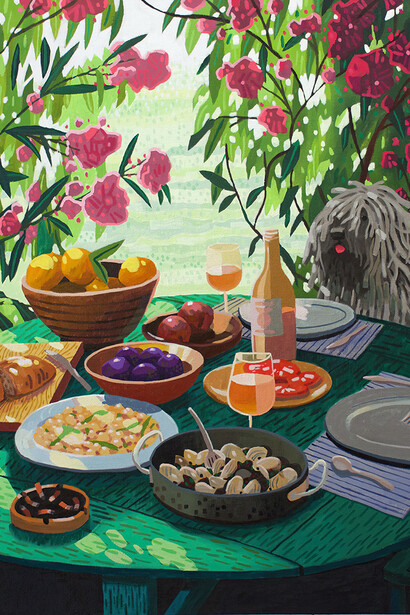
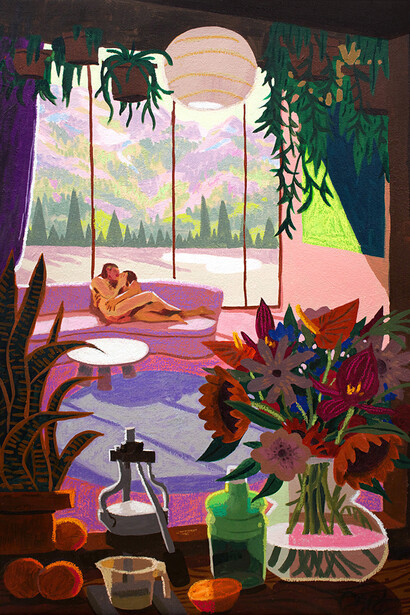
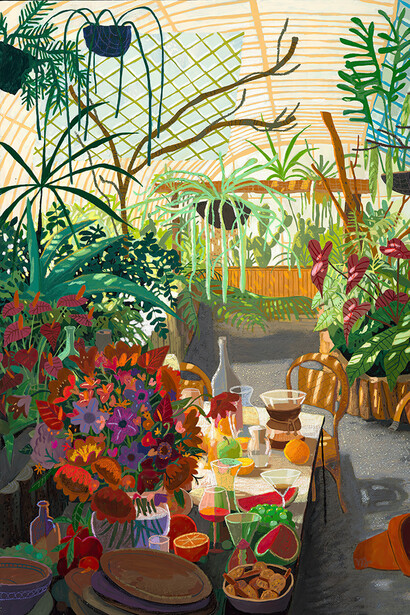
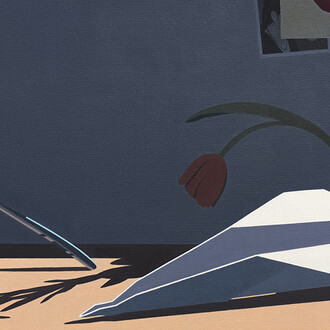
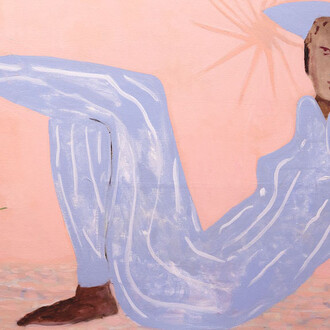
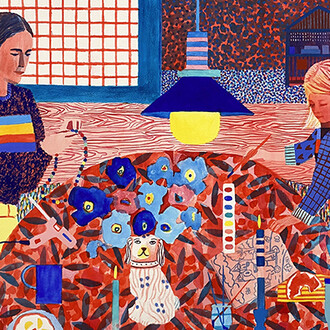
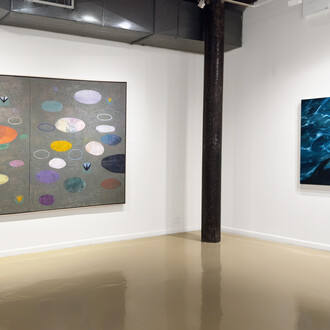
Divided into two dominant complementary color groups, red and green, the works are installed in two separate rooms. Moving from one space to the other heightens the visual experience, echoing the emotional shift. The works are filled with intimate details: burned-down candles, untouched fruit, fallen glasses, oversized bouquets with no one left to admire them. There is warmth in the paintings, but also a stillness which reflects the complexity of connection. Kennedy invites viewers to linger in that in between space: the moment after laughter fades, when memory and emotion begin to overlap, creating a deeply relatable meditation on community, perception, and the subtle rhythms of being human.