English
 Español
 Français
 Deutsch
 Italiano
 Português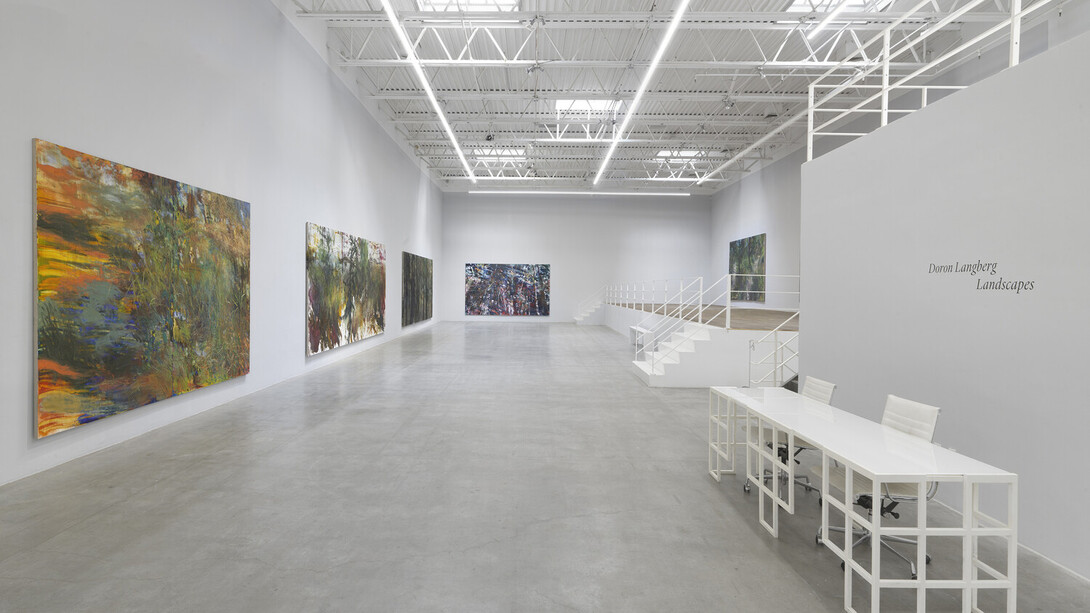
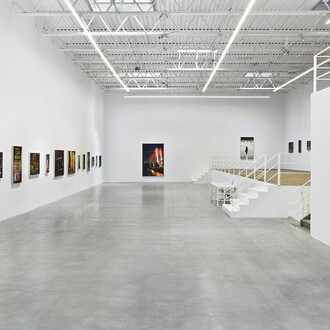
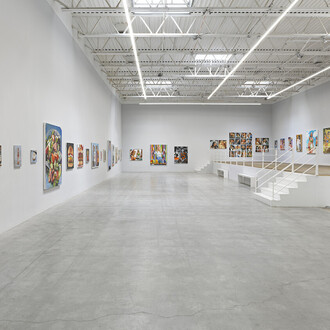
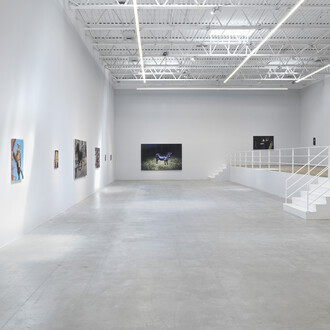
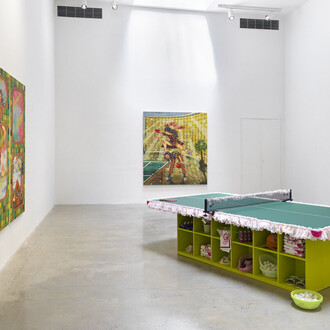
This body of work made over the last two years depicts the places that shaped me: Yokneam, where I grew up in Israel; Drohobych, the town in Ukraine where my dad escaped from after surviving the Holocaust; and Fire Island, a microcosm of my life in New York. During this time, the unrelenting violence in Gaza disintegrated ideas I had about my home and history. What does home mean when it perpetrates atrocities? How can we inflict such pain onto others when we experienced so much pain ourselves? Struggling to give form to these questions with my language of portraiture I found guidance in Van Gogh and Munch, who saw space in landscape to express their darkest experiences. I painted these spaces through the animating lens of how they were used, from dancing to acts of brutality, to understand how foundational parts of myself have changed.
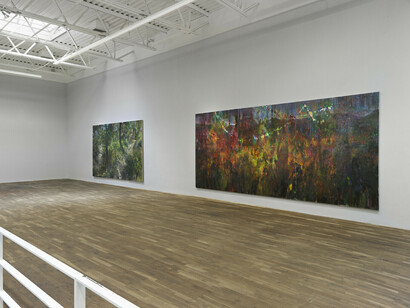
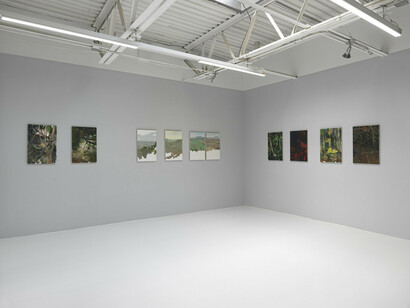
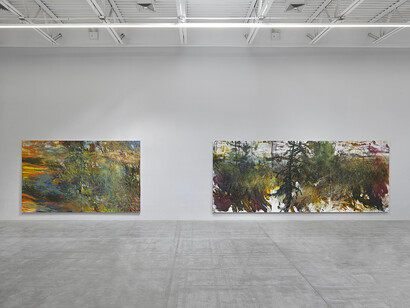
As Israel descended into a path of killing and destruction, I felt a growing rupture from my home. To approach this in painting I depicted a patch of shrubs outside my parents’ house with an agitated palette and surface. Though overwhelming, my feelings were not enough, I needed distance from my own subjectivity and the emotional ties that clouded my judgment. Thinking literally, while visiting my family during the war, I made a series of small paintings overlooking the sprawl of Emek Yizrael, focusing on the furthest part of the landscape. The resulting paintings revealed an unsettling peacefulness. Yokneam felt like that as well—too beautiful with its fields of wildflowers, too silent about all that is happening just a few hours’ drive away. Back at studio working on the HaEmek painting, I thought of artist Moshe Gershuni, whose symbols and gestures laid bare contradictions within Jewish Israeli identity and the distortions of the occupation. I borrowed his language of stains as a form of consciousness coursing through the landscape, to make visible the violence that enables my presence on this land.
Not knowing what my Jewishness meant anymore, in late 2024 I went to paint in Bronica Forest outside of Drohobych, where thousands of Jews were murdered during the Holocaust, including some of my family and their community. I’m not sure what I expected to find there, but standing in the forest, making three paintings a day in complete silence, it became apparent that unlike the cacophony of voices in Israel or New York, no one was talking back to me. Bearing witness to the incalculable loss and cruelty that took place there through these small paintings, I thought of Gaza. The large works I made when I returned to New York—one describing a shadowy expanse of tree trunks, and the other, illuminated treetops at night seen from the perspective of falling materialized both the life and death of my family in the forest they surely loved. Making these works allowed me to mourn them, grounding my grief as a personal experience rather than a means to justify endless cycles of bloodshed. Untangled from ideology, my history became a source of moral clarity.
In New York, everyday life felt changed, as everyone I knew carried the pain of the present moment. To paint this shift, I returned to the Meat Rack, a wooded cruising ground in Fire Island where I found freedom and abandon, describing it with layered materiality, weighed down by an overload of detail. In this new reality coming together took on a desperation—a break from thinking of the war and a way to process it. Seeing the war through the eyes of my close friends was painful but allowed for a worldview outside of the ideological vortex in Israel, with its intractable logic. It was like a gasp of air. Thinking of the connection between community and the possibility for change, I made a large painting of the Meat Rack rave, where in the summer after the war began, I felt a heaviness lift for the first time. Depicting figures melding into a field of color and each other was a way to paint the dissolution of my own confines through the subjectivity of the people around me.
Making these paintings gave me the structure to contend with what is at the core of all of this—that no matter the circumstances, Palestinians deserve justice and liberation. By choosing to look away from unspeakable horrors under the auspice of protecting Jewish life, we destroy ourselves and countless others. Painting is my way to keep looking.
(Text by Doron Langberg, New York City, 2026)