English
 Español
 Français
 Deutsch
 Italiano
 Português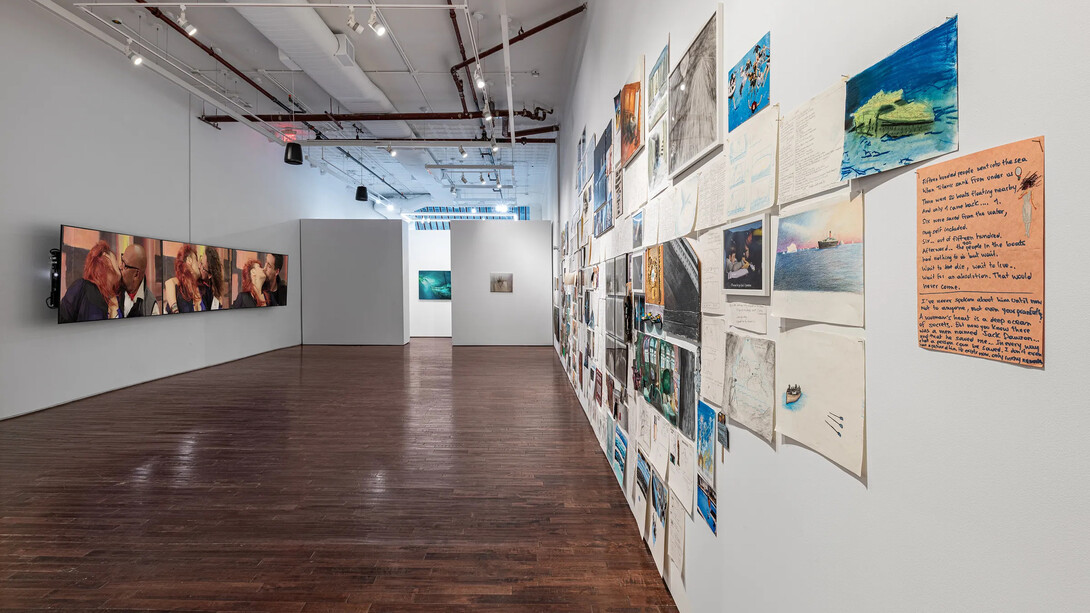
Cristin Tierney Gallery is pleased to present Titanic, a deep emotion, a solo exhibition, installation, and film by Claudia Bitrán. This marks the highly anticipated New York City premiere of her remake of Titanic (1997) and the artist's second solo show with the gallery. The exhibition opens Friday, February 20th, and will be on view through March 28th. The artist will be present at the opening reception.
For more than a decade, Claudia Bitrán has been remaking James Cameron's Titanic through an extensive collaborative process that spans film, painting, sculpture, drawing, animation, performance, and scenography. Using lo-fi materials, deliberately visible methods of production, DIY processes, and spontaneous casting, Bitrán meticulously reconstructs the original film scene-by-scene at an intimate scale. The project has involved more than 1,400 participants across the United States, Chile, and Mexico, who have contributed as actors, crew members, and collaborators, allowing the work to take shape and evolve through collective labor and improvisation.
Bitrán both plays the leading role of Rose and acts as the Director James Cameron throughout the film, as the remaining cast shifts among a multitude of friends, volunteers, family members, and people recruited in public spaces. The role of Jack is played by 40 different actors (representing a range of gender expressions, ethnicities, and ages). The process treats the blockbuster as raw material-something to be disassembled and reconfigured through innovation, repetition, memory, play, and communal participation. Rather than striving for cinematic realism and illusion, Titanic, a deep emotion embraces its artifice and foregrounds its process. Cardboard props, painted backdrops, and makeshift environments remain exposed, while characters and scenes transition seamlessly between animation and live action.
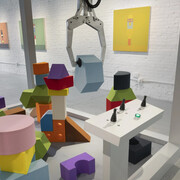
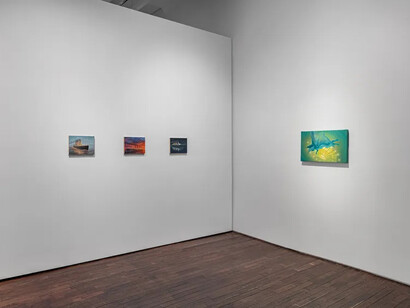
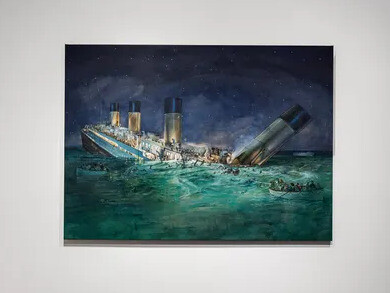
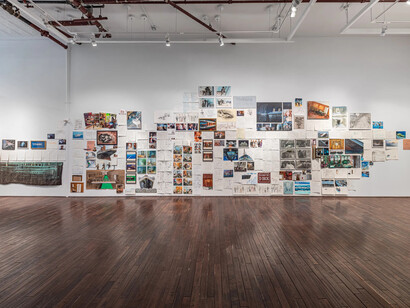
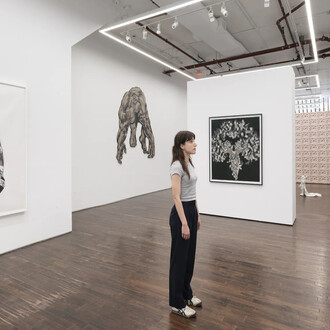
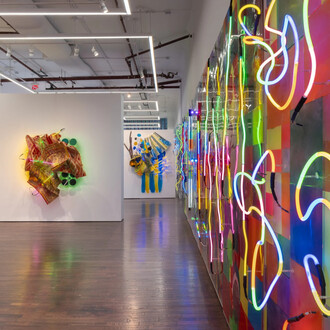
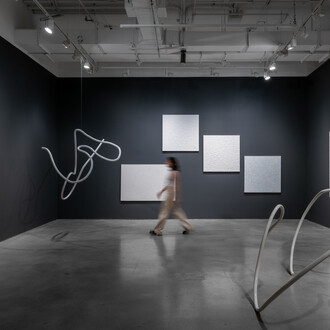
For its New York City premiere, Titanic, a deep emotion is presented as a three-channel film installation. Paintings, sculptural props, drawn storyboards, notes, painted scene stills, and material remnants extend the work into the gallery space, framing the screening and emphasizing the film's construction. Its kitsch and self-crafted components serve as commentary on the excess behind pop culture phenomena and are a timely metaphor for the perils of human hubris.