English
 Español
 Français
 Deutsch
 Italiano
 Português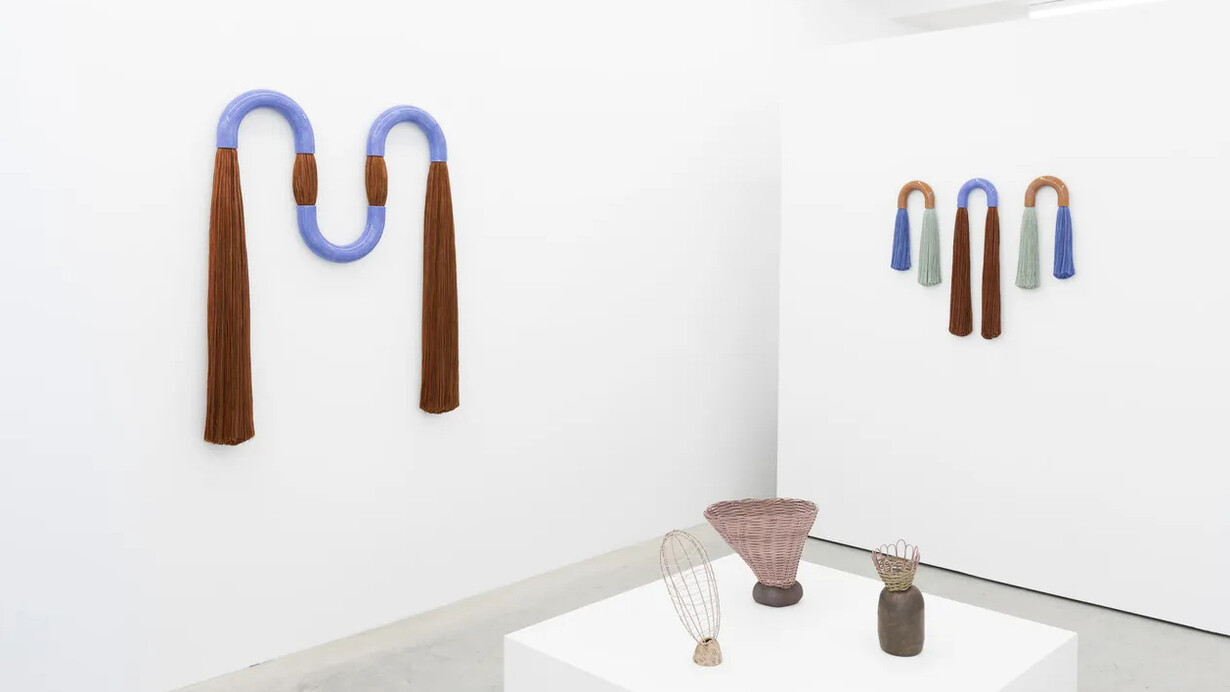
In her inaugural gallery solo show, Over and over, again and again, Eliza Bentz explores the haptic act of weaving as ritual: a deliberate, embodied performance that accumulates into the structure of the grid.
The exhibition emerges from an all consuming urge to make, bringing together vessels, portals, and curves created over several years. Each piece is connected not only through shared material, form, and palette, but through a collective commitment to the grid as both structure and sensibility.
Drawing on thousands of years of textile history, Bentz elicits a familiarity with early craft. Combining ceramic and textile traditions, she transforms utilitarian forms into whimsical structures that question function and purpose.
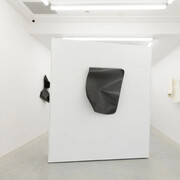
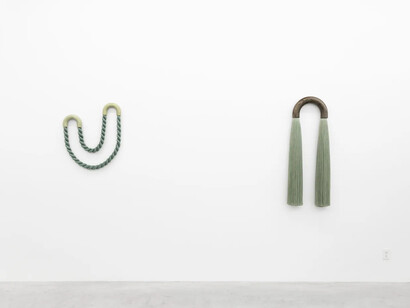
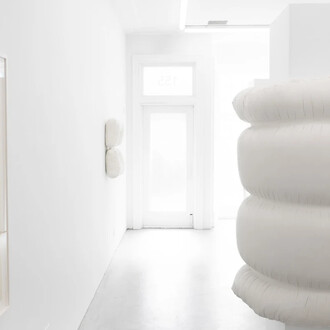
Installed across a sequence of distinct yet interconnected “rooms,” the exhibition unfolds as a spatial progression from structured form toward increasingly relaxed, organic expression. The first space centers on the porcelain curve, soft yet vibrant in tone. Fibers swell from each end, connecting coiled extensions that hold tension and preserve the logic of the grid. Alongside these works, vessel sculptures rest on the ground in more subdued tones, introducing a shift in atmosphere. Their placement and palette anchor the room with forms that feel bodily, tactile, and quietly alive.
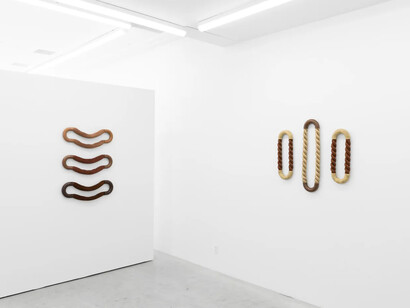
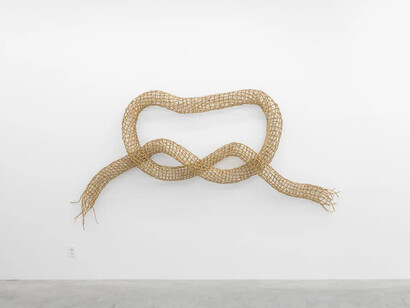
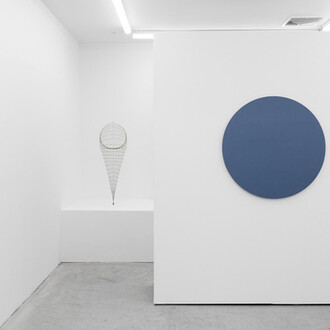
Moving deeper into the gallery, the ceramic curves become more neutral, their surfaces evoking the warmth of skin and the softness of hair. Larger organic structures emerge, constructed from paper and reed, their gestures more fluid and simplified. Changes in glaze and surface treatment signal a tonal evolution, as texture and material subtly recalibrate the dialogue between structure and growth.
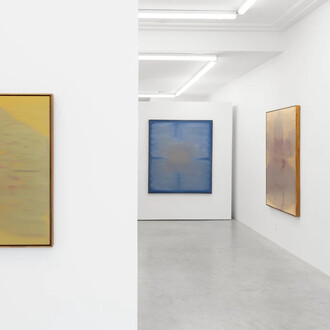
In the final space, portal weavings further abstract the vessels encountered at the outset of the exhibition. Simplified organic forms distill the exhibition’s trajectory, transforming earlier motifs of containment into thresholds. What begins as grounded, utilitarian sculpture gradually opens into architectural passageways that suggest movement rather than holding. Across the rooms, the grid persists, but it softens and loosens, ultimately yielding to an organic continuum that binds fiber, clay, and space into a unified whole.