English
 Español
 Français
 Deutsch
 Italiano
 Português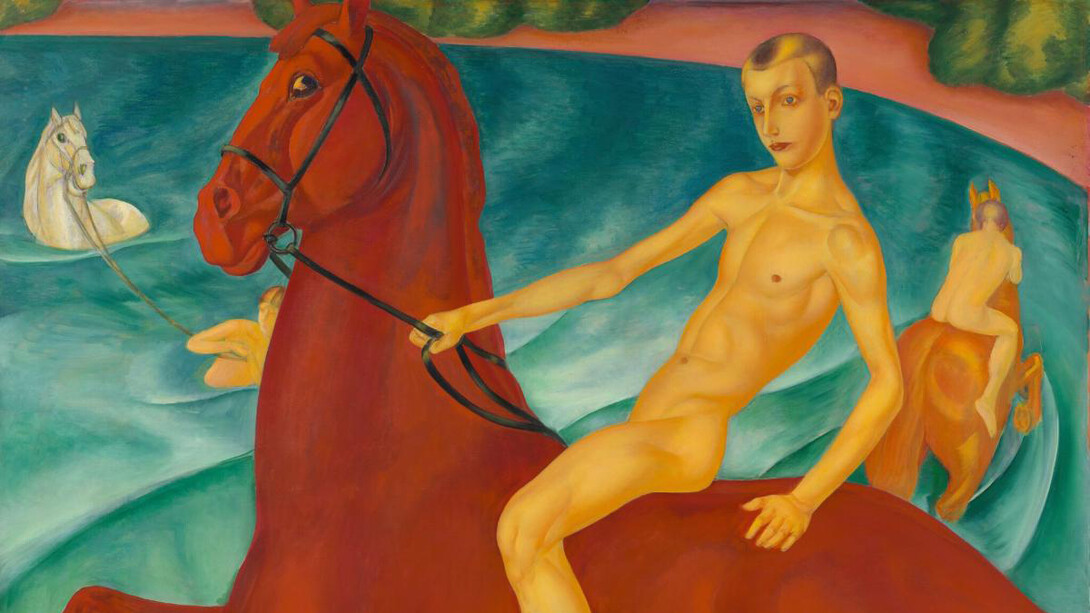
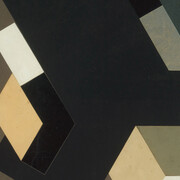
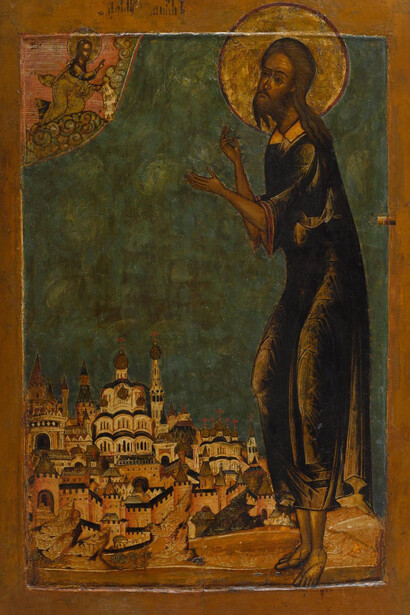
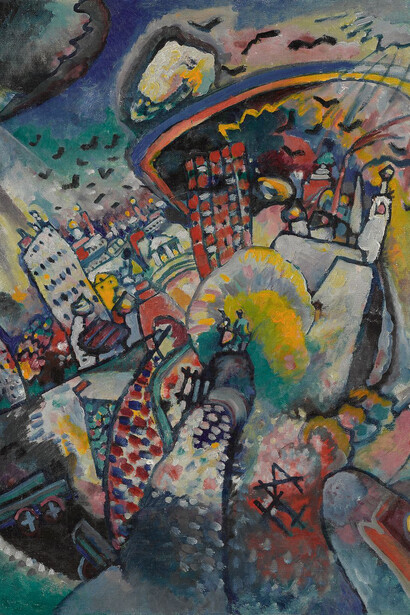
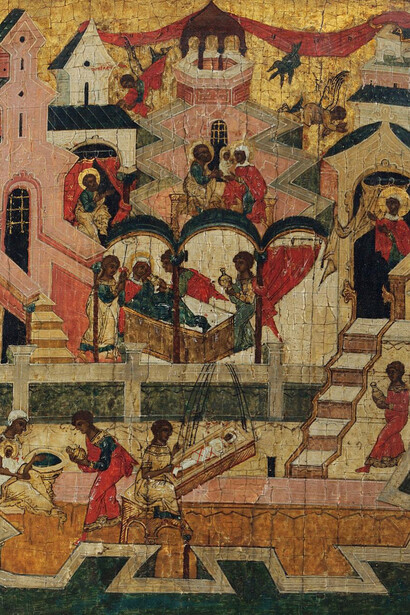
Russian medieval and folk art was one of the main sources of inspiration for Russian avant-garde artists of the early XX century. K.S. Petrov-Vodkin, N.S. Goncharova, P.N. Filonov, V.V. Kandinsky, M.Z. Shagal, V.E. Tatlin and K.S. Malevich kept turning to Christian motives in their artwork.
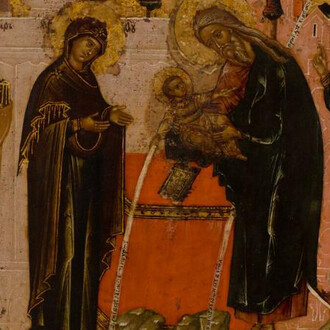
Many avant-gardists received primary art education or worked in icon-making workshops performing church orders. Thus, they were well aware of all the features typical for modern church painting as well as Russian medieval art newly discovered in the second half of the XIX century – early XX century. It was possible to see old icons in the Tretyakov Gallery, Rumyantsev Museum as well as in private collections of I.S. Ostroukhov, P.I. Kharitonenko, P.P Ryabushinsky, A.V. Morozov and P.I Shchukin.
The artists and researchers of that epoch scientifically contemplated icon-making traditions as a source of inspiration. A.B. Grishchenko, particularly, is the author of Russian Icon as Art of Painting published in 1917. He highlighted a special significance of artistic features of Russian medieval art for contemporary painting: “We can use it [icon] for educating, for enhancing the feeling of composition and color by courage and experience; we may just enjoy it as the supreme achievement of art”.
However, the masters of the early XX century were building their own unique artistic worlds deriving inspiration from the bright coloring and pure forms.