English
 Español
 Français
 Deutsch
 Italiano
 Português
Hungary has one of Europe’s oldest and most fascinating wine cultures, shaped by centuries of tradition, regional diversity, and unique grape varieties. Among its most iconic wines stands Egri Bikavér, a bold and characterful red blend whose name translates dramatically to “Bull’s Blood of Eger.” Known for its rich history, layered flavors, and versatility at the table, Egri Bikavér represents not only a specific wine style but also a symbol of Hungarian resilience and craftsmanship. This article explores the origins, production, flavor profile, and modern evolution of Egri Bikavér, along with detailed guidance on the best foods to pair with this distinctive wine.
The origins and history of Egri Bikavér
Egri Bikavér comes from the historic wine region of Eger, located in northern Hungary. The region itself has been producing wine since at least the Middle Ages, benefiting from volcanic soils, rolling hills, and a climate that balances warm summers with cooler influences ideal for cultivating structured red wines.
The dramatic name “Bull’s Blood” is tied to a popular legend from the 16th century. During the Ottoman siege of Eger in 1552, Hungarian soldiers were said to have drunk local red wine to strengthen their resolve. Observing their fierce resistance, Turkish forces supposedly believed the soldiers were drinking bull’s blood to gain supernatural strength. While the story is more myth than documented fact, it has become an enduring part of the wine’s identity and marketing appeal.
Historically, Egri Bikavér was not always the refined blend it is today. During the communist era, mass production lowered quality standards, but since the 1990s, Hungarian winemakers have focused on quality, terroir expression, and modern techniques. Look for wines with official quality classifications like 'Classicus,' 'Superior,' or 'Grand Superior' to ensure authenticity and quality.
What makes Egri Bikavér unique?
Unlike single-varietal wines, Egri Bikavér is defined as a blend. Regulations require it to include multiple grape varieties, ensuring complexity and balance. The most important grape in the blend is typically Kékfrankos (known elsewhere as Blaufränkisch), which provides structure, acidity, and spicy character. Other commonly used grapes include Kadarka, Cabernet Sauvignon, Merlot, Pinot Noir, and sometimes Syrah or Zweigelt.
To be labelled as Egri Bikavér, the wine must meet specific requirements:
It must be made in the Eger wine region.
It must contain at least three grape varieties.
No single grape can dominate excessively; the blend should be harmonious.
The wine must meet certain aging and quality standards depending on its classification.
There are generally three quality tiers:
Classicus: the entry-level category, often fresh, fruit-forward, and approachable.
Superior: a more structured and complex version, usually aged longer and showing greater depth.
Grand Superior: the highest category, produced from carefully selected vineyards with longer maturation, offering intense concentration and aging potential.
This blending tradition allows winemakers to balance fruit, acidity, tannin, and spice, creating a wine that is both expressive and versatile.
Flavor profile and characteristics
Egri Bikavér typically offers a medium- to full-bodied profile with lively acidity and layered aromas. While individual bottles vary depending on the producer and blend composition, common tasting notes include:
Red and dark berries such as cherry, blackberry, and plum.
Spicy notes like black pepper, clove, and paprika.
Earthy undertones.
Subtle oak influence in higher-quality examples, including vanilla or tobacco.
One defining feature is balance. Unlike heavier New World red blends that emphasize high alcohol or jammy fruit, Egri Bikavér often showcases elegance and freshness alongside its richness. The volcanic soils of Eger contribute mineral nuances, while the climate helps preserve acidity, making the wine lively rather than overly dense.
Its balanced structure invites foodies to feel confident pairing Egri Bikavér with a wide range of dishes, from contemplative sips to lively meals.
Traditional Hungarian food pairings
The most natural pairing for Egri Bikavér is Hungarian cuisine itself. Many traditional dishes feature paprika, slow-cooked meats, and savory spices, which complement the wine’s acidity and spiciness.
Goulash (Gulyás): Hungary’s iconic beef soup or stew is a classic match. The richness of the beef and the paprika-driven seasoning harmonize beautifully with the wine’s berry fruit and peppery notes.
Pörkölt (Hungarian stew): this thicker stew, often made with pork or beef, pairs especially well with fuller-bodied Egri Bikavér. The wine’s acidity cuts through the richness, while its spice echoes the dish’s flavor profile.
Stuffed cabbage (Töltött káposzta): The tanginess of fermented cabbage complements the wine’s freshness, creating a balanced and satisfying pairing.
Paprika chicken (Paprikás csirke): A medium-bodied Egri Bikavér can enhance the creamy paprika sauce without overwhelming the dish.
Beyond Hungarian cuisine: international pairings
One of the strengths of Egri Bikavér is its versatility with international cuisines. Its balanced acidity and moderate tannins make it suitable for dishes like grilled meats, tomato-based pasta, and even vegetarian options such as eggplant dishes, broadening its appeal for diverse palates.
Grilled and roasted meats: roast lamb, grilled pork chops, and roasted duck all work well. The wine’s acidity refreshes the palate, while its savory depth complements charred or caramelized flavors.
Italian cuisine: tomato-based pasta sauces, lasagna, or mushroom risotto pair beautifully. The acidity in the wine matches tomato acidity, while earthy notes align with mushrooms.
Barbecue dishes: smoky flavors from barbecue sauces or grilled meats highlight the wine’s spicy character.
Vegetarian options: eggplant-based dishes, lentil stews, and roasted vegetables with herbs can be excellent partners, especially when the food includes umami-rich elements.
Cheese pairings
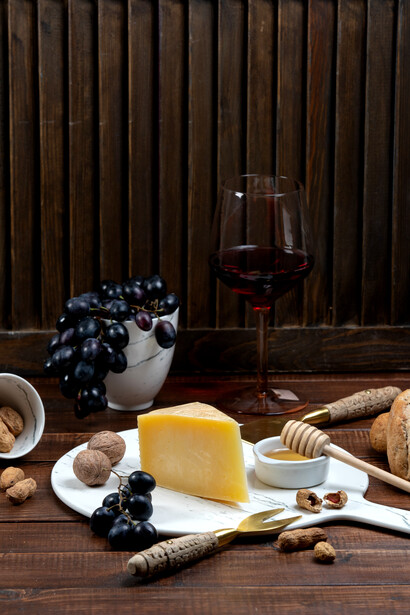
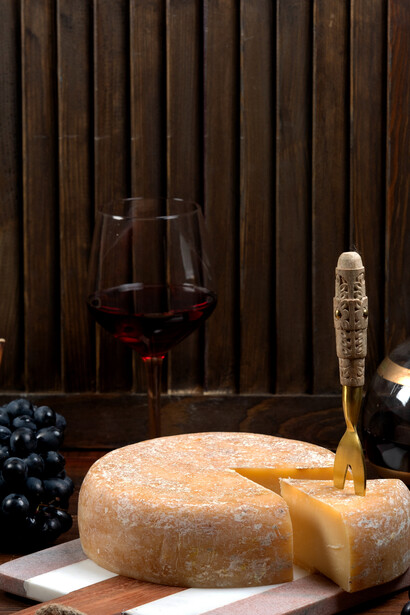
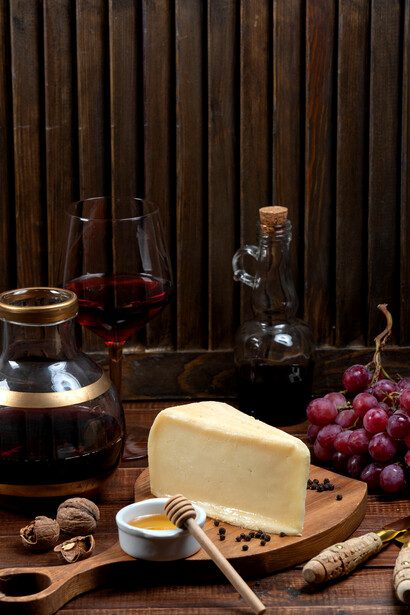
Egri Bikavér pairs beautifully with a range of cheeses, particularly semi-hard and aged varieties. Options such as aged cheddar, Gouda, Manchego, and Hungarian cheeses like Pálpusztai complement the wine’s structure and depth. The key is to choose cheeses with enough flavor intensity to stand up to the wine without overwhelming its more nuanced characteristics.
Serving tips
To enjoy Egri Bikavér at its best, serve it slightly below room temperature, ideally between 16–18°C. Higher-quality bottles benefit from breathing for 30–60 minutes before drinking, which helps the aromas open and the structure soften. Use a standard red wine glass to allow the bouquet to fully develop. While younger Classicus versions are typically ready to drink upon release, Superior and Grand Superior wines often improve with several years of aging, during which their flavors become more integrated and complex.
The modern revival and global recognition
In recent decades, Hungarian winemakers have focused on redefining Egri Bikavér as a premium wine rather than a mass-market product. By emphasizing vineyard selection, careful blending, and sustainable practices, producers are restoring their reputation internationally.
Wine enthusiasts increasingly appreciate Egri Bikavér for offering excellent value compared to more famous European blends. Its unique identity—neither purely Old World nor New World in style—makes it appealing to adventurous drinkers seeking something different from familiar Bordeaux or Rhône blends.
Conclusion
Egri Bikavér stands as one of Hungary’s most storied and expressive wines, blending history, myth, and modern craftsmanship into every bottle. From its legendary origins during the siege of Eger to its contemporary renaissance as a high-quality red blend, it captures the spirit of Hungarian wine culture.
Its defining characteristics—balanced structure, spicy complexity, and vibrant acidity—make it not only enjoyable on its own but also remarkably food-friendly. Whether paired with traditional Hungarian dishes like goulash and paprika chicken, international classics such as grilled meats and pasta, or even hearty vegetarian fare, Egri Bikavér demonstrates versatility and depth.
For anyone exploring European wines beyond the most famous regions, Egri Bikavér offers an exciting and rewarding experience. It invites drinkers to discover a lesser-known yet deeply rooted wine tradition, one that continues to evolve while honoring centuries of heritage.