English
 Español
 Français
 Deutsch
 Italiano
 Português
![Miriam Inez da Silva, El teatro de Miriam [Miriam’s theatre], exhibition view. Courtesy of Travesía Cuatro](/attachments/d86985a1cc6cd527fab7e5a6bf31c5c5e85e08e0/store/fill/1090/613/753eb4f5360ee774db9793783b43b75b10139664460c0860bb738ecf3f8c/Miriam-Inez-da-Silva-El-teatro-de-Miriam-Miriams-theatre-exhibition-view-Courtesy-of-Travesia.jpg)
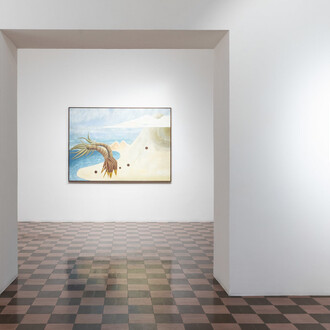
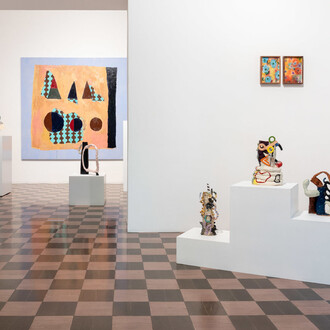
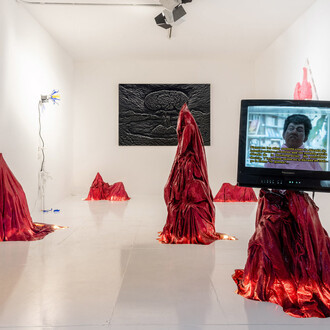
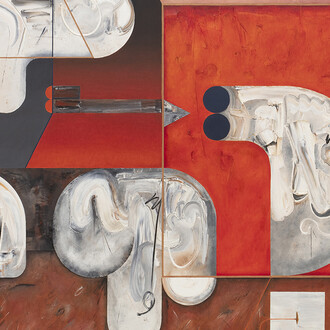
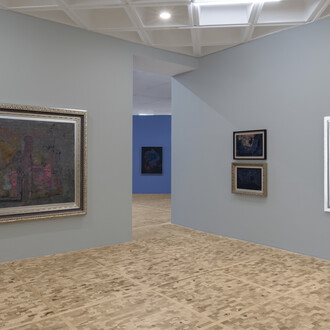
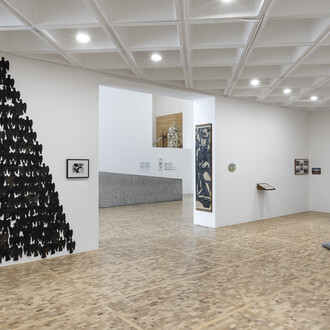
Travesía Cuatro Guadalajara presents El teatro de Miriam” [Miriam’s theatre], a solo exhibition dedicated to the Brazilian artist Miriam Inez da Silva (b. 1939, Trindade, Brazil – 1996, Rio de Janeiro, Brazil).
The exhibition is a continuation of the project presented last year atTravesía Cuatro Madrid and brings together works dating from the 1970s to the early 1990s, paying tribute to a unique and still insufficiently recognized figure in the Brazilian art scene. The exhibition is presented at Casa Franco, a villa designed in 1929 by renowned Mexican architect Luis Barragán, through a museographic approach that invites viewers to rediscover the work of Miriam Inez da Silva beyond reductionist labels, as a sophisticated and critical reflection on society, power, and community. The music accompanying the exhibition is a selection of songs chosen by Sofia Cerqueira, the artist’s daughter, which belonged to the private dimension of Miriam Inez’s life and that echo the festive atmosphere in which she lived.
A contemporary of the Brazilian Pop movement, Miriam Inez da Silva was an irreverent and transgressive artist who, by connecting and appropriating elements of Brazilian vernacular culture, created a body of work that reflects the processes of modernization in Brazil throughout the 20th century. Cultured and free-spirited, she drew inspiration from images of popular culture and the tradition of votive offerings, tarot, popular music, and woodcut printing to address themes ranging from the re-reading and reinterpretation of Catholic myths to the customs of marginalized societies and communities (Afro-Brazilian and LGBTQ), whom, especially during the years of the dictatorship, had few opportunities to express themselves freely.
Inez da Silva’s main themes are rendered in her paintings against a white background—called vida [life] by the artist—which represents the social space of power, where social relationships are reproduced but also challenged. By creating complex tensions on these monochromatic backgrounds, she investigates the multiple forces that hold us together as a community, and through which, both shared pleasure and oppression, become visible.
Since the early 1970s, most art critics in her native Brazil have mistakenly labeled Inez da Silva as a “primitive,” “naïve,” or “popular” artist, treating her work as innocent and traditional. The inclusion of her work in these categories is the result of a biased view, influenced by colonialism and elitism, unable to recognize the complexities of her practice. This exhibition seeks, on the contrary, to highlight the intention, malice, and transgression implicit in the artist’s language.
![Miriam Inez da Silva, El teatro de Miriam [Miriam’s theatre], exhibition view. Courtesy of Travesía Cuatro](/attachments/6ab91c1dc6f1476329c50e878e006f72ca4825e7/store/fill/410/308/dfddb098f94a7be0d8f7e31273b8416e03b68c7854f47141a405deac3e11/Miriam-Inez-da-Silva-El-teatro-de-Miriam-Miriams-theatre-exhibition-view-Courtesy-of-Travesia.jpg)
![Miriam Inez da Silva, El teatro de Miriam [Miriam’s theatre], exhibition view. Courtesy of Travesía Cuatro](/attachments/fca24e95fa440145f6b9fb8cbad81139a0256c52/store/fill/410/308/602dac46950340ae9f0f988f0f5d219fba72fc56820d602ad38e799bd9b4/Miriam-Inez-da-Silva-El-teatro-de-Miriam-Miriams-theatre-exhibition-view-Courtesy-of-Travesia.jpg)
![Miriam Inez da Silva, El teatro de Miriam [Miriam’s theatre], exhibition view. Courtesy of Travesía Cuatro](/attachments/71bdcc2ba9a45494539b084a84e654286eb628a0/store/fill/410/308/549068c183ddaec794460ce5e1dde13a8847f273b4bb510d9b9dd1c4ba63/Miriam-Inez-da-Silva-El-teatro-de-Miriam-Miriams-theatre-exhibition-view-Courtesy-of-Travesia.jpg)
![Miguel Fernández de Castro, La espera [The wait], exhibition view. Courtesy of Travesía Cuatro](/attachments/14dcc681d1fedcca6fe33ae0456e10c69bd4c11d/store/fill/330/330/b3935b33867e6d37e07ecb33393d6eb15717d20829f0f66ec7f11e86ab41/Miguel-Fernandez-de-Castro-La-espera-The-wait-exhibition-view-Courtesy-of-Travesia-Cuatro.jpg)