English
 Español
 Français
 Deutsch
 Italiano
 Português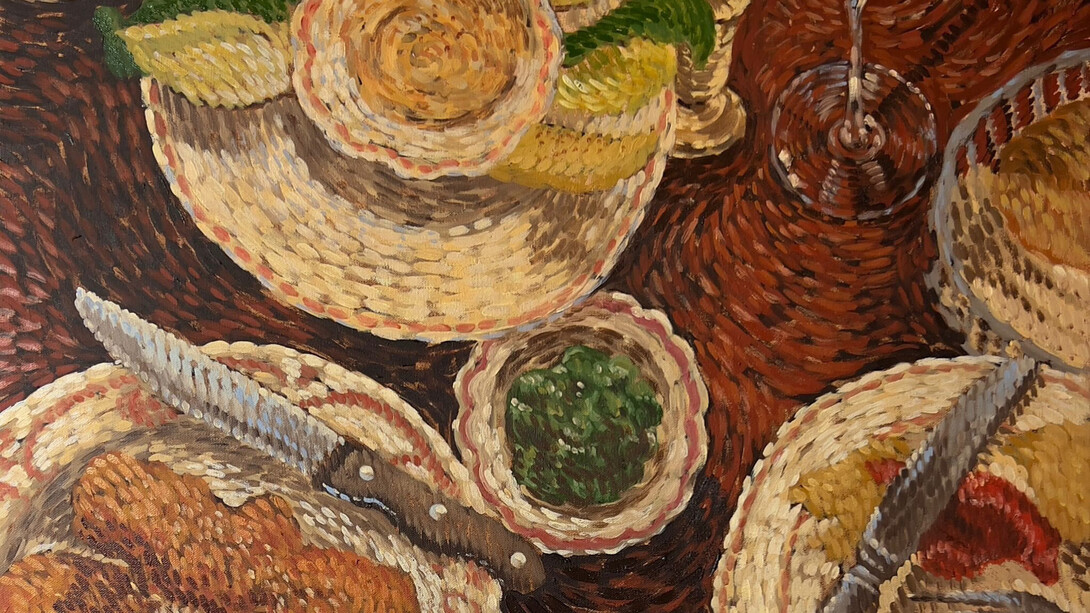
Sullivan+Strumpf is delighted to announce their inaugural solo exhibition of London-based Australian artist Jess Cochrane, opening at their Gadigal/Sydney gallery Thursday February 26, until Saturday March 28, 2026. Developed in response to a renewed connection with her Hungarian heritage, Cochrane’s latest body is a self-exploration through the intertwined roots of culture, family history and the contemporary landscape. The middle of the flower is Cochrane’s first solo exhibition with the gallery following the announcement of her representation in August 2025.
As a third generation Hungarian, Jess Cochrane's new work bridges self-exploration with broader questions of familial migration and reclaiming one's cultural heritage.
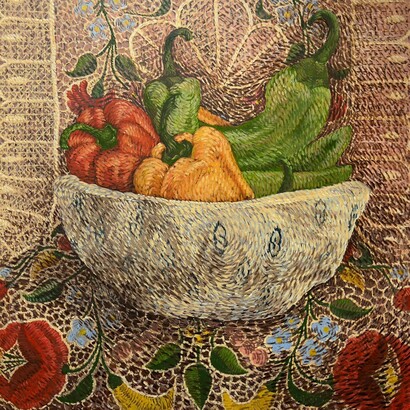
Like many Australians with migrant grandparents, Cochrane articulates both a sense of dislocation with, and desire to strengthen, her cultural ties. The middle of the flower teases out these feelings through recurring traditional Hungarian patterns and motifs, observed through floral fabric, embroidery, and design.
At the heart of her latest body is a personal dialogue with her late grandfather, Tibi, whose story anchors the artist’s return to her Hungarian roots. Having fled Budapest for Australia on a food supply ship during wartime, Tibi rebuilt a life in Bendigo, Victoria—raising five children following the tragic passing of his wife, Carmel. Although he passed away six months before Cochrane was born, Tibi’s memory survives through family stories that echo resilience and the quiet sacrifices of migration.
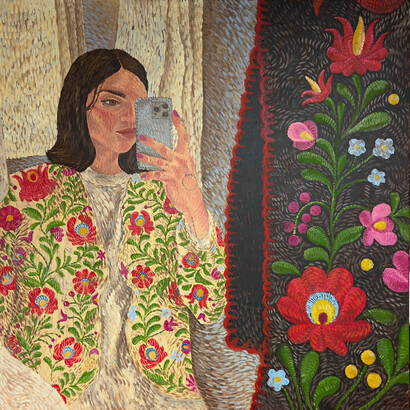
The centrepiece of Cochrane’s upcoming exhibition is a two-part work titled, I just called to say I love you (2025), which acts as a symbolic conversation between generations.
The first work is an oil rendering of one of the only existing photographs of Tibi, captured in a sharp suit and speaking on the phone. This scene is mirrored by Cochrane in a large self-portrait, dressed in a Nanushka suit and seated in a Marcel Breuer Wassily chair. Two touchstones which act as subtle nods to Hungarian design and contemporary culture, connecting her modern identity with her ancestral lineage.
Through this act of visual mimicry, Cochrane creates space for an imagined exchange with the grandfather she never met, seeking to mend a dropped stitch in the fabric of her life.
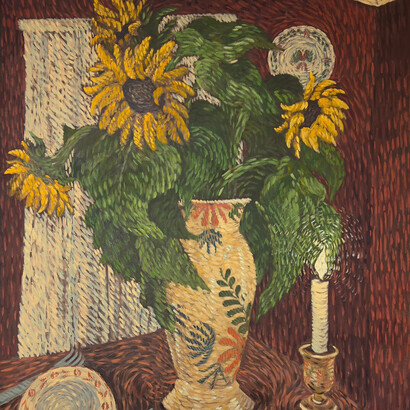
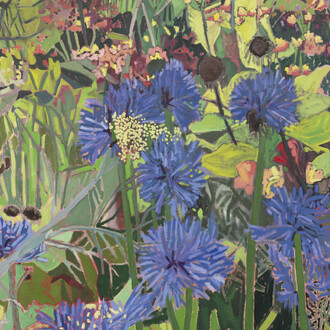
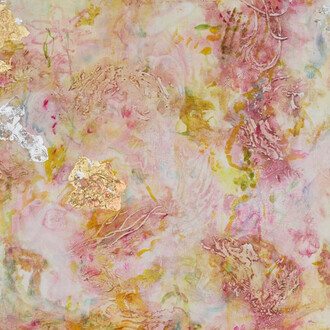
Creating a conversation with painters such as Cezanne, Monet and Bonnard, Cochrane’s visual language draws on a rich Impressionistic lineage to fuse the past and the present. This embrace of impressionistic mark-making stems from a shared fascination with the echoes of the everyday, much like the Impressionists’ depictions of leisure and modernity during the Industrial Revolution.
In Cochrane’s hands, this language becomes a way of engaging with both this narrative history and reframing our current era of digital consumption. Phones and social media act as the new cafe tables and city streets, existing as contemporary spaces of connection, isolation and self-reflection. This examination of contemporary life, and the power of technology to augment how we visually interpret the world, is a significant undercurrent throughout the artist’s practice.
Cochrane’s strong interest in the textures of contemporary life and society is guided by her photography, which acts as a personal catalogue of shared memories and recent history. Drawing from this digital archive, she recreates carefully selected scenes of friends and family in her compositions. Presenting the joy and glimmer found in small, everyday moments.
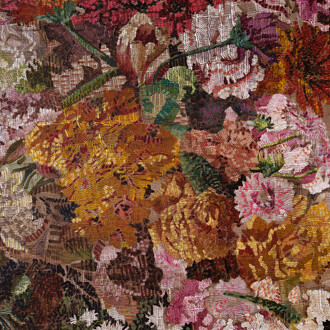
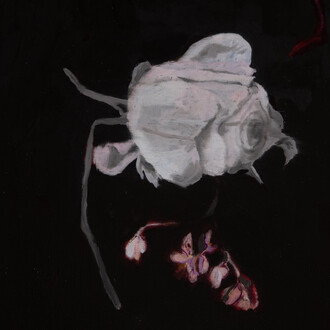
Examining the landscape of being a woman in the 21st century, this new body of work also operates as a meditation on motherhood. Presenting ceramics as symbols of pregnancy, the artist explores the notion of the mother as a vessel. Floral motifs presented throughout the series link together these maternal themes with traditional Hungarian folk stories, which view flowers as symbols of girls’ development into womanhood.
Hungary is often colloquially referred to as “The Middle of the Flower” due to its centralised geographic position, surrounded by Slavic and Balkan countries. In choosing this title, Cochrane reinforces the importance of floral motifs within this new body of work, and her exploration of what lies at the core of her personal, cultural, and artistic journey.
Jess Cochrane studied graphic design at the University of Canberra before pursuing art at the University of Wollongong in Australia. Her recent exhibitions include the group shows In my prime, (Sullivan+Strumpf, Melbourne, 2025) and Beginnings (Heliconia Projects, Casa de Campo, 2025), and the solo exhibition It won’t last forever (Gillian Jason, London, 2024). Her work was presented by Sullivan+Strumpf at Spring 1883 Melbourne and Sydney Contemporary 2025.
![Cherine Fahd, The captains [Georgia Airborne] (detail), 2026. Courtesy of MCA](/attachments/a8ddfa5ce965d6214a12b995ccad3efeaa7cb3f7/store/fill/330/330/2250514c801510cec18ebb750a8e8ad50105c447ae376f5654cb924fd1ae/Cherine-Fahd-The-captains-Georgia-Airborne-detail-2026-Courtesy-of-MCA.jpg)