English
 Español
 Français
 Deutsch
 Italiano
 Português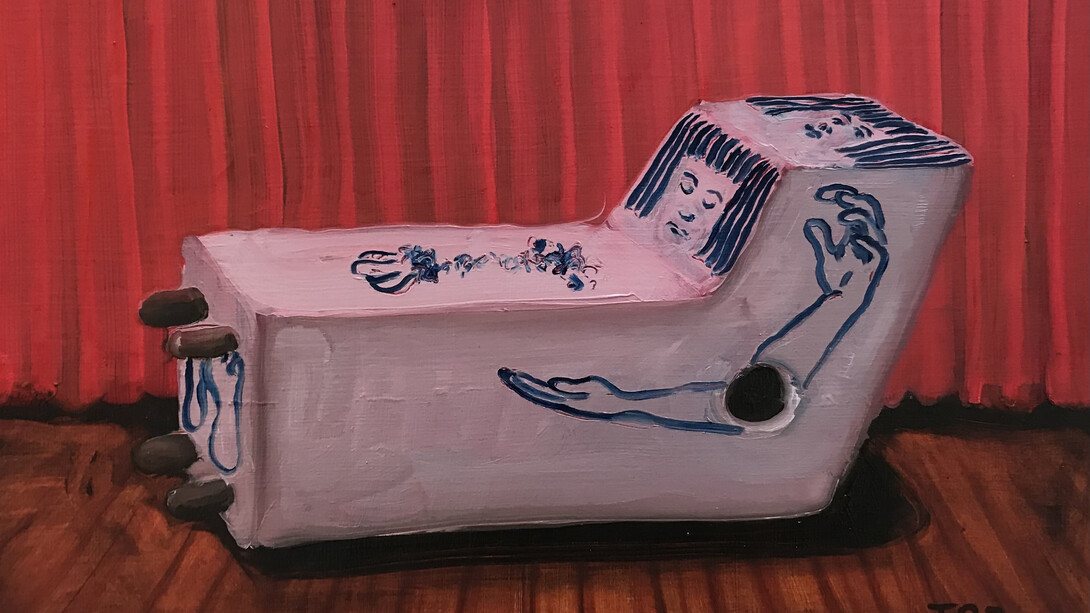
Charlie Smith London is pleased to present Distorted self, a three-person painting exhibition bringing together contemporary artists Jonathan Bennett, Catherine Lette, and Richard Meaghan. The exhibition explores the distorted figure as a site of psychological tension, social pressure, and inner conflict, examining how bodies become reshaped by environment, ideology, and the unconscious.
Across the exhibition, the human form appears fractured, exaggerated, reduced, or transformed. Rather than functioning as stable representations of identity, these figures operate as psychological diagrams—sites where anxiety, power, care, alienation, humour, and resistance are played out.
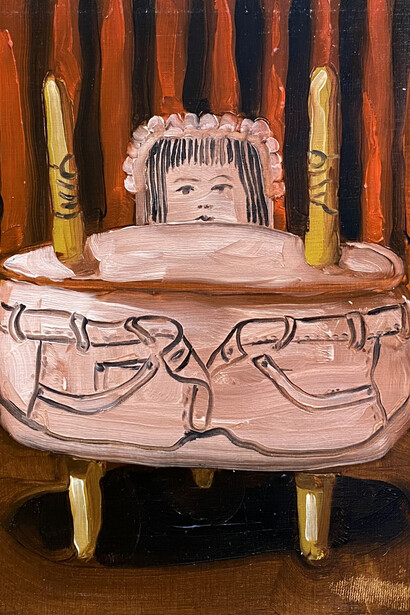
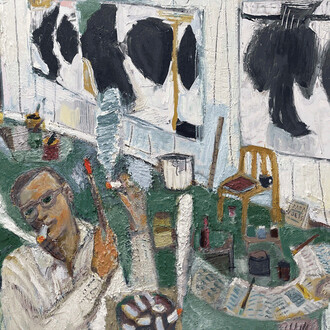
Jonathan Bennett’s paintings reduce the body to simplified, often comic forms derived from clay models. Limbs become architectural, faces collapse into objects, and cobalt blue surfaces reference the industrial ceramics of his birthplace, Stoke- on-Trent. Working quickly in oil, Bennett creates theatrical tableaux animated by flamboyant, poetic titles that echo the allegorical tradition of European painting while subverting its authority. His works stage melodramatic encounters between anthropomorphic forms, offering not fixed meanings but a charged space in which the unconscious can surface.
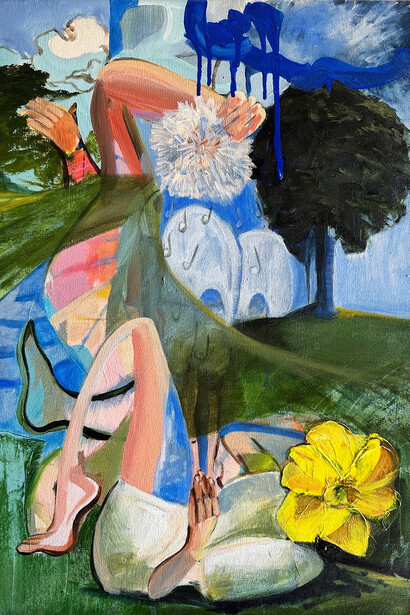
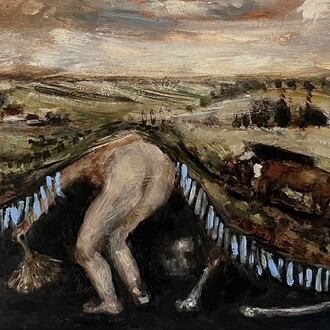
Catherine Lette’s work centres on the figure under pressure—fragmented, disassembled, or in states of uneasy adaptation. Drawing from personal experience, her paintings explore how domestic, rural, virtual, and imagined environments shape both body and mind. Lette’s distorted figures reflect emotional and psychological states rather than physical realism, addressing themes of care, motherhood, female agency, and the instability of home. Humour and ambiguity coexist with unease, while landscapes, objects, and animals increasingly enter the work as active participants, complicating the boundary between inner life and external world.
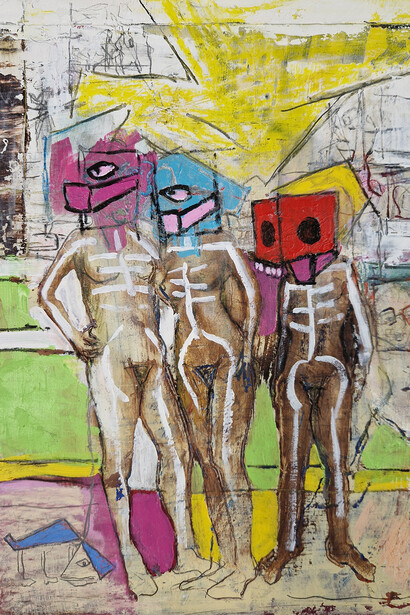
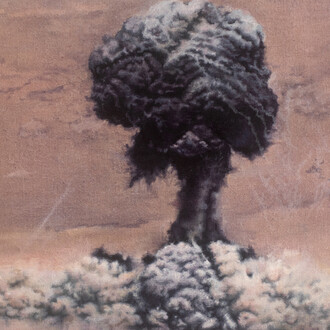
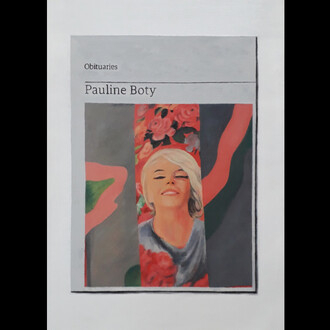
Richard Meaghan presents a darker, dystopian vision of bodily distortion, where identity is eroded by technology, consumerism, and ideological control. Through existential portraiture, his work depicts the body as a site of surveillance, mutation, and erasure. Figures become avatars, data points, or insect-like remnants, echoing Orwellian and Kafkaesque anxieties. Meaghan’s paintings confront the psychological violence of modern systems, asking what remains of the self when humanity is mediated, commodified, or hollowed out.
Together, Bennett, Lette, and Meaghan present distortion not as stylistic excess, but as a necessary visual language for articulating contemporary experience. Distorted self proposes the body as a contested psychological terrain—one shaped by memory, power, care, technology, and the persistent struggle to remain human.