English
 Español
 Français
 Deutsch
 Italiano
 Português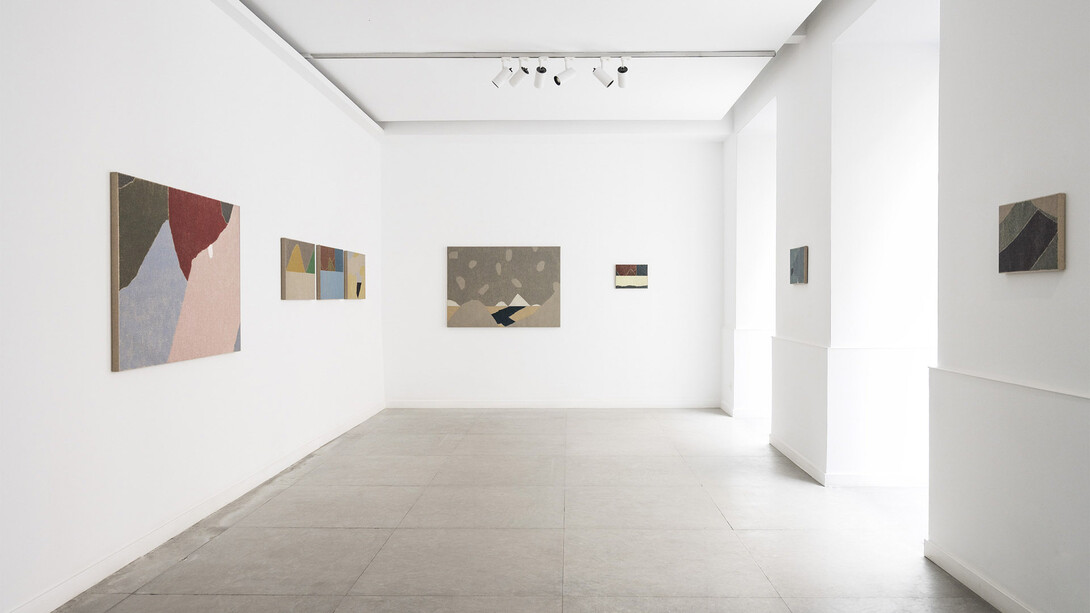
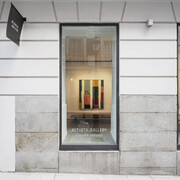
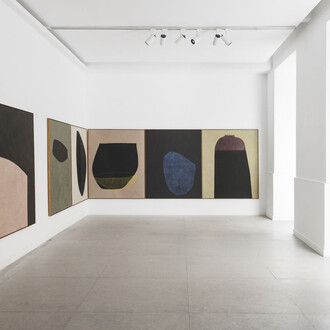
Alzueta Gallery Madrid is pleased to present Hêmérê, the first solo exhibition by Frédéric Dumoulin in Spain, from January 22 to February 21, 2026.
By choosing the name Hêmérê — the primordial Greek goddess of Day and mother of Thalassa — Dumoulin immediately reveals his rare sensitivity to language: its sound, its rhythm, and its evocative power. He is drawn to the word for its musicality, its subtle echo of “Homer” and the French word aimer (“to love”), as well as the rich tapestry of ancient myths and imagery it evokes.
Dumoulin’s fascination with language permeates his work. Each painting is conceived as a journey, accompanied by a word chosen for its poetic weight and the images it can summon. Like a writer endlessly revising drafts, he produces hundreds of sketches before arriving at a single composition.
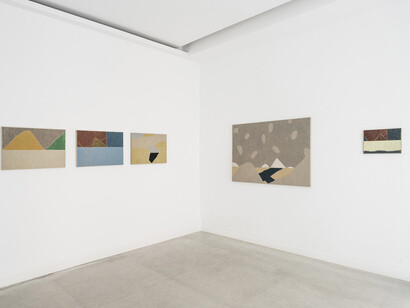
Color becomes a personal music, sometimes intentionally dissonant, meant to surprise and shift the viewer’s expectations: a meadow takes on the tones of the sky, a hill merges with a cloud — subtle reversals that offer a new way of seeing the world. He weaves together forms and colors to create a painting that can soothe, strike, and send a shiver down the spine.
Hêmérê brings together the foundations of Dumoulin’s practice: his deep attachment to ancient texts —especially The Iliad and The odyssey—, his love for the sound of words, and his fascination with how a single word can contain a landscape or an emotion. This sensitivity is echoed in his approach to the natural world, shaped by careful observation. Dumoulin sees poetry in every aspect of nature. For Hêmérê, particular attention is given to the sea and mountains, to their evocative power, and to the way daylight interacts with the landscape. He captures the quiet serenity of a sunrise, that sense of completeness felt at dawn, at the threshold between night and day, between wakefulness and sleep. Attuned to these fleeting, liminal moments, they flow through and inform his entire body of work.
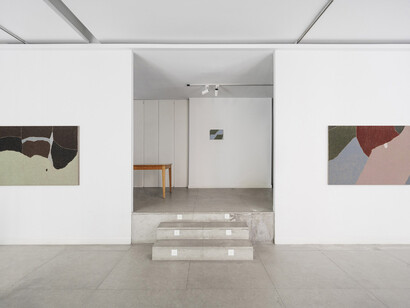
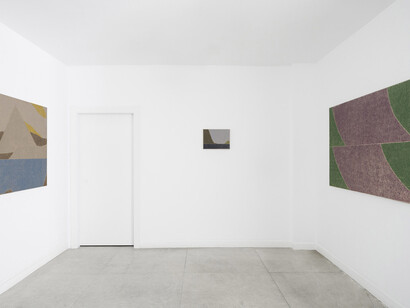
Small and large formats interact, each shedding a different light on Dumoulin’s practice. The smaller works are like short musical variations on a theme, striving to capture the fleeting and the momentary. Long accustomed to intimate, almost icon-like canvases, Dumoulin approaches them intuitively, searching for the color that will strike the most harmonious note. These paintings reveal his dedication to capturing moments that are brief, delicate, and almost ephemeral.
In contrast, large-scale works invite the viewer to be fully enveloped in light. They demand a slower, more deliberate compositional process and a heightened sense of space. Air flows more freely, the eye is drawn deep into the canvas, and the surrounding environment fades away, yielding to what unfolds within the painting, as if it were spilling over into reality. While the smaller works capture fleeting, immediate emotions, the larger ones trace their unfolding — hesitations, revisions, and layers built up over several days. They reveal a new depth, both in the landscape and in Dumoulin’s inner exploration.
For Frédéric Dumoulin, landscapes are not merely a depiction of reality, but a stage for a personal, intimate, and poetic music, shaped by his reading, his observations, and his own reflections.