English
 Español
 Français
 Deutsch
 Italiano
 Português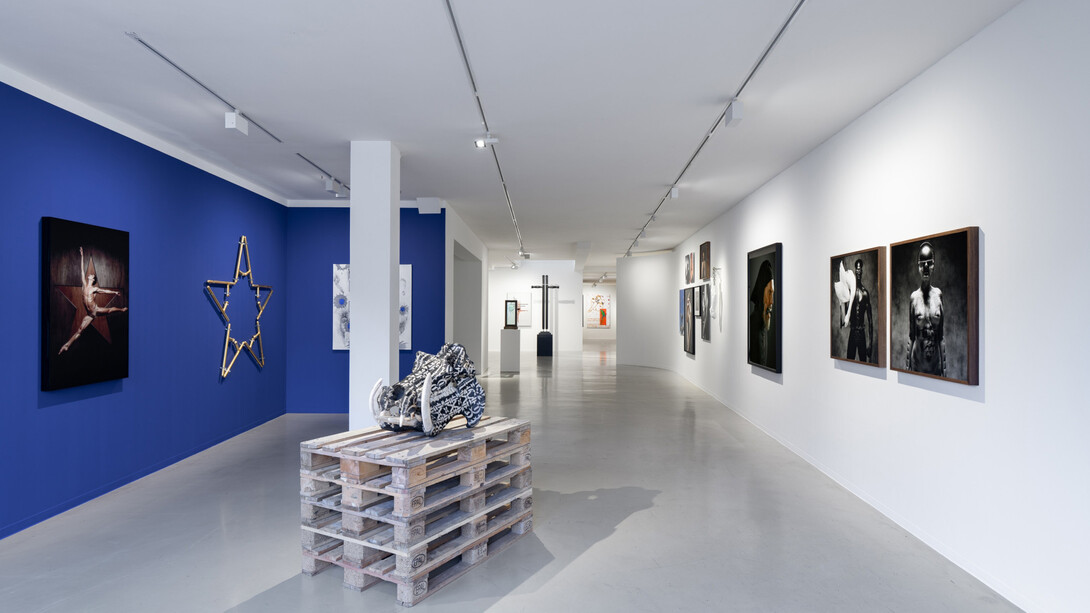
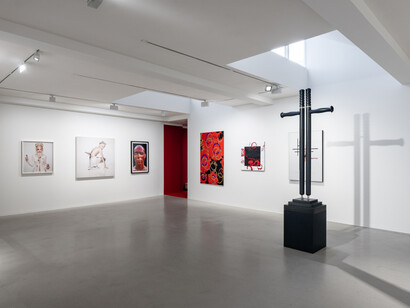
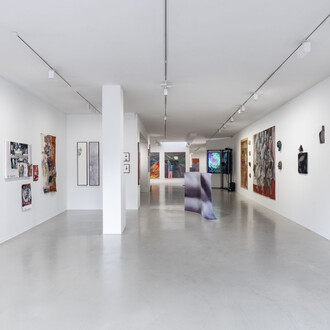
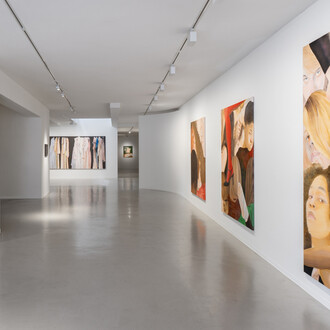
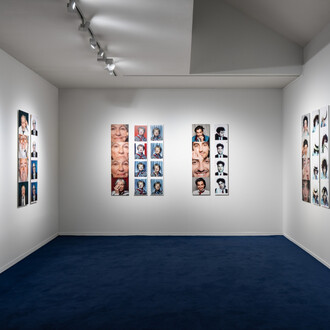
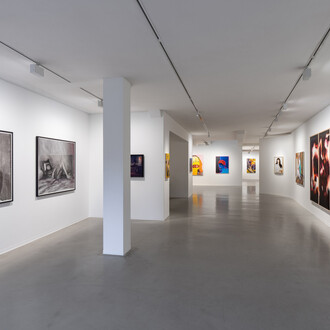
Galerie Ron Mandos is proud to present Tender fury, which brings together Erwin Olaf and Kendell Geers, two iconic artists whose practices have each forged a distinctive visual language at the intersection of healing, intimacy and rage. Rooted in deeply personal histories of activism against racism, prejudice, and discrimination, the exhibition reveals connections between their lives and work, despite differences in medium and tone. Tender fury is on view from January 24 through April 5, 2026.
Curated through the personal perspective of their close friend and gallerist Ron Mandos, Tender fury offers a fragile yet powerful portrait of two artists who struggled to find their voices within art systems they felt alienated from. In response, both created bodies of work that expose the political power of images. Tenderness and fury are not contradictions here, but coexisting forces: each artist believes in art as a language capable of disabling systems of oppression, control, repression and censorship.
Kendell Geers’s practice is grounded in sharp intellectual rigor and is often compared to that of Marcel Duchamp in its shift away from the individual art object toward a more holistic approach—one that connects every detail of the art system. His work is also decisively shaped by his experience as an anti-apartheid activist in South Africa. Formed within a society structured by legal brutality, censorship, and ideological symbolism, he developed an acute sensitivity to how authority embeds itself as blind habit in everyday forms.
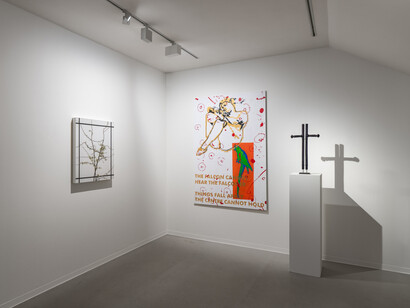
This sensitivity is clearly articulated in his Les fleurs du mal paintings, in which the seemingly benign genre of the still life becomes a vehicle for confrontation. Historically associated with beauty, fragility, and contemplation, the flower is transformed by Geers into a charged political and existential subject. Rather than offering aesthetic consolation, these works infuse beauty with threat: blossoms appear seductive yet aggressive, collapsing the still life’s promise of timelessness into a sense of urgency. Violence, colonial history, mortality, and desire emerge through this polished surface, demonstrating how even the most decorative cultural forms are never ideologically neutral. In this way, the paintings exemplify Geers’s broader strategy of exposing how power disguises itself as taste, tradition, or habit, while implicating the viewer in the act of passive acceptance.
Erwin Olaf, by contrast, works through meticulously staged photographic tableaux that draw viewers inward rather than confronting them head-on. His cinematic images explore vulnerability, repression, and emotional isolation. Olaf’s figures exist in suspended moments of silence and tension, revealing how power, gender norms, and social expectations are internalized and performed within private spaces.
Despite their differing approaches, both artists treat the image as a site of resistance. Where Geers externalizes conflict through overt symbols of threat and exclusion, Olaf internalizes it, exposing how authority is absorbed and normalized. Together, their works trace a continuum between public violence and private consequence, ideological systems and personal experience.
Both artists destabilize comfort. Geers employs black humor, linguistic disruption, and aesthetic dissonance. Olaf works through intimacy, empathy and psychological unease. In each case, the viewer is implicated, not as a neutral observer so much as an active participant in systems of looking, judging and habits of acceptance.
This dialogue underscores a shared commitment to art as a critical tool that is urgent rather than decorative, unnerving rather than reassuring. Geers reveals the image as a battleground, where desire itself becomes an act of defiance against moral, religious and nationalist constraint. His new works for Tender Fury draw on the aesthetics of the redacted Epstein files, which he compares to Malevich, Theo van Doesburg, and Piet Mondrian. For Geers, “the aesthetics of redaction are the visible expression of unchecked political power in deciding what may be seen, what is censored and what must be imagined.”
Olaf’s photography offers a counterpoint grounded in tenderness and psychological depth. His images depict bodies poised between longing and restraint, intimacy and isolation. Quiet yet deeply political, Olaf’s eroticism resists dominant narratives of masculinity and power through vulnerability, queerness, and emotional exposure. In his practice, activism unfolds through empathy and recognition rather than confrontation.
Tender fury is timely exhibition that addresses the Post Traumatic Stress of a global society ripped apart by extremism and conflict. Both artists believe in the power of art to give the viewer keys to healing from trauma and to protest their own tender fury. Geers ignites fury as a destabilizing force that fractures taboos and exposes violence embedded in cultural habits, whilst Olaf cultivates tenderness as an insistence on intimacy, and emotional truth as political acts. Positioning eroticism not as spectacle but as strategy, the exhibition asserts that pleasure, vulnerability, and the right to desire freely remain inseparable from struggles for justice and freedom
Dance and nude
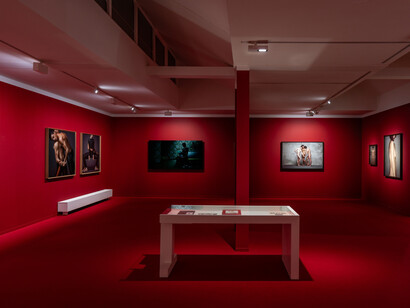
In the red room at the back of the gallery, Erwin Olaf’s enduring engagement with Nude unfolds as an act of trust, dignity, and emancipation. Spanning his career from early black-and-white photography of the 1980s to later studio works, the selection reveals how nudity was never a provocation for Olaf, but a means of looking—carefully and attentively—at the human body. Fascinated by skin and its capacity to carry vulnerability and pride, he resisted both censorship and cliché, insisting on the body as a site of beauty in all its forms. It did not matter to Olaf what his subjects looked like or who they were: fat or thin, young or old, white or black, straight or gay, each was placed on a pedestal, emerging from the encounter not exposed, but affirmed.
This love for the human body finds a natural counterpart in Dance, where skin and movement converge in an exploration of control, effort, and precision. Olaf’s engagement with dance began with Hans van Manen, his close friend and mentor, who introduced him to fine art photography and taught him to look at the body with absolute clarity and intention. Van Manen, who sadly passed away in December 2025, remained a lifelong point of reference for Olaf, both artistically and personally. From these beginnings to later commissions by the Dutch National Ballet and highly refined close-ups, Olaf’s dance photographs treat the body as sculpture in motion, every muscle and gesture deliberately composed. Dance taught him how to direct the body down to its smallest detail, sharpening his photographic craft and deepening his understanding of physical expression.
In this last room, Nude and Dance are inseparable: both arise from Olaf’s devotion to the body as a vessel of beauty, discipline, and presence, where stillness and movement alike reveal the intensity of being human.