English
 Español
 Français
 Deutsch
 Italiano
 Português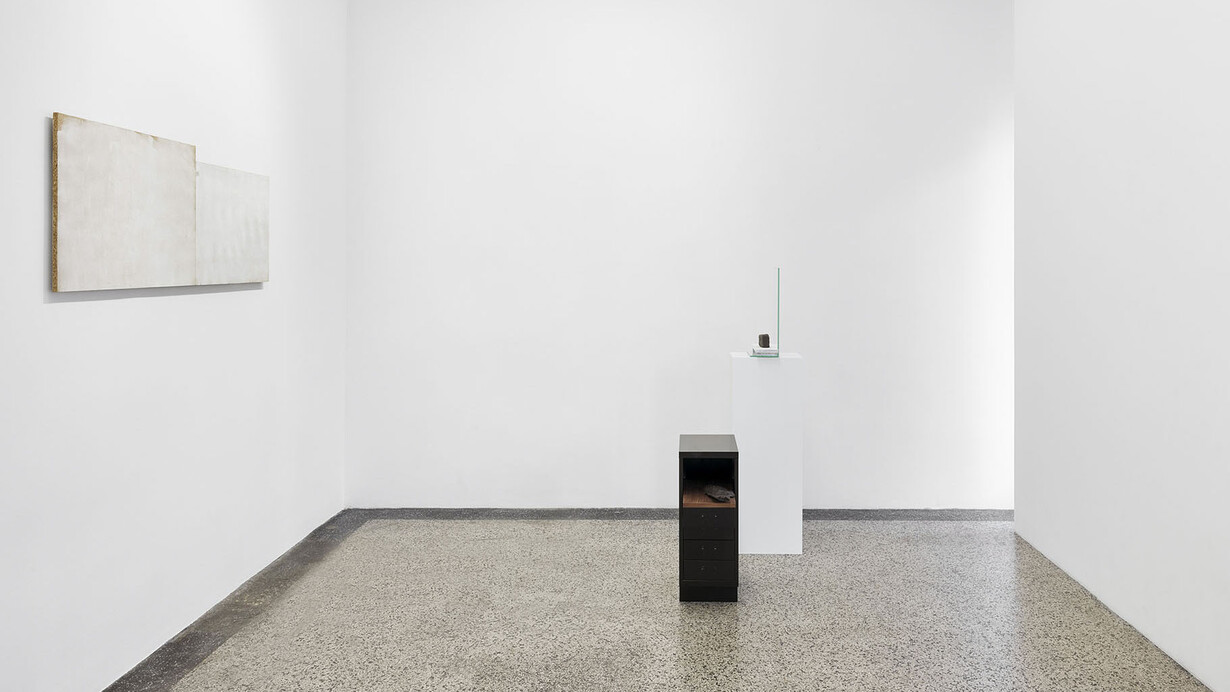
One by one he counted them all, even those that weren’t in one piece, the faceless, sexless remnants of people.
(Fernanda Melchor, Hurricane season)
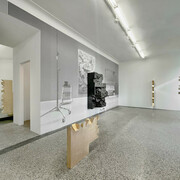
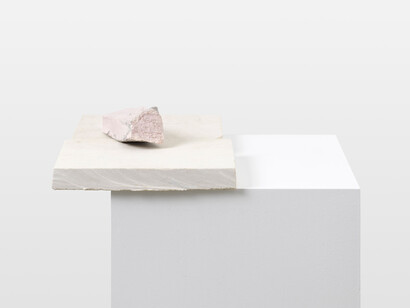
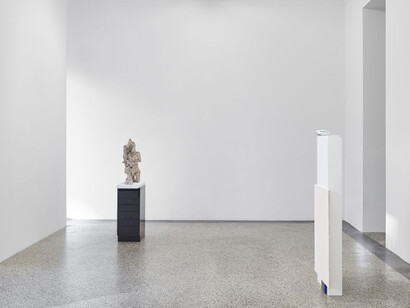
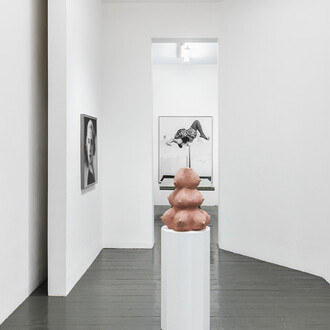
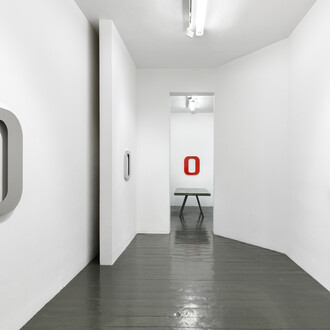
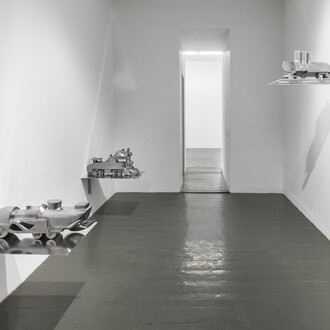
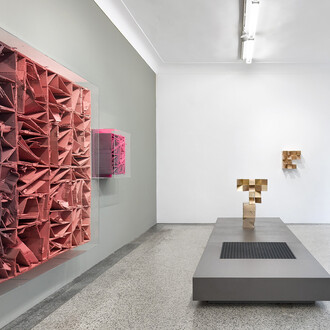
A rhythm of incorporation and release permeates Ulrike Schulze’s works like breath. In the exhibition Inspire expire, it seems as if the rigid, fragile bodies are imbued with a monstrous vitality. Each breath is accompanied by an invigoration and a loss. In this way, these bodies and the traces inscribed on them resonate with the human, living body, yet the compositions of raw materials such as modeled, fired ceramics, wood, bronze, and glass elude immediate classification. The interplay of meaning assignment and radical devaluation shapes the perception of the works. The eye feels rather than recognizes. The fine, glazed paint and the modeling of the material take place on the same preverbal level. Here, color is not an addition but part of the formation, merging with the surfaces.
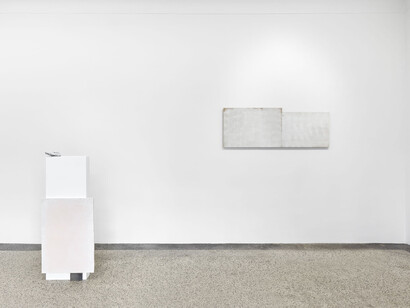
Each work is a complex structure of different elements that attract, support, and repel each other. They follow their own grammar of gentle interventions and sculptural tectonics. In this interplay, the question of what it takes to be something is questioned anew each time. In her work, Ulrike Schulze moves between the borders of abstraction and deconstruction. A tension arises between form and matter, between the conscious and the unconscious, in which the quiet poetry of the works unfolds. The unintentional is provoked and is a calculated part of the settings. This consciously taken risk lies between openness and control. Within traditional sculptural subjects and seemingly familiar forms, the objects function as vessels for something that eludes direct verbal access – something unknown emerges from the works.
In her most recent works, Schulze integrates found footage. Enriched with an additional temporal layer, the clear forms of the drawer cabinets counteract the raw openness of the modeled ceramics. Small interventions reduce the found footage to its materiality without losing its connotation of everyday life, cool functionality, and uniform identity.
The poetic nature of Ulrike Schulze’s work lies in their unavailability, in their latent state between movement and standstill. Thus, a latency manifests itself in the space and in the tectonics of the works themselves. The compositional principle of each work continues in the space, and the precise placement of empty spaces contains the potential for further arrangements. In this way, the space becomes a stage, a lively space. The works oscillate in a sphere between real, physical, and virtual, imagined space.
(Text by Sabrina Podemski)