English
 Español
 Français
 Deutsch
 Italiano
 Português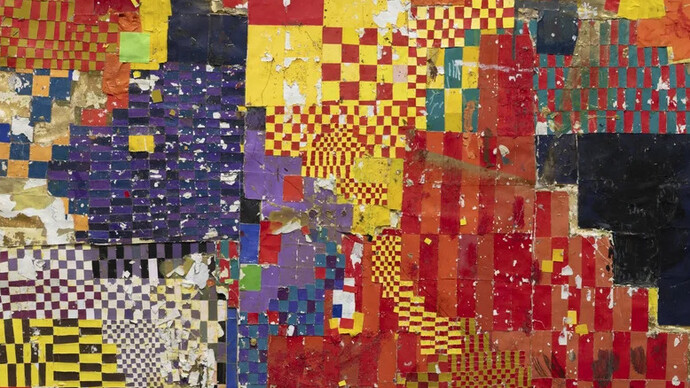
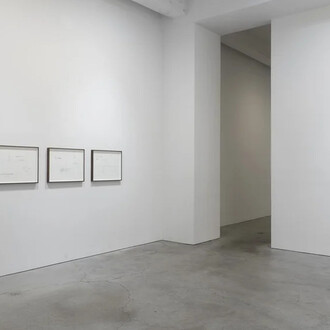
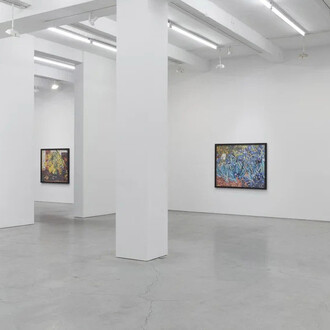
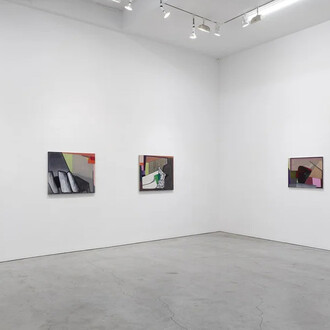
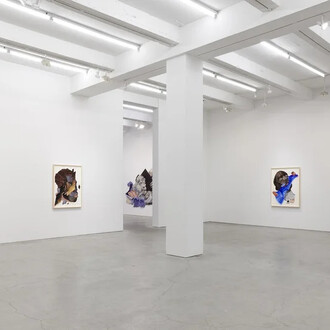
Sikkema Malloy Jenkins is pleased to present A view, a group exhibition of gallery artists working across painting, photography, textile, and editions. A view is on view from January 9 through February 7, 2026. Exhibiting artists include william córdova, Keltie Ferris, Louis Fratino, Zipora Fried, Arturo Herrera, Merlin James, Teresa Lanceta, Heidi Lau, Wardell Milan, Kay Rosen, Erin Shirreff, Kara Walker, and Luiz Zerbini. Interdisciplinary practitioner william córdova is interested in the ephemeral nature of materiality across space and time. Integrating sacred geometries and rhythmic abstraction with references to non-Western spiritual systems and artistic movements, córdova's work seeks to reveal a shared network of image, sound, and revolutionary memory.
Keltie Ferris's kinetic abstractions emerge from the complex interactions of medium and gesture. Hand-painted patterns, bursts of spray paint and oil pastel, and pixelated backgrounds thrum across the surface of his canvases. His pictorial lexicon nods to a wide range of visual lineages, including motifs from nature, ancient craftwork, Abstract Expressionism, and contemporary digital images. In his large-scale paintings, thick layers of paint are built up, then alternately swiped, blurred, or erased, emphasizing the direct link between physical action and visual output.
Louis Fratino creates paintings and drawings that speak to the resonance of personal memory and the quiet sublimity of everyday life. Figurative portraits, domestic interiors, and vibrant landscapes are rendered as intimate tableaux of recollected experiences rather than a direct representation of a specific subject. Invoking a dialogic affinity towards visual and literary Modernisms, Fratino's work mines the possibilities of connection, amplified through a seductive handling of medium and form.
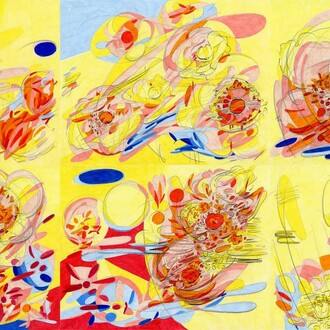
Zipora Fried’s practice meditates on the relationship between the surface presence and the subconscious. In her large-scale drawings, rows of pigment are built up line by line, with each pencil stroke existing as both a self-contained gesture and a constituent strand of a greater whole. Lighter hues meld into vibrant saturation, while deeper colors unfurl into shadow. Fried views the application of each mark as a contemplative process, imbued with mood and individual sensation.
Arturo Herrera’s multimedia work engages the legacies of Modernism through visual strategies of fragmentation, repetition, and reconstruction. His bold, layered compositions revel in the tension between what is revealed and what is concealed, and the mutability of images within different pictorial contexts. Painterly gestures and found imagery adjoin and overlap with flat abstraction and gaps in color; like pauses in a piece of music, the intentional creation of space amongst forms becomes its own unit of meaning.
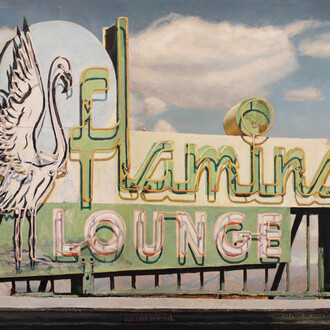
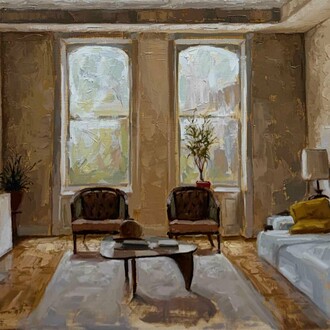
Merlin James's oeuvre is informed by a deep understanding of the painted medium, its material history, and its deployment across a range of formal and representational sub-genres. Working neither directly from life nor from photographs, James draws on impressions and memories over time to reimagine familiar spaces and presences. Gauzy layers of paint foreground the medium's physical application, while casting an amorphous veil of memory to recollected landscapes, figures, and still lifes.
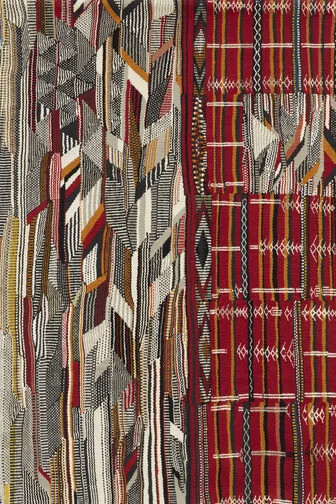
Grounded in the fundamental motion of warp and weft, Teresa Lanceta’s weavings interlace personal memory and formal abstraction with visual legacies of nomadic craft and Iberian culture. Specific colors and shapes appear through her woven landscapes as signifiers of certain ideas and emotions. Above all, Lanceta’s work embraces the capacity of textile to transmit global histories and systems of knowledge.
Heidi Lau sees clay as the ideal conduit for exploring the malleability and materiality of time. Her hand-built clay formations range from intimately scaled figures to site-responsive installations, melding organic bodies with totemic objects and primordial monuments. Drawing upon Taoist mythology, Chinese landscape painting, and vernacular spiritual practices, Lau’s ceramics explore anti-categorical imaginings of material and space, channeled through personal memory and ritual.
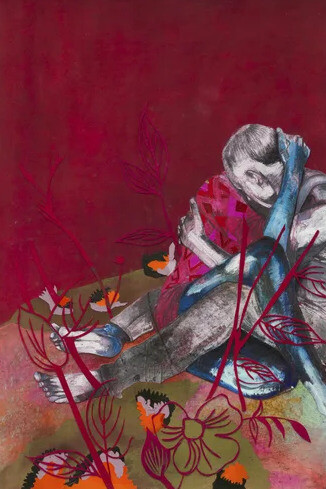
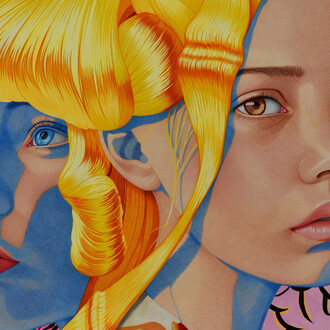
Building upon a conceptual foundation in photography, Wardell Milan’s practice encompasses drawing, collage, and painting to explore ideas of the body, beauty, and the unconscious. He constructs striking human subjects through collaged, reclaimed photographic elements, contending with the medium’s claims to representation. Navigating landscapes of painted abstraction, Milan’s figures inhabit their own bodies—physical, psychological, and photographic bodies—as multi-faceted, intersecting sites of gender, desire, and history.
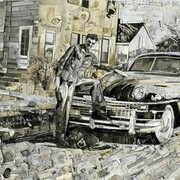
Vik Muniz’s practice is guided by an interest in reframing and renaming materiality. Using unorthodox materials such as paper scraps, photo fragments, food, trash, and ink, Muniz meticulously reconstructs images from a wide range of subject matter: canonical works of art, landscapes, portraits, family pictures, and nature photography. These layers of physical reconstitution and translated mediums become embedded in the final composition, provoking for each viewer a reflexive experience of “when” and “how” an image takes form.
A linguist by training, Kay Rosen’s work revels in the mutability of text and image. Language, for Rosen, needs only minimal manipulations of scale, color, and typographical structure to generate new insights into everyday words and phrases. Buoyed by a keen wit and sense of levity, her “verbal shortcuts” provoke incisive and lasting perspectives on contemporary sociopolitical issues.
Erin Shirreff’s diverse body of work, which includes photography, video, and sculpture, is united by her interest in the ways we experience three-dimensional forms in an age in which our perception is almost invariably mediated by still and moving images. Her work explores the gap between objects and their representations, and the materials (and materiality) of image-making.
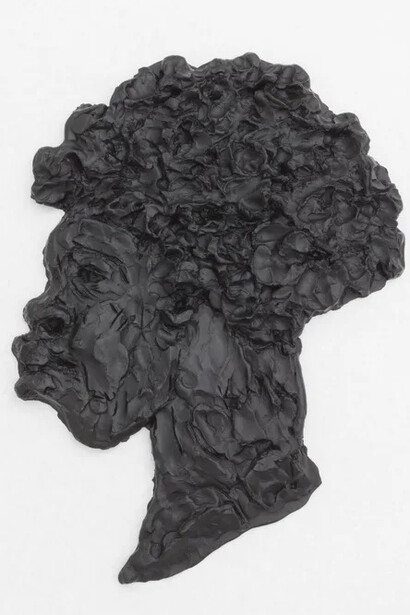
Kara Walker is an internationally acclaimed multi-media artist who rose to prominence in the mid-90s with her striking cut paper silhouettes. Through large-scale projects, collages, drawings, film, and sculpture, Walker’s work candidly investigates the legacies of slavery and American mythmaking.
Nature, history, and the relationship between humans and the land are central to the visual identity of Luiz Zerbini. Integrating both geometric and organic forms, his work draws upon the land and cityscapes of his native Brazil. Lush, undulating vegetation and earthen textures share an ecosystem with mosaic patterns and linear architectural constructions. His diverse palette emphasizes rich, verdant colors alongside the more neutral tones of built systems.