English
 Español
 Français
 Deutsch
 Italiano
 Português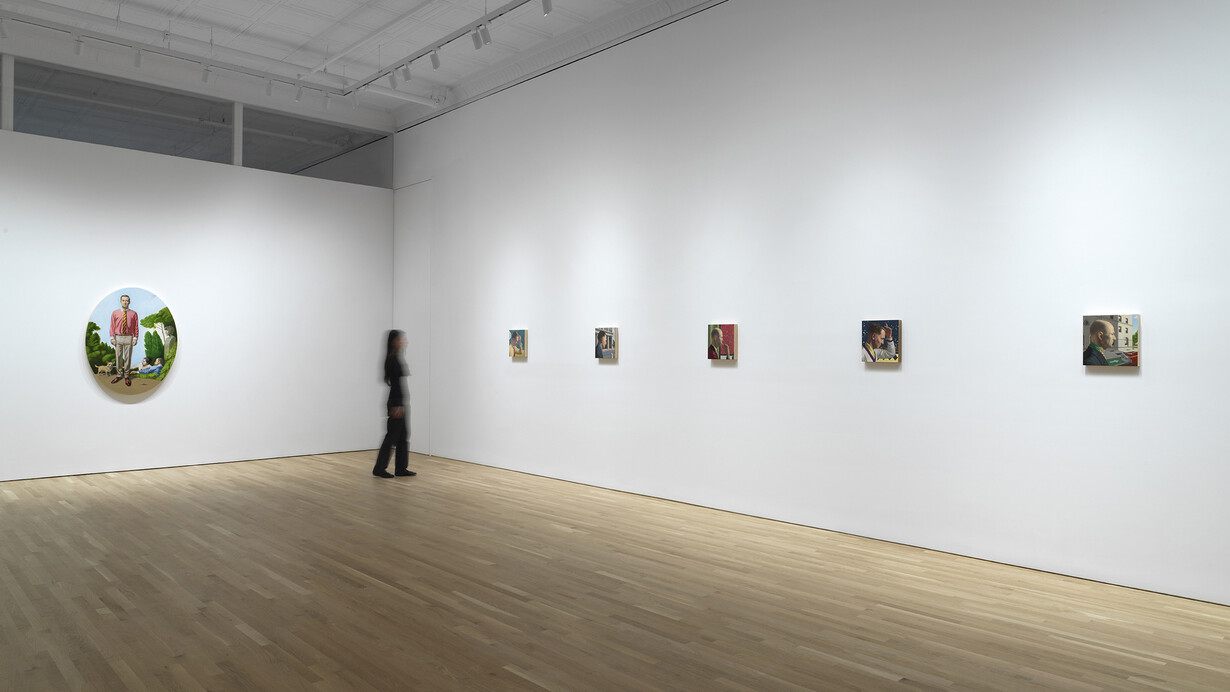
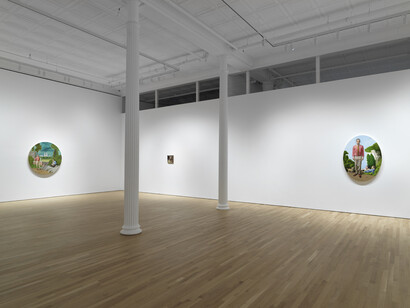
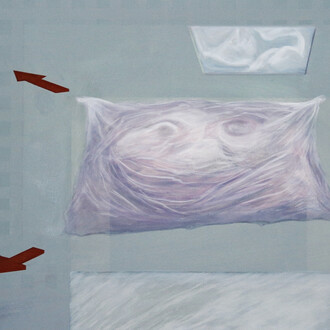
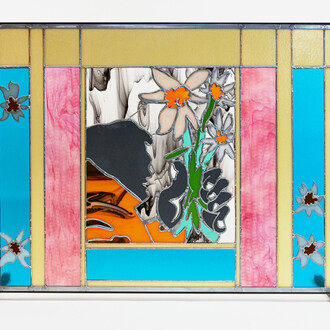
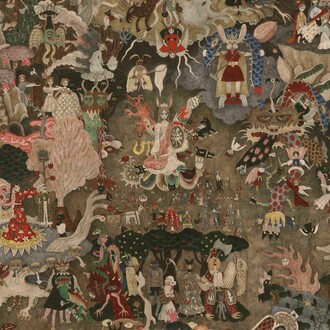
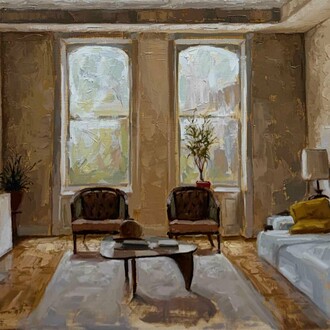
Ortuzar is pleased to present Housekeeping, the gallery’s first solo exhibition by the New York–based artist Kurt Kauper. The show brings together new paintings on panel that depict objects arranged within domestic interiors, figures in suspended or ambiguous situations, and motifs drawn from art-historical sources.
Central to Kauper’s practice is the conviction that artworks do not convey stable discursive meanings. Instead, they give form to aspects of experience that resist linguistic definition. He approaches representational painting not as a vehicle for argument or linear narrative, but as a means of producing an emotive experience grounded in a response to visual form. While viewers may seek meaning in images, the paintings are not intended to prompt semantic interpretation; they remain open, unresolved, anchored only by formal coherence.
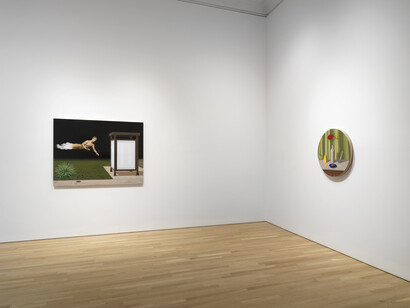
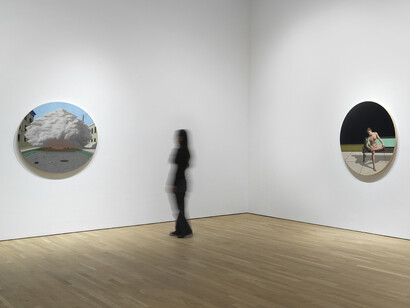
In Fantasy #1 (2019), a figure derived from a 15th-century painting by Sassetta—originally a levitating saint—appears isolated and repositioned within a contemporary urban environment. A similar process is at work in Fantasy #2, large version (2025), which uses the pose of the Hellenistic bronze Boy with thorn as a point of departure. New tondos incorporate elements from Giorgione’s The tempest, Watteau’s Pierrot, and Manet’s The explosion, each functioning less as a reference than as visual residue that activates compositional possibilities.
Kauper’s interest in disconnected impressions continues in a new group of tondo still lifes. In Objects carefully organized in front of the curtains, on the credenza (2025), a bottle holding flowers, a glass containing a hair comb, a yellow pyramid, and a plate with a triangle of salmon are arranged with a deliberate, almost absurd level of care. The painting’s vividly articulated surfaces are precise and resolved, but not naturalistic. They are immediately recognizable but don’t pretend to describe a state of affairs that one might encounter in the world. They insist on the importance of order, which, in the end, is certain to be pointless and transient.
The series Watching men depicts anonymous male figures adjusting their appearance within mostly domestic interiors. Though men have rarely been framed as subjects of self-presentation in the history of painting, Kauper focuses on moments of attending to “masculine” appearance. Yet the effort of the subjects’ actions ultimately contrasts with Kauper’s primary aim: to arrive at images in which form exists for itself, independent of any narrative or need for validation by content.