English
 Español
 Français
 Deutsch
 Italiano
 Português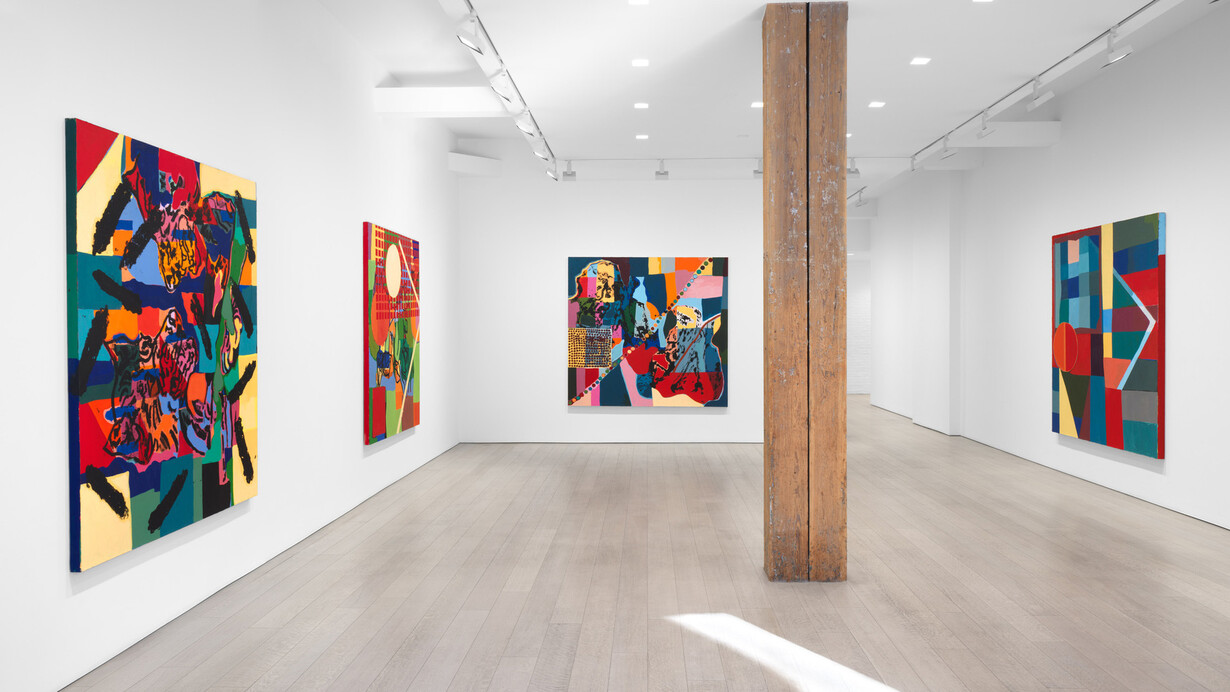
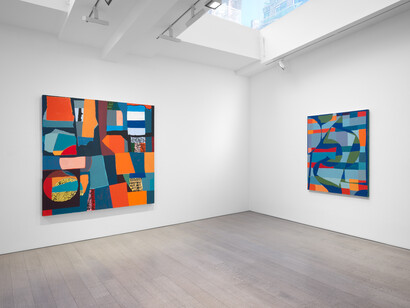
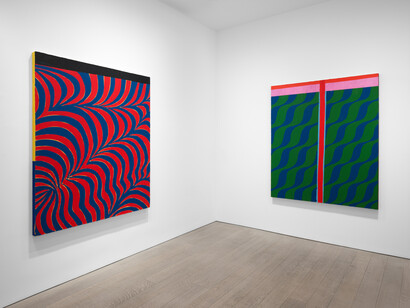
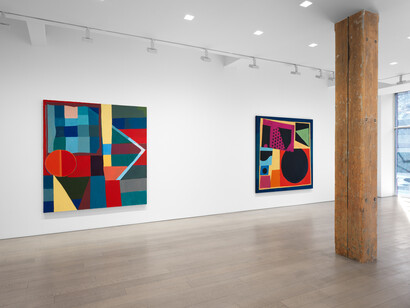
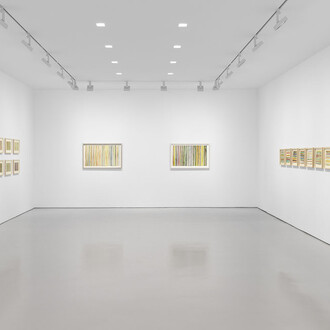
Miles McEnery Gallery is delighted to announce an exhibition of new paintings by Nick Aguayo, on view 8 January through 14 February 2026 at 515 West 22nd Street. The exhibition is accompanied by a fully illustrated publication featuring an essay by Benjamin Weissman.
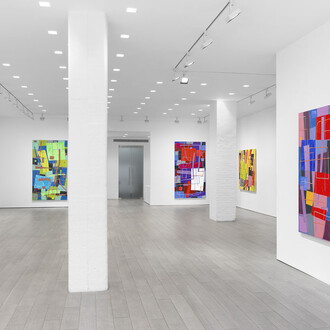
In his latest body of work, Aguayo deepens his exploration of abstracted shapes, images, and patterned geometries that have long captivated him. Familiar forms reappear in endlessly reconfigured arrangements, producing compositions that feel both disciplined and fluid. Aguayo describes his process as a self-assigned sentence: a commitment to continually revisiting the motifs that “entirely capture” him, exploring their eccentricities until they yield new meaning. This cycle gives the paintings their taut immediacy. “In a lot of my new paintings I’ve tried to preserve the feeling of the first mark,” he reflects. “Restraint? Something in it brings an uneasiness, a doubt. I wanna live there for a while, if I can.”
Aguayo embraces the instability of intention, seeing it as elastic rather than fixed. The result is a visual vocabulary that is precise yet open-ended; his subconscious pursuit of pattern, tension, and equilibrium is evident in every inch of the uninhibited compositions.
Aguayo’s paintings are worked through impulsively, with clarity emerging only at the end—similar to how emotions are processed. Through the personal trials and events that Weissman elaborates on, we see how deeply self-referential (yet wholly abstract) these physical meditations can be for the artist. As the author notes, “Rothko talked about the large scale of his work providing a kind of intimacy. Abstract painter Aguayo doesn’t think in terms of intimacy, but rather of being enveloped.” This sense of being surrounded and absorbed is made manifest in the work and on the artist himself: as Aguayo reflected on Instagram, “…Painting so much I’m kind of turning into one.”
An innate roughness permeates each canvas, carrying the immediacy of touch and the cathartic release embedded in the act of creation. Viewing Aguayo’s paintings is like watching a gesture in real time—marks and forms unfold to reveal the artist’s hand at work. Shapes accumulate, overlap, and diverge with a rhythm that feels alive and measured, creating a choreography of controlled chaos. These compositions are unapologetically self-aware, ultimately revealing the subtle interplay of intuition and intention that guides each painting.