English
 Español
 Français
 Deutsch
 Italiano
 Português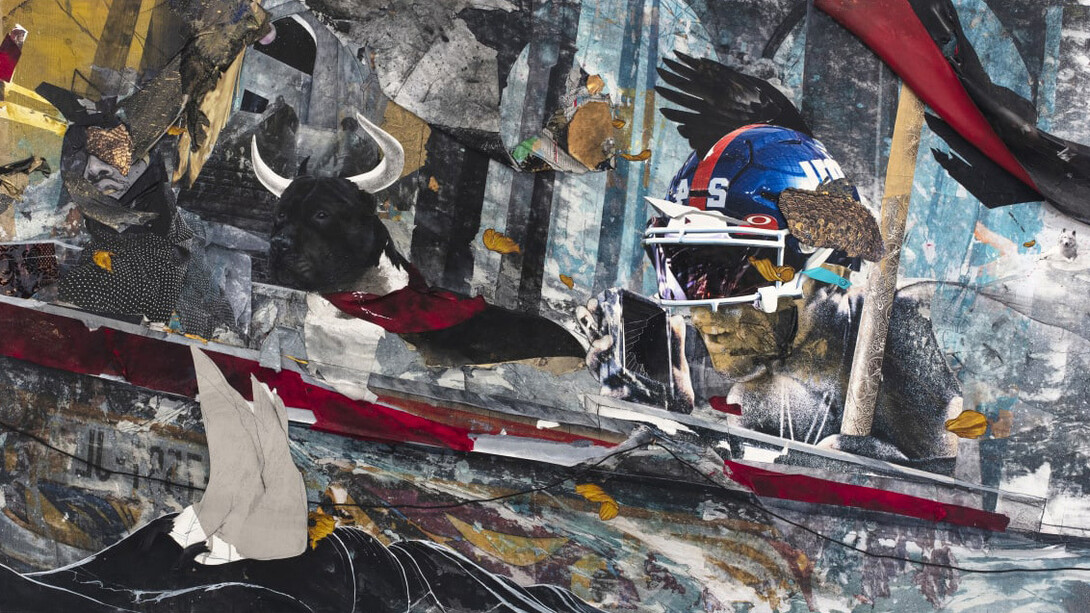
Located on the fringes of Chinatown near Manhattan’s Lower East Side gallery scene, Marc Straus Gallery has been a must-see venue for artists, critics, artworld luminaries, and contemporary-art aficionados for the past fifteen years. During that time, one could expect to see installed within the gallery’s four floors artworks with a broad range of mediums, themes and styles by an international roster of artists. Among the offerings, viewers could relish the intricate abstract woven textile compositions by India-born Natasha Das, or the embroidered constructions by Nigeria’s Ozioma Onuzulike. Viewers could lose themselves in the otherworldly realms created by Indonesia’s Entang Wiharso, in his elaborate paintings and sculptures, or become mesmerized by the arresting neon text pieces and textile constructions by Portland, Oregon-based artist Marie Watt that explore her NativeAmerican heritage.
The gallery is known for introducing to New York and U.S. art audiences young talents such as the precisionist painter Yael Medrez Pier (b. 1990, Mexico City), and multimedia artist Márton Nemes (b. 1986, Székesfehérvár, Hungary). Last year, the gallery hosted Nemes’s first-ever U.S. solo show following his remarkable presentation at the 2024 Venice Biennale, in which he filled Hungary’s national pavilion with brilliantly colored painted-metal reliefs that often emanate light and sound. His luminous and sonorous work, Stereo Paintings 12a, is a fine example included in the present exhibition. That same year at the Venice Biennale, the United States pavilion hosted a vivid, pulsating exhibition by Jeffrey Gibson, an artist of Native-American descent, who was represented by Marc Straus Gallery early on in the artist’s illustrious career. One of Gibson’s seminal—and celebrated—works from his beaded “punching bag” series, I can see you (2015), is another highlight of the anniversary exhibition.
The gallery’s founder, Marc Straus, a medical oncologist, who had built a successful medical practice, and his wife, Livia Straus, a theologian and scholar, have been collecting art for many years. Early acquisitions included a Kenneth Noland “Chevron” painting from 1966; and Ellsworth Kelly’s large, two-panel composition Chatham VIII (1970). These spare, hard-edge abstractions correspond to certain works by artists in the current gallery stable, such as Charles Hinman and Jong Oh.
In a recent conversation with Marc Straus, I asked about the gallery’s fifteenth anniversary, and his thoughts about the journey that led him here. “I'm shocked that I'm doing this for fifteen years’” Straus said. “I had an extraordinarily busy medical career, being an oncologist and running a massive practice, working an average of about 90 hours per week for forty years. At one point, it became clear to me that it was time to go—but it took a while. I had the idea of opening an art gallery. I went out and started to look at spaces in Chelsea—at about forty places. Then I thought, I had no business being in Chelsea. I wanted to do something and be someplace that would be a little more edgy. We looked at this building on Grand Street we had that was across the street from my Dad's textile store. The building was in terrible shape--probably the oldest tenement structure on the block. I took it over not knowing what the bones were like. So, I began to redesign and renovate the building, and I was lucky that it went fairly quickly. Meanwhile, I had a temporary gallery for a few months; we showed Paul Pretzer, Michael Brown, and Antonio Santín, among others. I quickly started a gallery roster, mostly with artists who hadn’t shown much or were underknown in the United States. We almost sold out every show; I was pretty lucky. We started to work with the old-timers, and mid-career artists later on.“
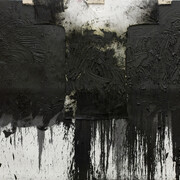
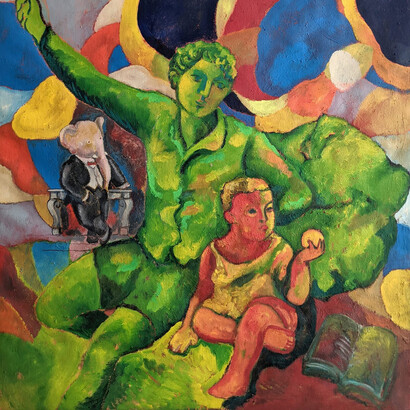
Over the past fifteen years, Marc Straus Gallery has been responsible for bringing renewed attention to seasoned veterans, such as American artists Charles Hinman and Otis Jones, as well as Europeans who have made important contributions to world culture, such as the controversial Viennese performance artist and painter Hermann Nitsch, and Sandro Chia, one of the leaders of Italy’s Transavanguardia movement of the late 1970s and ‘80s, which inspired new forms of figurative painting around the world.
American artists, such as Rona Pondick and Jeanne Silverthorne who have changed the discourse on figurative art with imaginative, phantasmagorical sculptures in novel materials and forms, have been championed by the gallery for years. The gallery also represents German artists, such as Anna Leonhardt, known for richly textured illusionistic, painterly abstractions. And Ulf Puder, a central figure of the Leipzig School, creates meticulous paintings in which fantastical landscapes and urban scenes appear to stem from empirical observation but are wholly of the artist’s imagination. Despite the disparate thematic, formal and technical concerns of the individual gallery artists, there seems to be a high, overriding sense of quality that unifies the gallery stable.
“What do you look for when you’re thinking about showing an artist--what are the qualities you have in mind?” I asked Straus. “I’ve made thousands of studio visits, mostly with Livia. And she's done many more than me,” he said. “We don’t go in thinking about showing anybody. I go into a studio kind of with a blank slate. When we’re traveling, I don’t do a lot of homework, but I do some research to decide who I would like to visit. In 2008, for instance, while traveling in Eastern Europe, we made about 200 studio visits in just two weeks. We would be out every day from about 9 am to midnight. In cities like Prague and Zagreb I tried to connect with someone who would be knowledgeable about the art scene in those cities. In Zagreb, there is a small contemporary museum, and the director introduced us to several new artists. One of the first artists we met there was Zlatan Vehabović, who was a student in his final year at the time; we now represent him. Our Eastern European visits led to a museum show Livia and I curated, After the Fall, which debuted at the Hudson Valley Center for Contemporary Art in Peekskill [co-founded by the Strauses], in 2010, and traveled to the Knoxville Museum of Art.”
Acquiring works and running an art gallery are obviously very different endeavors. I asked Marc Straus about the difference. “How do you reconcile your passion for art with what you think the art market can sustain and support the gallery enterprise,” I asked. “I think that I have a very good instinct for that,” he replied. “The main thing is I have to adore the work, and I have to feel like I can speak about it with integrity and passion. That determines whether I can sell it. It is a kind of work ethic. I would have the worst time trying to sell something I don’t care about. And now, after fifteen years, thankfully, there are many people who pay attention if I love something. And you have to be clear, truthful and consistent in what you say about an artwork. You can’t tell a different story a second time.”
Certainly, many works on view in this anniversary survey need no extraneous commentary and convey an emphatic objecthood with unapologetic panache. The quasi-figurative assemblage works by Malaysia-born artist Anne Samat, for instance, made with a myriad of diminutive found objects, and painstakingly constructed, appear as ritual cult figures that seem to have departed the spirit world. These figures enter the real world only temporarily, so we may have the opportunity to observe a physical embodiment of the artist’s private, esthetic domain. Clive Smith’s panel painting, Sky stack (2024), a masterful exercise in trompe-l’oeil, shows four boxlike compartments, each occupied by a meticulously painted common wild bird that one might find anywhere in the Hudson Valley. One bird is shown nesting while the other three perch along the edge of the otherwise empty box that recalls a Minimalist sculpture by Donald Judd, perhaps. The work appears as a unique merger of realism and abstraction, and nature and artifice. Metaphorically at least, it suggests the four floors of this gallery and the wondrous, esthetically charged occupants of each room.
(Text by David Ebony, NYC 2026)