English
 Español
 Français
 Deutsch
 Italiano
 Português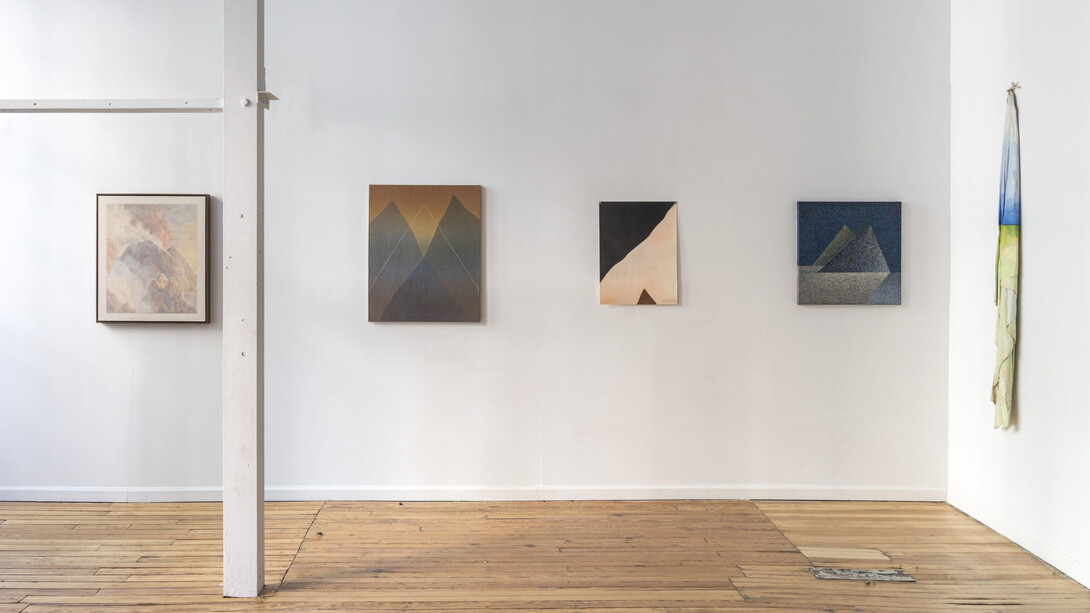
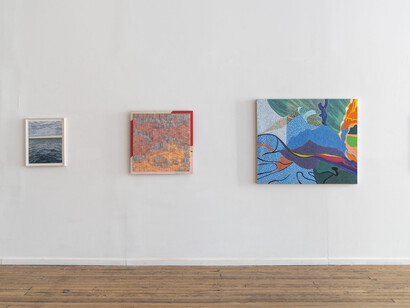
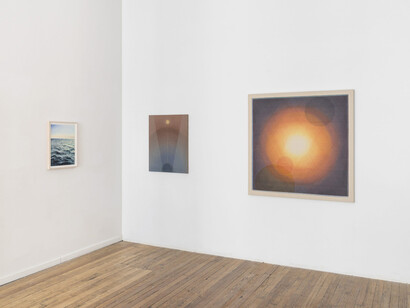
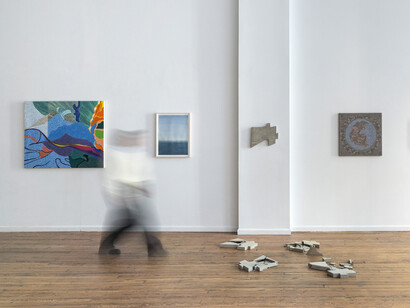
JDJ is pleased to present Field notes, a group exhibition bringing together artists whose practices move between abstraction and landscape, foregrounding material processes and methods of making that translate observation, experience, and environment into form.
Spanning multiple generations, the exhibition brings together a group of artists working across painting, drawing, textile, sculpture, and works on paper who approach landscape as a site of encounter: geological, political, bodily, atmospheric, and psychological. Rather than rendering specific places, these works register the traces of looking, moving through, or responding to the world.
Participating artists: Jayden Ashley, Barrow Parke, Myles Bennett, Sofia del Mar Collins, Julia Felsenthal, Rachel Garrard, Azadeh Gholizadeh, Wendi Gross, Heather Guertin, Nathaniel Robinson, Susan Weil, Adrianne Wortzel.
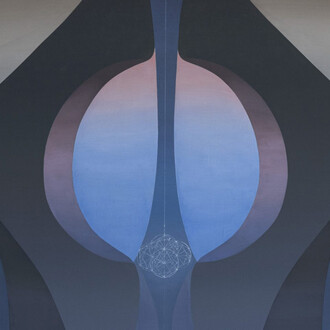
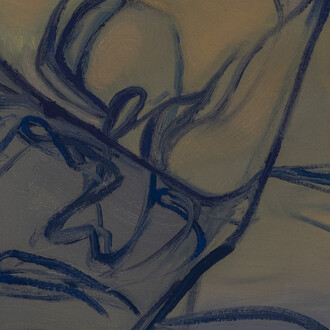
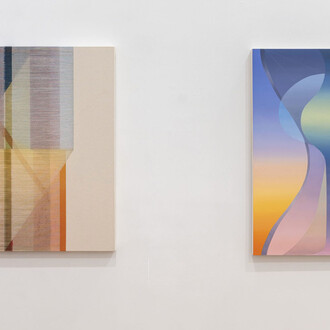
Susan Weil’s Figure as landscape, c. 1971, made with spray paint on paper, collapses bodily and environmental forms into a single, shifting silhouette, while her sculptural painting Soft landscape, 1972 depicts a clear horizon despite the folds of its pleated surface. Adrianne Wortzel’s acrylic paintings from the 1960s and 1970s similarly hover between organic movement and formal structure, their undulating color fields evoking horizon lines or shifting ground.
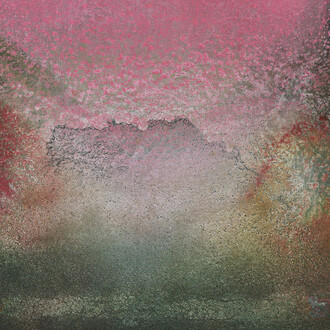
Material specificity becomes a form of observation throughout the exhibition. Rachel Garrard’s works, created with rock powder pigment on linen, draw directly from geological matter; their softly radiating compositions—such as Genesis, 2023 and Two peaks, 2024— feel both elemental and meditative.
Meanwhile Julia Felsenthal’s densely articulated watercolor paintings of the ocean find poetic ambivalence in the attempt to use water to depict water—a process, seemingly intuitive, that succeeds only though the artist’s sustained intervention. The resulting works celebrate the protean nature of water and air while indulging and interrogating the human desire to halt time, to fix what is fluid.
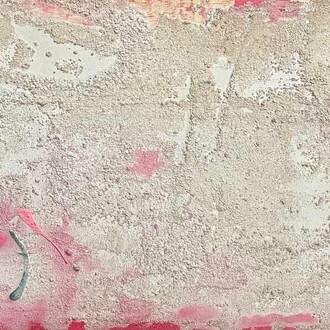
Jayden Ashley and Barrow Parke show how landscape can be transformed through shifting political boundaries. Ashley’s Bête noire, 2025 reinterprets 1930s redlining maps of Fort Greene through fractured concrete panels, using the material as a metaphor for how systemic racial exclusion has evolved into contemporary gentrification and ongoing social and economic constraint. Barrow Parke’s Pangaea, 2024, uses embroidery and weaving—arguably humanity’s oldest form of technology—to depict the supercontinent Pangaea with current-day country borders superimposed onto the landmass, revealing the arbitrary constructs imposed long after cultural and material knowledge were formed and shared.
A number of artists translate fleeting atmospheric conditions into carefully built surfaces. Myles Bennett’s graphite, ink, and colored pencil works—ranging from the volcanic references of Eruption (Vernet volcano), 2024 to the glowing optical density of Penumbra #13, 2026—use accumulated mark-making to evoke light, shadow, and depth. Wendi Gross’s Soft rain, 2025, made with dye on canvas, allows pigment to move, flow, and fully permeate the canvas, settling organically and recalling rainfall, erosion, and vapor dispersing. Azadeh Gholizadeh’s Clouds: puget sound, 2023 translates an observed atmospheric condition into a woven-painterly surface, where merino wool and acrylic are layered across canvas mesh to render shifting cloud forms through systems of repetition, texture, and material density rather than pictorial illusion.
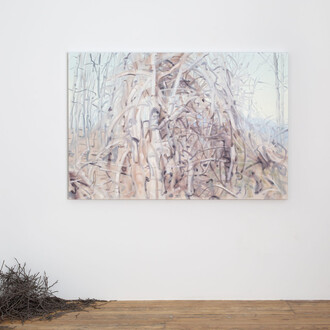
Other works register landscape through gesture, movement, and scale. Heather Guertin’s paintings transform spliced fragments of discarded printed imagery into densely textured abstractions, where layered brushwork and hybrid forms translate recognizable source material into a painterly language shaped by process, perception, and transformation. Her painting Blue valley, 2025 unfolds as a vibrant, animated terrain. Nathaniel Robinson’s Through leaves, 2022, builds a dense, flickering field of accumulated brushstrokes that translate foliage, light and shadow into an immersive surface, where landscape emerges through repetition. Sofia del Mar Collins’s Seaskirt, 2024, constructed from ink on hand-dyed silk and muslin, introduces a sculptural, textile response to coastal environments, where fabric becomes a stand-in for water, motion, and permeability.