English
 Español
 Français
 Deutsch
 Italiano
 Português
Almost everything will work again if you unplug it for a few minutes…including you.
(Anne Lamott)
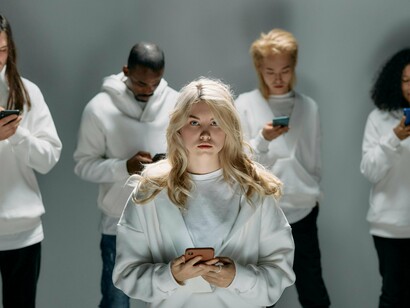
We live in the most interconnected era of human history. Our phones wake us up, our watches count our steps, and our notifications remind us we are "always on." The world applauds the multitasker, the quick responder, and the person who’s reachable 24/7. But behind the glow of our screens, exhaustion is mounting.
Cue the digital detox. It promises relief, freedom from endless scrolling, fewer notifications, and more peace. But here’s the question we rarely ask: Can we really unplug in a world that is wired into everything we do?
The allure of the digital detox
The phrase itself sounds almost luxurious. A retreat without Wi-Fi. A weekend without Instagram. An evening without WhatsApp buzzing like an impatient guest at the door. The idea whispers, "You can breathe again."
And in fairness, there’s evidence to back it up. Studies link reduced screen time to better sleep, improved focus, and stronger real-life connections. Digital detox retreats are booming—from silent monasteries to resorts that lock away your devices at check-in. For many, unplugging feels less like a wellness choice and more like survival.
In fact, a 2022 study by the University of Bath found that people who took just one week off social media reported higher life satisfaction and reduced anxiety. That single week of silence did what months of scrolling couldn't—it helped them reconnect with their own thoughts. The irony is, people are desperate to escape something they once thought they couldn’t live without.
But here’s the catch: while detoxing helps, it often feels temporary. Like dieting, we return to old habits once the retreat is over. The detox gives us clarity—but what happens when Monday morning emails flood in?
The problem with being "always on"
Technology was supposed to free us. Instead, it blurred every boundary. Work emails arrive at midnight. Family dinners are put on hold by "just a quick call." Our worth seems measured in likes, views, and response times.
Psychologists call it conscious partial attention. We’re never fully present—half here, half scrolling, half exhausted. It chips away at our relationships, our productivity, and even our self-worth.
Thinking about it: we text during meetings, scroll during meals, and fall asleep to the soft glow of screens. It’s no longer unusual to spend more time online than in real conversations. The constant notifications condition our brains to crave stimulation—the ping, the buzz, each one a tiny hint of dopamine. It feels good for a second, but it leaves us emptier than before.
The truth? The problem isn’t technology itself—it's our relationship with it. And like any toxic relationship, breaking free takes more than a weekend off.
Why it’s hard to unplug
Let’s be honest: unplugging is not simple.
Work demands: Employers expect quick replies, even after hours.
Social pressure: Group chats don’t pause just because you want a break.
Fear of missing out (FOMO): What if you miss the news, the invite, or the moment?
Our devices are designed for addiction. Infinite scrolls, auto play videos, and dopamine-triggering notifications—companies study our brains and build apps to keep us hooked. So, guilt-tripping yourself for struggling to unplug misses the point. The game was designed to keep you playing.
And beyond personal willpower, there’s a cultural layer. Productivity has become a badge of honour. If you’re not responding fast enough, posting often enough, or "grinding" hard enough, it’s easy to feel like you’re falling behind. The line between ambition and anxiety is now paper-thin. In many ways, the digital world feeds both our dreams and our insecurities.
Can we find balance?
If a full detox feels impossible, balance might be the real goal. Instead of unplugging completely, what if we built healthier boundaries?
Tech-free zones: Bedrooms, dinner tables, or morning routines without screens.
Digital sabbaths: One day a week where devices are optional, not mandatory.
Mindful use: Check apps with intention, not on autopilot.
Reclaim boredom: Resist the urge to fill every pause with scrolling.
The aim is not to reject but to rhythm. Technology can be a tool, not a tyrant—if we learn to set the terms.
Balance looks different for everyone. For some, it means deleting social media apps during the workweek. For others, it’s about muting notifications or setting "Do not disturb" hours. The key is awareness—noticing how often we reach for our phones without thinking. Once we are aware, we can choose differently.
Stories of unplugging
Around the world, people are experimenting with new rhymes. A teacher in South Korea limits her social media use to Sundays, calling it her "mental hygiene day." A start-up in Sweden enforces email-free Fridays to spark creativity. Parents in Kenya form storytelling circles where phones stay outside the room, and only voices carry the night.
Even major companies are rethinking their culture. In France, the "right to disconnect" law gives employees legal protection to ignore after-hours emails. In Japan, tech firms are introducing "no-screen meetings" to boost innovation. These small shifts signal a bigger truth—society is realizing that constant connection isn’t the same as meaningful engagement.
These small acts of reclaiming presence may not be as glamorous as a week-long retreat, but they are powerful. They teach us that unplugging doesn’t have to be extreme—it can be daily, intentional, and sustainable.
The takeaway: redefining connection
A digital detox is not about rejecting technology. It’s about reclaiming yourself. In a world that confuses constant availability with true connection, unplugging becomes an act of courage.
Because maybe the point isn’t disappearing from the grid forever. Maybe it’s learning to log out when you need to. Maybe it’s reminding yourself that your value isn’t tied to a blue tick or a quick reply.
True connection isn’t measured in messages or mentions—it's measured in presence. The laughter shared across a dinner table, the silence of a walk without headphones, the full attention you give when someone speaks. Those are the moments that refill what instant scrolling drains.
So, can we really unplug in a connected age? Probably not fully. But we can pause, we can choose, and we can remember this: the best connections are still the ones where you look someone in the eye, not the screen.