English
 Español
 Français
 Deutsch
 Italiano
 Português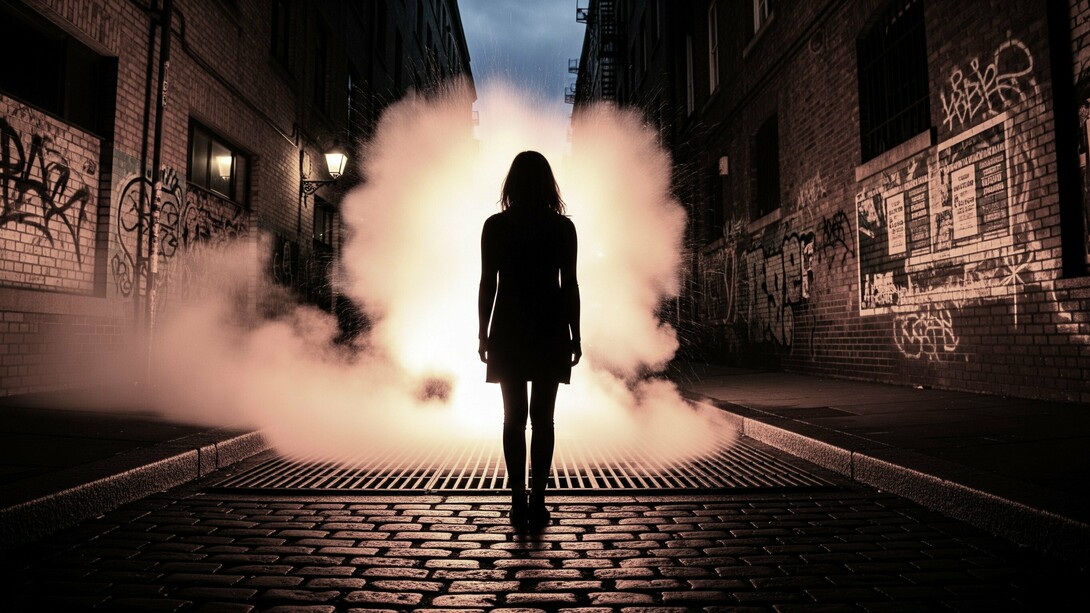
Here is a story about Aldonza, before everything happened:
Aldonza grabs her satchel-bag, and she steps out with her mother into the morning sun, like diving into a lake, like a crime.
She is a crime.
The streets in this part of the village, where the Moriscos are allowed to live, go winding up and down and all around; the folds and valleys of a quilt atop a sleeping body. At any moment, it seems like the cobblestone itself might begin to shift, rise and fall with the breathing of whatever great giant is resting below—or perhaps the early morning sun is waking it up, the giant, and it will yawn with a groan to split the Earth, and it will sit upright, stretching, and the town will be ruined, just like that.
It seems like the whole world might be thrown aside, onto the floor in a crumpled heap.
“Come,” calls Aldonza’s mother, back over her shoulder. “We have to be in the marketplace before noon.”
“Before Dhuhr,” is what she means. “We have to be seen there,” is what she means. “Taqiyya, Habibti.”
They have to be seen
In the marketplace
At Dhuhr, not praying,
So that everyone will know that they don’t pray—
Not like that,
At least—
Not at that time of day,
At least.
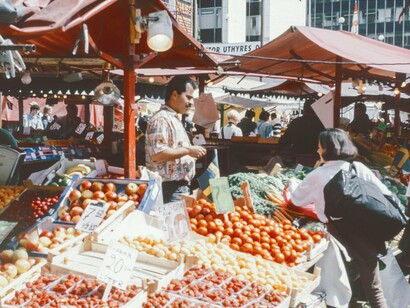
They pass houses so much like theirs, with awnings to break the view from the outside, with the windows boarded up. They pass other people walking. They stare at the walls. They stare at their feet.
“Taqiyya,
Habibti.”—
“Don’t look them in the eyes.”
“There are knives in the eyes, here.”
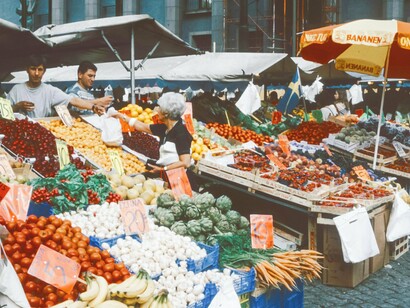
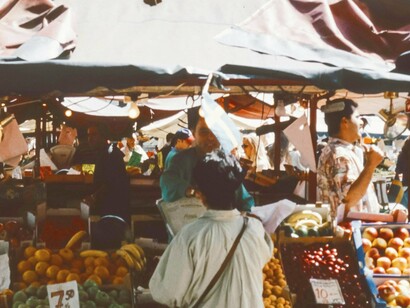
It’s not far they have to go—they can already smell the fresh-baked bread and curing meats. They can already catch the shuffling feet and threading voices—bartering, arguing, screaming, agreeing, agreeing to disagree, and moving apart. Screaming. Begging. Apologizing. Screaming. Warning, with love—fear, but love—
“Taqiyya, habibti.”
Aldonza walks through the winding streets of the giant’s quilt, and she lets herself breathe. In, and out. In the far distance, a windmill, softly turning.
For just a moment, she lets herself feel something other than worry—sunshine on her cheek, she lets herself feel that. Through the thin soles of her shoes, for just a moment, she thinks that maybe she can feel the giant starting to wake up—
It might be—
Or maybe it is the whole world that is starting to move, with a rumble, a screech, a roar.
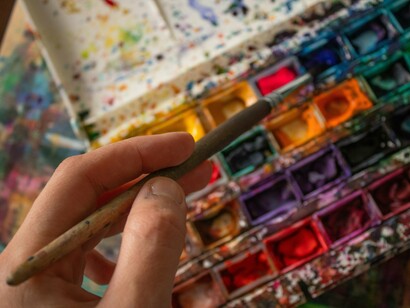
Even through the thick soles of my boots, I can feel the monster shifting and groaning beneath the sidewalk. “It will come for us all,” I text to Ahmed, who still has a day or two left before he is bombed and buried, along with the rest of his family; he has decided to spend the time painting, with his older son’s watercolor palette—his younger son has never showed any interest in it as a hand-me-down, and so what’s to do but for Ahmed to paint with it? What else is there for him to do? “It will swallow us up, all of us. It will swallow us whole,” I tell him.
Ahmed is not a very good painter. He has actually never really painted before—he’s never had the thought, or the chance. He’s spent nearly his whole life working, and not the sort of work where you paint, or draw, or write. He bought this watercolor set five or six years ago because he decided that his children weren’t going to work, so they ought to have something else to do. What else was there for them to do but paint? He shows me what he’s made. “It will swallow me whole,” he tells me, “but then they will dig me out. They will dig you out, too.”
He is just playing along with what I am saying. He thinks my brain has just turned to sawdust, as so many people’s brains have turned to sawdust. He isn’t really hearing me; he is just trying to make me feel better.
I shake my head.
“It will burn us down to nothing but our bones, and then not even that,” I tell him. “There will be nothing left to dig out.”
I can feel it in my feet.
“It’s just the train,” Aldonza tells me, as we pass each other in the marketplace at Dhuhr—
And for just a moment, she seems to flicker between who she is and what she is—
Golden-white feathers—blades like eye—an eye like a blade—an eye, BURNING.
Neither of us is where we are supposed to be; we have gone and slipped. Asphalt sidewalk…
Cobblestones, stands selling fruits and vegetables and meats, and wine.
Shop-windows—puffs of breath in late-fall, early-winter cold, pelting air. Narrow-tipped spears—chains dragging—voices crying out.
Pens and paper.
Hooves and hoofbeats like a heartbeat, wild.
We are all tangled—we are all mixed up, for a moment.
“It’s just the train,” Aldonza says to her mother for no reason at all.
And when the train comes by again, beneath my boots, beneath the sidewalk, with a roar, a screech, a rumble, it startles up a dove that had been finding some warmth on top of one of the gratings down into the tunnels—up, into the air, and away—
But not so long ago, and not far.
The prisoners are not being dragged out to the marketplace today to beg for their lives. For no reason at all, there are some days that they just don’t. The guards want a break. The people are tired of the noise. The Mayor is spending the day in bed.
Aldonza’s father stands in the cell with the other men. His chain is bound to the part of the wall that is closest to the right, below the grating up into the street. He stares up between the bars, into the blinding sun, and even he can feel it coming.
Whatever is coming.