English
 Español
 Français
 Deutsch
 Italiano
 Português
The video began the way so many nature documentaries do—slow music, a deep masculine voice-over, and the sweep of a camera across a dense green canopy. Clara Hayes clicked it almost absentmindedly, scrolling through Facebook Watch after a restless phone call with her best friend.
“Extremely rare footage has been captured in the forests of Thailand and Indonesia. A helmeted hornbill couple is selecting their nest cavity. These birds are partners for life, and their nesting ritual is both beautiful and dangerous,” the narrator said.
The camera moved in on a massive tree, its trunk hollowed by age. The hornbill pair perched on its branches, tilting their heads toward each other in what seemed like silent conversation.
“They usually choose the tallest and oldest trees. When they find a hole large enough, they claim it as their home. The female steps inside. Together, they begin sealing the entrance with mud, faeces, and regurgitated food—turning the hollow into a predator-proof fortress,” the voice continued.
Clara’s eyes stayed fixed on the screen as the female disappeared into the cavity and the male arrived with a beak full of mud. “Once inside, the female does something extraordinary,” the narrator said. “Knowing she won’t need them, she pulls out her flight feathers. For the next several months, she will never leave this chamber. What was once a nest is now both a sanctuary and a prison.”
The music deepened. The male tirelessly delivered food through the tiny slit, never keeping the best for himself. “It is said he collects up to thirty thousand fruits. When she tires of fruit, he searches tirelessly for protein-rich insects, perfect for her. He never eats the best food himself—always saving it for her.”
Clara paused the video. Her chest pressed tight, as if trying to hold the image of these small creatures and their unwavering devotion inside her. Just moments before, she had been on the phone with her best friend—married barely a month, already talking divorce. It wasn’t unusual. At forty-six, Clara was surrounded by the wreckage of other people’s failed unions: neighbours who spoke only in grudging tones, cousins silently enduring mismatched lives, and colleagues surviving marriages like delicate negotiations with no clear victory.
And yet here, on her phone screen, were birds—birds—who seemed to understand something humans had forgotten.
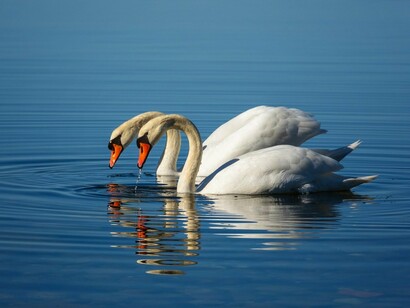
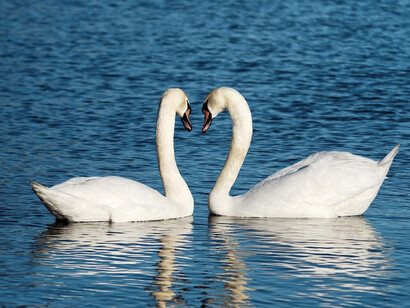
We call people “animals” as an insult, she thought, but maybe animals get the most important things right. Wolves who mate for life, hunting together, raising their pups side by side. Penguins who rotate incubating their eggs, each taking turns in the relentless cold. Swans who return year after year to the same partner, necks arched in perfect symmetry. Hornbills who turn sacrifice into ritual, transforming a tree hollow into both prison and sanctuary.
Clara leaned back, letting the hum of the refrigerator and the muted city noise outside fill the quiet of her apartment. It was easy to dismiss the hornbills as instinct-driven, as simple creatures acting without reflection. But that would miss the point. Partnership, she realized, was not about ceremony or perfection. It was about endurance, patience, daily attention, and quiet, consistent care.
Her mind drifted to her own life. She had never married—not for lack of opportunity, but for fear of compromise, for fear of the gradual erosion of herself. Watching the hornbills, she realized that partnership wasn’t about losing oneself—it was about creating a shared space where each could flourish while supporting the other. Life itself was a partnership, she thought, whether romantic, familial, or communal.
The day stretched on. Clara made tea, the steam curling in delicate spirals around her mug. She watched the sunlight hit the balcony, illuminating the dust motes floating lazily in the air. A thought struck her: humans often mistake grand gestures for love, but the hornbills reminded her that devotion could be silent and unglamorous. Showing up, day after day, carrying the tiny, consistent weight of care—that was the essence of partnership.
She remembered her parents, who had weathered storms together—not without anger, not without cracks, but with an unshakable commitment to repair what was broken. They didn’t always look like the smiling couples in magazines, but they built a partnership sturdy enough to raise children, bury parents, survive illnesses, and still sit beside each other at the end of the day.
Later, Clara folded laundry while the city’s evening lights flickered through her window. She thought of friends who were fighting, friends who were leaving, and friends who had given up. And yet, she also thought of moments she had witnessed that mirrored the hornbills’ devotion: the co-worker who stayed late to help a colleague in crisis, the neighbour who brought meals to the sick, the sister who listened without judgment, and the friend who called at 2 a.m. just to be present.
Love did not always have to be romantic. Love was persistence, attention, patience, and sacrifice.
By the time night settled in, Clara returned to her phone and replayed the last few seconds of the hornbill video. The birds filled the frame—small, feathered, unassuming creatures—yet fierce in their commitment. She smiled, a mix of wistfulness and resolve curling through her chest. Maybe she would never seal herself into a tree hollow. Maybe her life would not follow that same ritual. But she could learn from them: to be patient, to nurture, to give without expectation, and to show up day after day, even when the world felt exhausting and unfair.
Life itself demanded partnership. And perhaps, if humans paid closer attention, we could do it better—messy, imperfect, but alive, devoted, and present, like the hornbills.
Clara set her phone aside and closed her eyes. The soft echoes of the hornbill’s story lingered in her mind. Love, she realized, was not about perfection, victory, or social validation. It was endurance, sacrifice, and the quiet act of showing up for someone else.
And maybe, just maybe, that was enough.