English
 Español
 Français
 Deutsch
 Italiano
 Português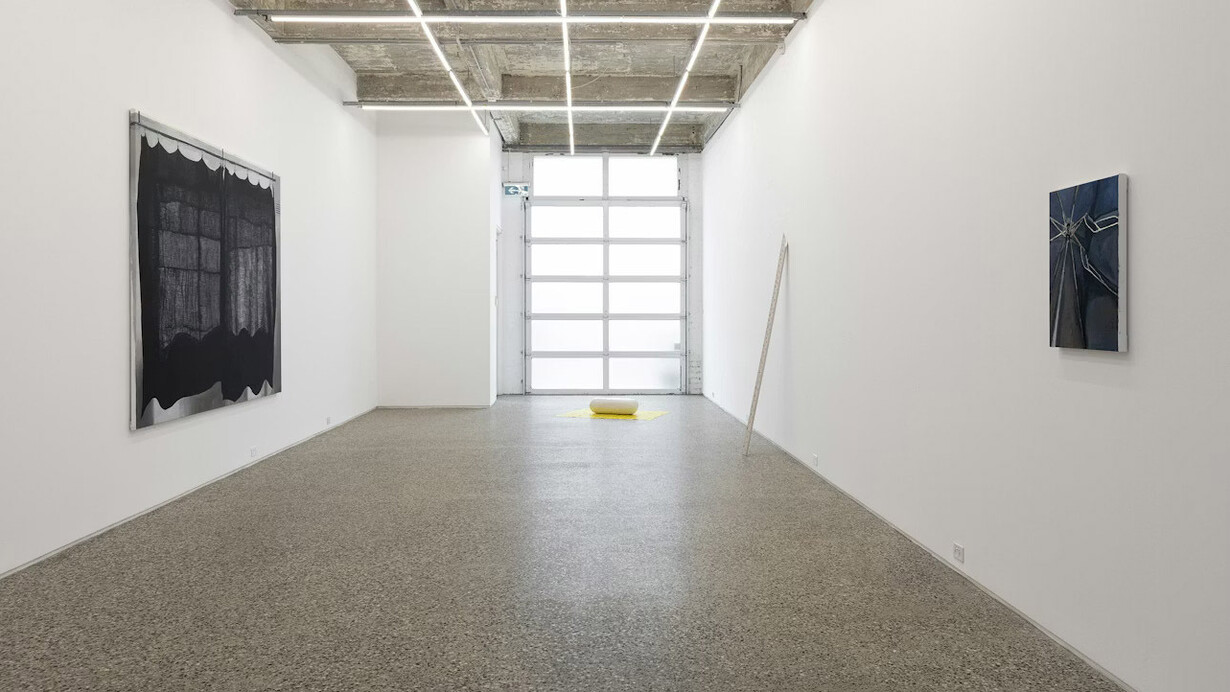
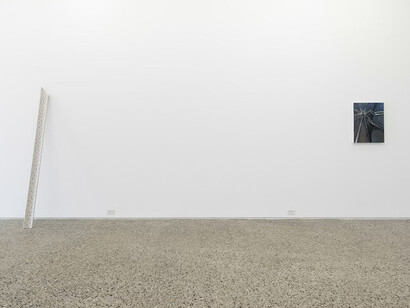
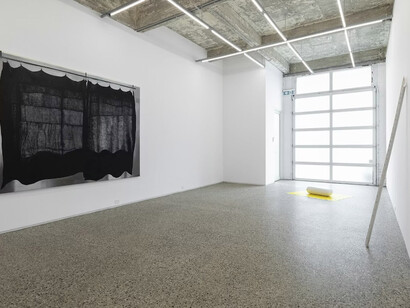
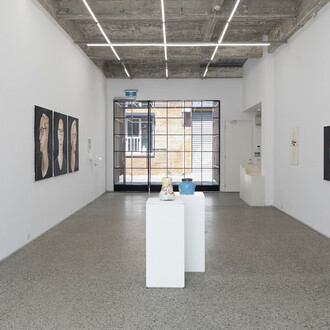
Like a stone sinking in a lake or a bullet in my heart assembles a range of works that contribute to an obtuse portrait of the artist, her histories, the environments she inhabits, and the stories she variously tells or conceals. Central within the configuration is the large-scale painting (Love is the perfect crime, 2025), depicting curtains from the artist's home, upon which are printed curtains flailing in the wind. It both reveals something of a domestic environment, while retaining its elusiveness through the doubling of the drapery, as if to be a further vailing of both the internal environment and all that is outside of the window. Yusi Zang has a tendency for creating paintings that offer only a glimpse of a scene, a detail of an obscurity, or a closeup of a fragment.
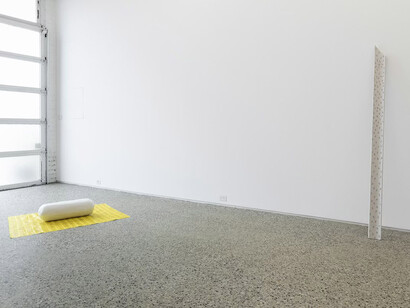
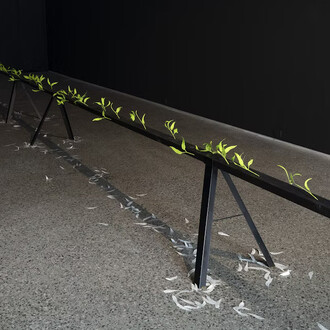
So too does that carry forth with other elements within the exhibition, with the sculptural work Gallery worms (2025) replicating a Phereoeca uterella (plaster bagworm), an often disguised yet commonplace moth larvae. Citing their occasional presence in the artist's studio, Zang's focus on such a detail continues their attraction to the often overlooked. So too does her sculptural work Baby I like it raw (2025) based upon a shrimp candy, an old-fashioned snack widely available in China, often associated with marking the new year. It neither contains shrimp nor replicates their form, but rather, tastes of peanut and has a shape more akin to a stout caterpillar. It is toward the realm of the nondescript that the artist is consistently attracted.
Like a stone sinking in a lake or a bullet in my heart has heft as an exhibition title. Its drama suggests that a focus on minute details and the commonplace is perhaps a strategy to assert the appearance of normalcy, a kind of control of the minutiae. Taken further, the emphasis on details may seek to shroud a deeper scrutiny of a broader situation or environment. Like the still surface of a deep body of water, hiding all that lurks beneath. Rather than allowing us to look at the potential danger escalating outside of the window, Yusi Zang asks us to focus on the curtains.
In the words of the artist: ‘The title of this exhibition gestures toward my relationship with human society—the restless current that runs beneath the ordinary facade of daily life. This hidden force is what sustains my practice and my existence, yet it is also what unsettles me, stirring unease and crisis. The facade is a posture I have learned to assume, lightened with humour and self-mockery so that it may pass as acceptable within society. And yet, I can never fully inhabit it, nor entirely comprehend it. Perhaps this is partly because, as an immigrant who has lived in this city for the past decade, I have often felt like a child learning once more how to grow up, as I once described in an interview. In truth, the process has been harder still, for I arrived already formed, yet untamed, as an adult. I sense that this dilemma will follow me wherever I go. The domestic objects and food that recur in my work—emblems of survival and consumption—echo this facade. Rooted in the intimacy of my own daily life, they give form to the currents beneath it: the unspoken energy, the quiet unease, and the pain that resists expression.’