English
 Español
 Français
 Deutsch
 Italiano
 Português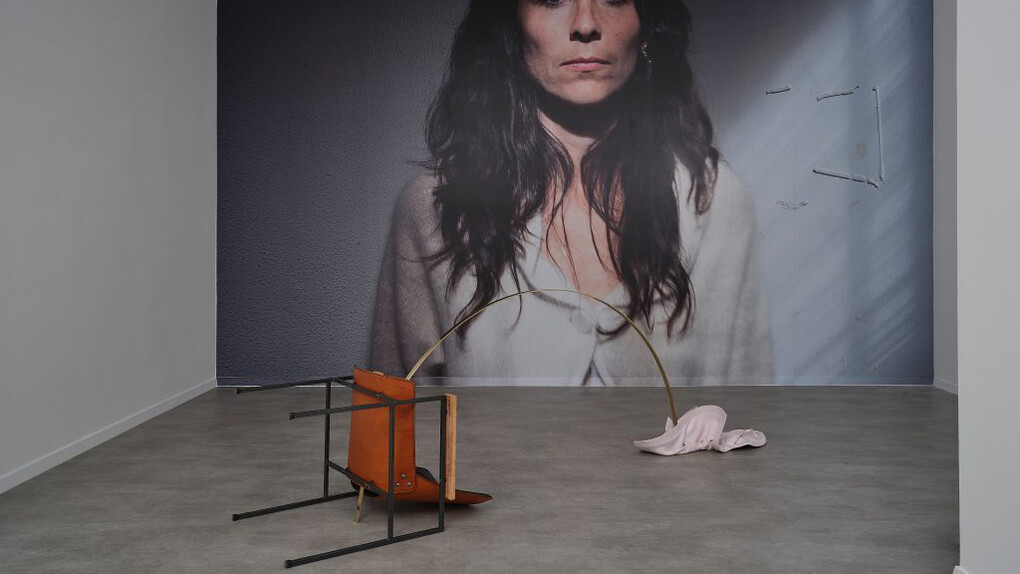
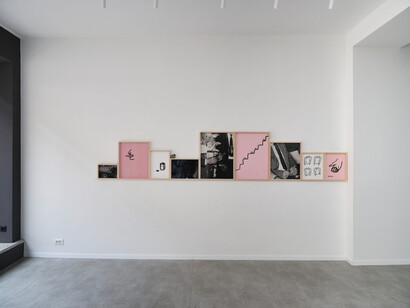
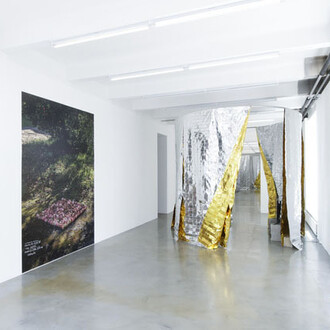
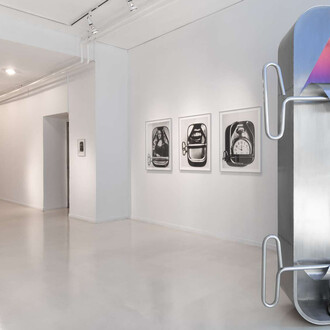
In Dear father, the artistic practices of Maja Babič Košir, Helena Tahir, and Nevena Aleksovski converge to explore the father figure as a site of complexity, tension, and quiet resonance. Their works differ in medium, form, and aesthetic language, yet together they form a constellation of traces: omission and reverence, rupture and tenderness, memory and transformation. Situated within broader discourses on kinship, inheritance, and archival practice, the exhibition treats the father figure not merely as a familial presence but as a structural, historical, and symbolic one.
The exhibition does not seek reconciliation nor to articulate a single paternal narrative. Instead, it cultivates attentiveness and reflection, dwelling on what remains unspoken, unsent, or irretrievable. The father appears as both anchor and fracture, origin and fissure, an unstable locus resonating across temporal, geographic, and emotional registers. Personal histories intersect with wider structures of migration, labour, and remembrance, linking intimate traces to collective experience.
Central to the exhibition is the notion of absence, understood as an active and generative force. Silence, incompleteness, and fragments function as both conceptual and material strategies, shaping the terrain of memory, desire, and imagination. Temporal layers coexist: archives hold the past, performative gestures inhabit the present, and imagination projects possible futures. In dialogue with feminist archival practice, postwar memory art, and contemporary meditations on kinship, Košir, Tahir, and Aleksovski reveal the father figure as mutable, refracted, reassembled, and carried forward through time.
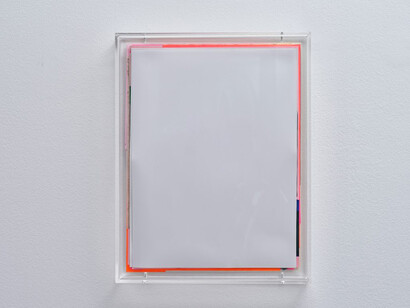
In Say something nice to me, Košir engages with her father’s archive not to preserve, but to transform. Sketches, prototypes, and fragments of letters and notes become sculptural gestures that trace his presence without sentimentality. In the Love letters series (2018–), found and familial materials are reshaped to explore memory, absence, and the lingering weight of loss, while the archive becomes a quiet partner in reflection. Through these interventions, the father emerges not as he once was, but as he reverberates through objects, forms, and the intentions they carry.
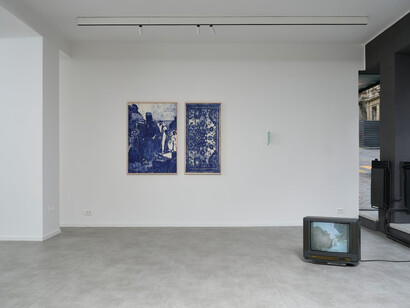
The last sector (2024–) traces Helena Tahir’s journey to Iraq, her father’s homeland, exploring landscapes shaped by displacement, political upheaval, and family history. Combining carbon transfer drawings, archival fragments, photographs, and personal letters, the work weaves a layered narrative of memory and belonging. Her father appears through traces and recollections—intimate, historically situated, and marked by exile and absence. The project embraces the impossibility of full retrieval while highlighting the generative potential of attentive inquiry, allowing fragmented personal and historical traces to converge into a quiet, reflective meditation on identity, inheritance, and connection.
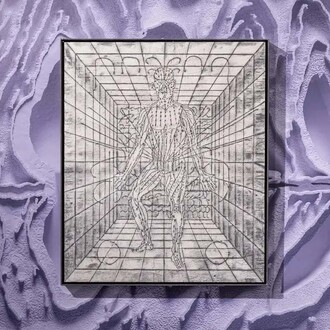
In Melancholy of the abandoned lands (2022–), Aleksovski situates her father’s life as a mine manager in Bor, Serbia, within broader histories of industrial labour, migration, and post-socialist transition. Mining functions both as subject and metaphor, an act of extraction that sustains yet estranges, providing life while eroding the very ground it depends on. Archival photographs are enlarged, fractured, and redrawn into constellations where presence and the void converge, alongside a series of drawings. Through this process, the artist revisits her father’s life and her own origins, negotiating intimacy and distance, and allowing private memory to expand into the collective.
Dear father adopts silence, incompleteness, and distance as methods of inquiry. Letters never sent, refracted images, and archives that resist closure open a space for thought beyond resolution. The father figure is never only familial; it is structural, cultural, and political. Through transformation and reconfiguration, Košir, Tahir, and Aleksovski turn private inheritance into shared reflection. The unfinished gesture becomes a site of possibility; questions remain suspended, and absence itself becomes a material for thought. Here, absence is not lack, but a medium through which the father is continually reimagined.
(Text by Piera Ravnikar)