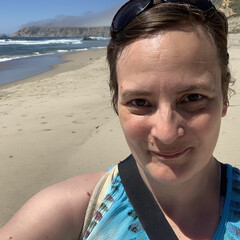
Who am I? Who do I want to be? How do I get there? These are questions that come up with astonishing regularity in a person’s life. Whether it is from accomplishing a goal or meeting the unexpected, these questions are always present. Human beings have always had one way of trying to answer these questions: storytelling.
Stories explain things both philosophical and tangible, regardless of verifiable truths or fiction. My interests are heavily tied to psychology, in particular, the psychology of trauma, history, true crime, cultural studies and how digital media is used in personal and cultural narratives. Stories are the common denominator. I have always loved storytelling. I have been reading ever since I can remember, and some of my best memories come from the pages of books. As I grew older, these stories took on different meanings. Stories I once hated as an adolescent have new meaning as an adult. Sometimes we encounter the same stories told from a different perspective, such as the recent retelling of the fairy tale wicked witches.
Looking back, I can see that a good deal of my post-secondary education revolved around various stories. I chose to study ancient civilizations to understand how we got to where we are today and form. I chose film school because I wanted to be able to tell these stories using imagery, dialogue, and movement. I chose my current degree program because it allows me to make connections between storytelling and various disciplines.
These interests also intersect with many ubiquitous human experiences, such as trauma. People understand what a traumatic event is, but there is still a lot of work being done on how it manifests itself in the human body, as well as how to manage these symptoms. This also has links to chronic illness, such as long COVID, which has been increasing steadily over the last few years. How are these physical manifestations connected to the concept of storytelling?
Digitally. There has been quite a bit of research on the negatives of the internet, but not as much regarding the positives. I have seen groups of people come together, sometimes accidentally, over common issues and find support largely through digital groups and social media. The internet provides a place where people can come together and tell their story and receive support, whether they are capable of leaving their home or not. So many different types of media are created by everyday people, from digital art to minifilms, aka reels. Some are quite profound. It is fascinating to see.
More recently, AI has entered the picture. Backlash is understandable. But I want to consider where this new technology can take us. What questions does it create? What does it mean to be an artist if the skill of creation is no longer necessary? Simply describing a thought? What makes art great? Concept? Skill? Both?
I am often asked: Why do you like that? Good question. One, I hope to answer here. What is it about certain stories that speaks to us? That speaks to the majority? How can we write stories that do the same? What is it that this story has that others might not?
I will bring my interest in storytelling, wellness, history, and psychology to these pages. I will seek to bring to you the stories that I find and hold most dear. I will take suggestions and hope to do them justice. I will attempt to weave together various disciplines and present them as a cohesive whole. Something that makes sense. Perhaps something that had not occurred to you yet.
This is who I am. Who I am trying to be. A storyteller. A story analyst. A story patron.
I believe that everyone has a story worth listening to or reading about. What’s your story?
We use essential cookies to keep you signed in and our website secure. We also use Google Analytics with cookieless measurement to understand how our site is used. With your permission, we use analytics cookies to measure your activity across browsing sessions.
We use Google Analytics to measure site usage. When analytics cookies are rejected, measurements are sent without persistent cookies. With your permission, cookies are enabled to connect your activity across sessions and improve measurement accuracy.
Essential cookies remain active to keep you signed in and our website secure.

 English
 Español
 Français
 Deutsch
 Italiano
 Português