English
 Español
 Français
 Deutsch
 Italiano
 Português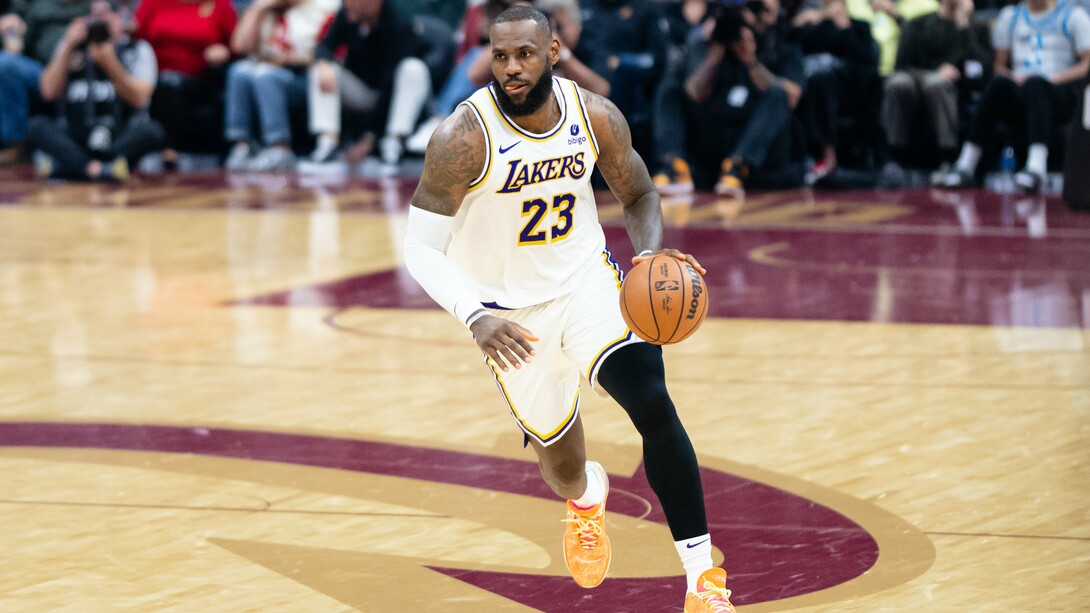
First off, let me say: there’s a clear top two. All due respect, but if you’re someone who thinks Kareem, Wilt, or Kobe should be in the conversation, you can stop reading now. They’re great players — maybe even top five — but let’s be honest. This is a debate among adults, where we respect others' choices even if we know, deep down, that ours is the correct one. It’s Jordan or James, that’s it.
Now, I should probably disclaim up front that I’ve been a firm Jordan believer since watching The Last Dance in 2020. Even after LeBron won the championship that same year (and no, I’m not one to discredit the ring just because of the COVID bubble — that title was legit), Jordan remained my pick. But since then, LeBron has made it harder and harder to ignore the totality of his resume. He’s overtaken Kareem to become the NBA’s all-time leading scorer, led the league in assists at age 35. And now, in a moment that feels like it belongs in a myth or a movie, he’s shared the court with his own son; you can’t just brush that aside.
Still, the case for Jordan remains as strong as ever. He still holds the highest points-per-game average in NBA history — 30.1 over the course of his career, a number that’s remained untouched despite decades of offensive inflation. He won MVP and Defensive Player of the Year in the same season. And, of course, he won three championships in a row, retired to play baseball, then came back and did it again. Nobody’s ever touched that kind of narrative perfection.
When it comes to the GOAT conversation, the most obvious (and most overused) point people throw around is championships. LeBron has four. Jordan has six. Case closed, right? Not quite. LeBron has been to the Finals ten times over his 22 seasons — almost double Jordan’s six appearances. “Ring culture,” as it’s often criticized, can oversimplify things. There’s truth to the idea that just making it to the Finals that often, especially across different teams and eras, is itself a feat of greatness. And those who argue that LeBron’s Finals losses somehow taint his legacy might be missing the point.
But you know what’s an even bigger feat than making it to the Finals ten times? Winning them. And winning them every single time you get there. Jordan was 6–0 on the game’s biggest stage, with six Finals MVPs to match. That kind of perfection matters, especially when we’re splitting hairs at the absolute top of the sport.
Another knock against LeBron’s case — depending on how you look at it — is the way he’s changed teams. Some fans frame this as a strength: "He can win with anyone." And there’s truth to that. LeBron’s ability to integrate into multiple systems, build chemistry with new stars, and still carry teams deep into the playoffs is remarkable. But let’s not pretend he didn’t leave Cleveland the first time for a very specific reason — to go play with better players. Jordan never had to do that. His entire run with the Bulls was built within one franchise, one system, one identity. And while LeBron's loyalty to Cleveland in his second stint was admirable, the narrative weight of constantly switching jerseys can’t be ignored.
This year, for the first time, it feels like LeBron is officially no longer the best player on his own team. Luka Dončić has that crown now — and rightfully so. But contrast that with Jordan, who was still the most dominant presence on the court even in his late 30s. Even during his underwhelming Wizards stint (which we’ll get to), there were still flashes of brilliance that reminded you who he was.
In terms of versatility, I’ve got to give the edge to LeBron. Jordan is a better two-way player in the purest sense — a lethal scorer and lockdown defender, with killer instincts and a relentless motor. But LeBron’s versatility is broader. At 6’9”, 250 pounds, he can guard nearly every position, serve as a rim protector, and initiate the offense as a primary ball-handler. His basketball IQ is off the charts, and his court vision is elite — he’s legitimately one of the best passers in NBA history. You don’t get that combination of size, skill, and smarts in many players, ever.
Longevity? No debate. This one goes to LeBron, hands down. I’d be an idiot to sit here and try to argue that Jordan’s Wizards years were anything but a stain on his overall resume. Sure, he had moments — a 51-point game here, a buzzer-beater there — but it wasn’t the same. LeBron, on the other hand, is still putting up nearly 25 points per game at age 40. He’s dunking on players half his age, still getting to the rim, still drawing double teams. That kind of sustained excellence is borderline superhuman. Whether you love him or hate him, there’s no denying that LeBron’s ability to stay relevant — not just in a ceremonial sense, but as an actual impact player — is unprecedented.
So where does that leave us? Personally, I’m still leaning toward Jordan. His resume is more compact, more dominant, more cinematic. He never lost in the Finals. He won a scoring title and Defensive Player of the Year in the same season. He took two years off and still came back to own the league. There’s a ruthless efficiency to Jordan’s greatness that just feels cleaner. More final. LeBron’s story, on the other hand, is sprawling, complex, and still being written.
I’ll say this, though: if LeBron wins another ring — even if he’s not the Finals MVP — I’ll give him the edge. To win five titles across multiple eras, playing different roles, adapting his game year after year, would be the final note he needs. He’d have longevity, versatility, and enough accolades to match Jordan in impact if not mythology.
But whether he does or doesn’t, this debate isn’t going anywhere. It will outlive both players, probably even me. It’ll be passed down like folklore to the next generation of fans, shaped by highlights, documentaries, and whatever stat-tracking system we invent next. Maybe that’s the real takeaway here. Even being in the conversation — to be so dominant, so era-defining, that you’re the subject of this level of scrutiny — is legacy enough.