English
 Español
 Français
 Deutsch
 Italiano
 Português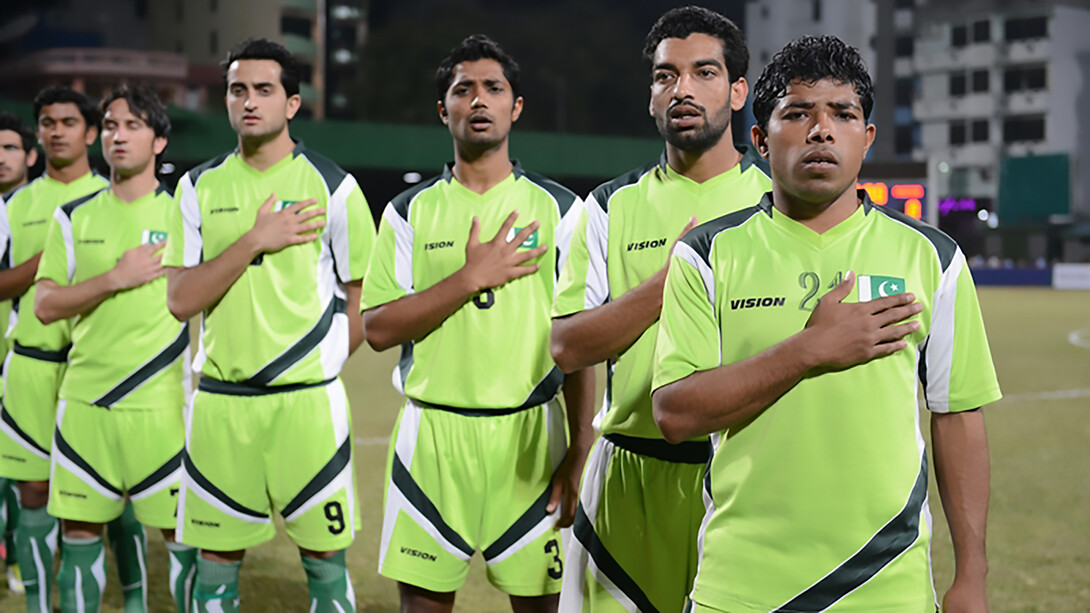
Football fever is taking over the Pakistani young generation. It was never considered an ideal landmark for global sports. All of a sudden, the young generation is turning toward sports that have been played for the past seven decades. South Asia is always considered a landscape where people are crazy about cricket. India and Pakistan, two major countries from this region, shared a massive rivalry in most stages of sports. Whether it was cricket or hockey, even a cultural sport like Kabaddi also had a high-tension face-off.
But that spark was always missed in football, where both nations failed to build a football legacy. India also had one of the oldest football derbies, where Mohan Bagan and East Bengal FC drew record crowds to the stadium. On the other side, Pakistan faced rapid bans and political hurdles, killing the potential big one.
In 2022, Pakistan’s football was unbanned for the World Cup Qualifiers face-off against Cambodia. The match resulted in a milestone for Pakistani football. Following that, Saudi Arabia came to Pakistan for the biggest clash Jinnah Stadium, Islamabad, Pakistan, has ever witnessed. The match shocked all critics who used to say Pakistan is not a footballing nation when a massive audience of 28K tickets was sold. For many readers, it is not that big a number, but in a city with no football audience, it was huge. Over the top, it had more audience than the cricket stadium in Rawalpindi, which was 18K.
It was just the beginning of a journey we had all been waiting for. Pakistan was not winning any match from the second round of the World Cup, but they got some decent games away and at home. But still, there was disappointment as we were failing to win any match. Football was active in the Pakistan national team, but still, the issues were there. Inactive league, no domestic football, no friendlies, and the Federation had its own issues. The Normalizing Committee was doing things that were just messing up. As FIFA stepped up for elections, we got new leadership in Football House Lahore.
It was just like a beacon of hope, where a name, Mohsin Gillani, from a football background and with a mindset we needed, came to restore football. There was a lot of hope for Pakistan football fans to get things better. We got some good additions in his current tenure, leading to improvements. He was criticized for not having a friendly agreement during the international break. It was rumored that we got a face-off against Russia, but it was just a rumor.
It was just the beginning of hardship and criticism, following a chain of issues. Associations were spending money like water, but players did not get a single penny. The lack of facilities was at the top of it, and they faced backlash during the U17 trials and the futsal trials. Even basic things like water were not present there. When it felt like things were falling apart, amazing results from international fixtures covered all their shortcomings.
Firstly, Pakistani women got disappointing results at the start. Chinese Taipei beat Pakistan 8-0, but in the next two games, Pakistan made a massive comeback, beating Indonesia 2-0 and Kazakhstan 2-1. They did not qualify, but it was still a big achievement for the women’s team. Later on, that U17 team followed with a good performance. These results covered it a little, but still, the issues were there.
In March 2025, Pakistan was in the AFC Asia Cup, and before that major event, once again, issues started rising. Just a few days before the fixture, the camp for Pakistani local players was challenging for them. These locals had a large number of names that did not have proper facilities for play. On top of that, they were up against Syria, so it was pretty clear they had no chance. Similarly, Pakistan lost against Myanmar as well. The team was getting full support from fans, but on the federation's end, things were messing up. In these face-offs, Pakistan's head coach, Stephen Constantine, sidelined many vital players because of his ego. As a result, Pakistan lost the chance to qualify for the Asia Cup.
Fans’ efforts worked, as not only did coaches change, but many players like Otis Khan returned to the national team. Also, many deserving names that had been shouted for a long time to be selected for the national team were called for the very first time. Players like Etzaz Hussain, Haris Zeb, and Faraz Gulzari not only got called up but also got their debut against a strong competitor, Afghanistan.
The Pakistan national team had many issues before those face-offs as well, as usual. Even though it was not confirmed whether Pakistani diaspora players were coming or not. But all these things were not able to stop fans from reaching the stadium. A decent number of fans rushed to Jinnah Stadium, Islamabad. The results were a little disappointing, as we could have won both away and home games, but we were unlucky.
Over the tenure of three years, all we understood was that Pakistan football had several rising fans despite all these challenges. Many decent facilities were working to improve the grassroots level of football, like Popo FC, which does not charge a single penny from players. Karachi city, which was called for the first ever women’s championship; Smurfs, which had already won many international tournaments; and the last one, TWK, which had such a big scale of clubs across the country. Despite all these shortcomings, corruption, and issues, there is hope that the time is not far when we will watch Pakistan facing off with Asian giants like Japan, Australia, South Korea, and Qatar.
References
Pakistan Football Federation.
A history of football in Pakistan — Part I.
Football: the dreams of Popo FC.
FIFA Lifts Ban On Pakistan Football Federation After Necessary Constitutional Changes.
The decade-long decline of Pakistani football after a rare high.