English
 Español
 Français
 Deutsch
 Italiano
 Português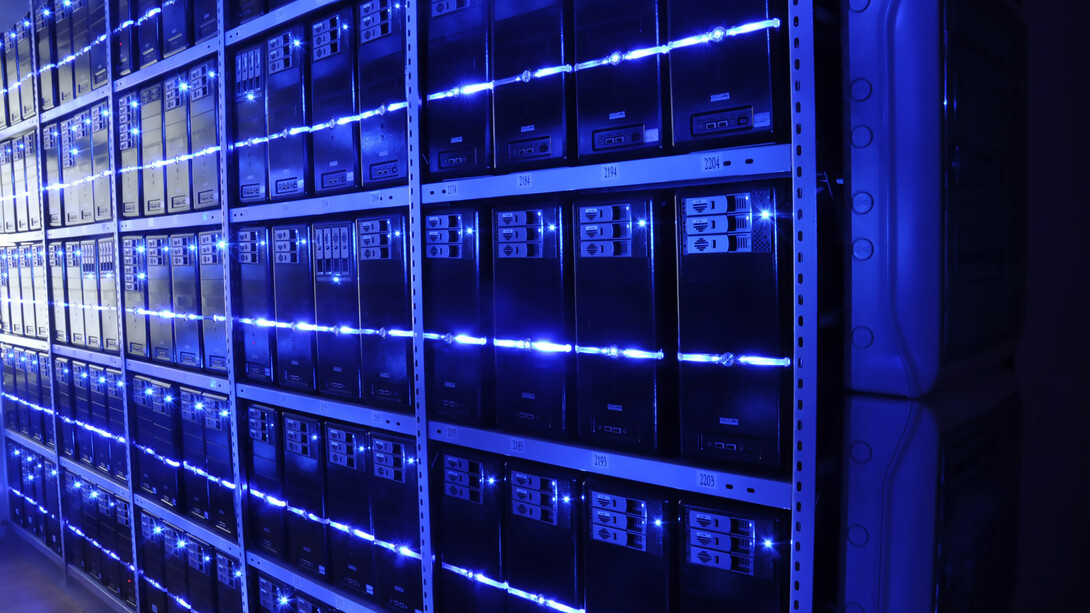
As AIs and particularly large language models (LLMs) keep advancing at a rapid pace, jumping from an intelligence level of a high-performance high school student in 2022-2023 to outsmarting college students in STEM fields in 2024, it only leads one to pose more questions regarding their potential in a wide variety of fields. However, for the cutting-edge models of the future to function and facilitate both administrative and more advanced tasks in fields such as finance, customer service, manufacturing, cybersecurity, or even healthcare 1, they need the physical and energy capacity to do so. These can only be provided by an AI data center in what is shaping up to be a geopolitical struggle for dominance in the field of AI capacity building, scale, and intelligence.
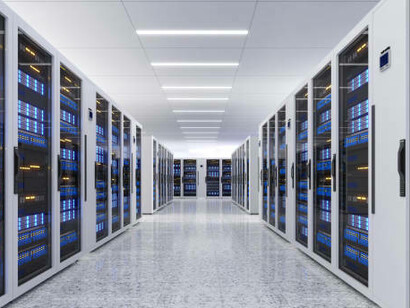
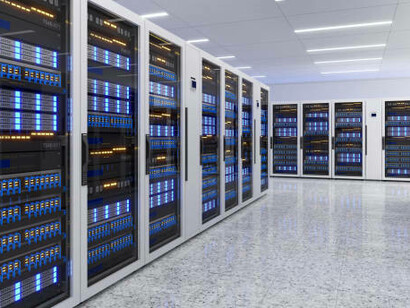
For an AI server to function at maximum capacity, it needs a cold environment; it must be equipped with hardware such as graphic processing units (GPUs) and central processors and have a large amount of RAM and memory. For such a center to function consistently, however, one needs a constant power source, since its energy consumption rates are immense.
As the AI race takes center stage not only in the tech world but also as part of a geopolitical confrontation similar to that of the Space Race or even, as some analyses have proposed, to that of a nuclear arms race 2, the energy sector is mobilizing to satisfy the needs of Big Tech. An example of that is the US-based Stargate project, which could amount to an investment of 500 billion USD in AI infrastructure starting in Texas. Similar projects are considered on the European continent and by China as well.
As such, as infrastructure becomes paramount in the AI race, discussions are being held regarding which type of energy would be the most appropriate to ensure a reliable and sustainable power supply for the data centers. This article will look at some recent announcements in the AI infrastructure projects and the investments that the tech industry and governments alike plan to make regarding one source of energy in particular: nuclear.
Types of energy fueling AI
To explain the scale of the effect AI will have on the energy sector, according to a US Department of Energy report 3, it is expected that AI data centers will consume as much as 12% of the US’s energy production by 2028. Moreover, Goldman Sachs4 estimates that the power demand from AI centers will increase by 160% by the year 2030, making it one of the most significant and sought-after markets for energy companies. To further illustrate the energy that AI data centers will consume in the near future, it has been estimated that if all Google searches were AI-powered, the Google search engine itself would need as much electricity as the entirety of Ireland.
Considering the scale of the demand for energy by Big Tech companies expanding their AI-related activities, one is left to wonder whether the supply is currently sufficient. This was something that was pointed out by Elon Musk way before his tenure as the head of the Department of Government Efficiency under Donald Trump’s second term, stating in early 2024 that “they just can’t find enough electricity to run all the chips.” Indeed, this will be a great concern, an imperative issue to be solved in the upcoming years. As AI evolves, the energy industry must keep up the pace as well.
According to energy analysts, the AI technology that will be developed in the next 5-10 years will need a low-carbon and 24/7-operating source of energy, and in the long term, one that is not dependent on external weather factors or prone to very regular refueling outages. Because nuclear energy ticks all of these boxes, Big Tech firms are reorienting themselves towards long-term investments in nuclear power plants and in the sector’s emerging innovative technologies, such as small modular reactors (SMRs) or natrium-cooled reactors.
Of course, since building a regular power plant is very costly and since the modular alternatives to producing nuclear energy are still mostly in their testing phases, it seems that a mix between natural gas and renewables might be the short-term solution to fueling AI data centers. One should also take into account the palpable risks of nuclear energy, from depositing nuclear waste to managing the risk of an accident, which might push some governments to be more reticent regarding expanding their nuclear capacity. However, it remains clear that nuclear is the ultimate solution that was envisaged by the leading voices in AI, as shown by tech leaders such as OpenAI CEO Sam Altman, who stated that he doesn’t “see a way for us to get there without nuclear,” or Microsoft co-founder Bill Gates, who has invested billions of dollars in nuclear energy startups5.
Signs that show a shift to nuclear energy
Despite mere declarations, we have witnessed, especially since late 2024, significant strategic investments by US-based tech giants in nuclear energy, as companies such as Microsoft, Google, and Amazon have signed energy contracts last year alone that would amount to 10 GW of newly created nuclear energy. See some examples of that below:
In September 2024, in Pennsylvania, Microsoft and Constellation Energy signed a 20-year power purchase agreement meant to restart the Three Mile Island NPP, once the site of a significant nuclear accident, in support of the former’s data server.
AWS6, Amazon’s subsidiary in cloud computing, announced in October 2024 an agreement with Dominion Energy to develop a small modular reactor in Virginia in support of the company’s data centers.
Also in October last year, Google announced a partnership with Kairos to power its data centers with nuclear energy created by SMRs, presumably leading to 500 megawatts of power by 2035.
The push for AI data servers and, consequently, for more advanced AI models is not, however, a game that the United States plays alone. China has achieved significant advancements in the AI sector, rocking the US tech stock market with its DeepSeek AI model, which achieved similar results to established LLMs such as ChatGPT with only a $5.6 million budget. Likewise, despite its initial lag in technology innovation, Europe, with France as its catalyst, is poised to become a significant player in AI, as it was revealed at the February 2025 Paris AI Summit.
How can Europe step into this game?
The Paris AI Summit7 further underlined the brink between the United States and the European Union regarding approaching AI development: a dispute between acceleration and regulation.
US Vice President JD Vance criticized the EU’s cautious approach to AI, urging the fostering of innovation as opposed to overregulation. Meanwhile, French President Emmanuel Macron showcased his country’s energy-producing capacity, which is optimal for AI companies. Since France is a leader in producing nuclear energy, with 18 plants and 57 reactors, and with energy production always surpassing national consumption, it is in an ideal spot to become the leading European nation in the AI race and to compete with giants like the US and China. Despite this, Macron will most likely attempt to expand this AI development effort to an EU level, claiming that the Paris Summit should be a wake-up call for Europe8 to develop an autonomous strategy and infrastructure in the field of AI.
The most relevant deal that was revealed by the French government during the summit was an MoU with UK-based AI cloud firm Fluidstack to build the “world’s largest decarbonized AI supercomputers in France.” This 10 billion euro agreement will allocate 1 gigawatt of energy for AI hubs by 2028, bringing fierce competition to the US Stargate project.
Besides France, the United Kingdom is also attempting to improve its AI infrastructure capabilities, as London has recently created an AI energy council to study the opportunities of using SMRs and renewables to fuel AI data centers. Also revealing London’s interest in small modular reactors is the February 2025 announcement of a partnership between Rolls-Royce and Siemens Energy to produce factory-made SMRs in the UK.
Meanwhile, as other European countries such as Germany and Italy are lagging in the field of nuclear energy, Central and Eastern European countries could play a significant role in the upcoming years at an EU level. For example, as part of a 485-million-euro EU project9, several CEE countries have been selected to establish their first AI factories across Europe, among which are Greece, Bulgaria, Slovenia, and Poland. While these are only the first steps and baby steps compared to the AI powerhouses of the world, one does not have to neglect the potential of CEE countries to host AI companies at a lower operating cost than in Western Europe and, in many cases, with a cheap and reliable source of nuclear energy. Countries such as the Czech Republic, Slovakia, Hungary, Bulgaria, and Romania already have significant nuclear infrastructure10, with many extra reactors being planned to be built in the next decade, which could put Eastern Europe in an advantageous spot.
Conclusion
The potential of nuclear energy to become the main source of power for the AI sector is immense, and the investment intentions of the most significant tech companies in the world prove that. While the US is leading the way in this development, considering the unstable political and economic environment created by the current Trump administration, Europe’s investments in the field of AI data centers could make it an attractive environment for European and extra-European companies alike.
As the AI race is intensifying and authoritarian states are increasingly competitive in the field, the US and Europe must stay ahead of the curve and find efficient and sustainable solutions to increase the energy output to supply AI infrastructure. However, the AI race has thus far mainly been a dogfight between the United States and China, with Europe being placed in a distant third place.
In the end, Europe’s increasing involvement in AI innovation and in providing the appropriate energy infrastructure is not about being part of a race just for the sake of it, but about Europe’s strategic and economic and ultimately military autonomy and its tech sovereignty in the face of growing uncertainty of the traditional Euro-Atlantic alliances.
Macron’s approach towards AI, which opposes Washington’s “innovate, don’t regulate” approach but nevertheless challenges Europe’s over-cautiousness, is the right one, making this the perfect time to put Europe’s nuclear capacity and digital innovation power at full capacity. A long-sought era of deregulation in innovation might be approaching in Europe at a tense time in which tech and AI sovereignty become crucial. While the AI dogfight between Washington and Beijing continues, Europe can catch up and become an AI powerhouse in the upcoming decades with the right mix between regulation and innovation and with a reliable energy sector, especially in the nuclear field.
References
1 Plumb, T. (2025, February 28). What is an AI server? Why artificial intelligence needs specialized systems. Network World.
2 Bernstein, D. (2024, August 28). Who is winning the AI arms race? Forbes.
3 U.S. Department of Energy. (2025, April 8). Advantages and challenges of nuclear-powered data centers.
4 Goldman Sachs. (2024, January 23). Is nuclear energy the answer to AI data centers’ power consumption?
5 Stover, D. (2024, December 19). AI goes nuclear. Bulletin of the Atomic Scientists.
6 Franck, T. (2024, October 16). Amazon goes nuclear: Investing more than $500 million to develop small modular reactors. CNBC.
7 Milmo, D. (2025, February 14). Global disunity, energy concerns and the shadow of Musk: Key takeaways from the Paris AI summit. The Guardian.
8 Caulcutt, C. (2025, February 10). ‘Plug, baby, plug’: Macron pushes for French nuclear-powered AI. Politico.
9 Atanasova, T. (2025, March 13). AI factories backed by EU coming to Bulgaria, Greece, Poland and Slovenia. The Recursive.
10 World Nuclear Association. (2025, February 4). Nuclear power in the European Union.