English
 Español
 Français
 Deutsch
 Italiano
 Português
For those who are conscious about their health, many may already have the habit of checking ingredient labels. However, have you ever come across mysterious names that you don’t quite understand? Today, I’d like to introduce one of them: cochineal colour, a fascinating yet often overlooked substance.
In our everyday meals, we may unknowingly ingest insects. This is particularly true for processed foods, which often contain “insect-derived ingredients.” Since their presence is not widely known, many people consume them without realising it. In the food industry, various additives are used to enhance colour, flavour, and preservation. Among these, some are derived from insects. These components are often labelled as “naturally derived,” making it challenging to identify their true origin unless you look very carefully and take the time to scrutinise the fine print on ingredient labels.
For example, red drinks, sweets, ice cream, and lipsticks—products we use daily—may contain pigments derived from insects. These pigments are essential for achieving vibrant colours and are considered historically significant additives, with a long-standing cultural and commercial history. However, learning about their production process may surprise you and prompt a re-evaluation of their use, especially if you consider alternative, synthetic options.
Pigments derived from scale insects
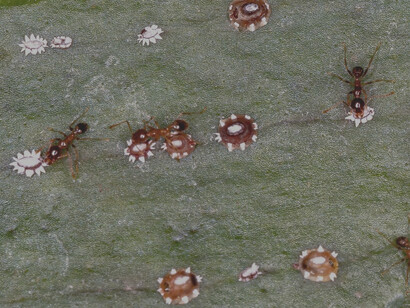
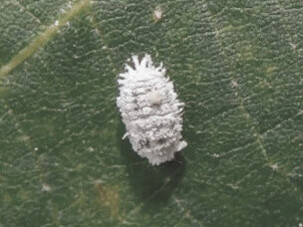
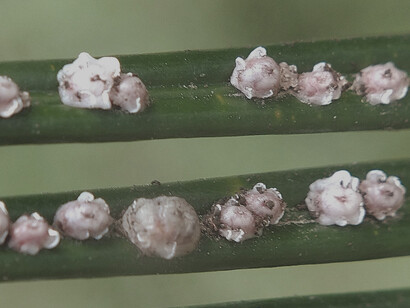
Scale insects are a type of small insect that live parasitically on specific plants. In my own garden, I have a mimosa tree, and every year, I battle to remove scale insects! They are quite a nuisance, often infesting plants in large numbers and requiring constant attention. However, the pigment extracted from these insects has been utilised for centuries. In particular, the red pigment known as cochineal colour or carmine acid is widely used in food, cosmetics, and pharmaceuticals. Colourants derived from scale insects are considered safer than synthetic dyes and are thus popular in the food and cosmetics industries, particularly due to their organic origins.
The primary sources are cochineal scale insects found in Mexico, kermes scale insects from Southern Europe, and Asian scale insects in the Hemiptera order. The extraction process involves harvesting large quantities of female scale insects, crushing them, and boiling them to obtain the pigment. There is also data suggesting that cochineal pigment may cause allergic reactions in some individuals. If you’re unsure about the source of your allergies, this is something worth considering. It’s always good to be aware of such hidden ingredients and their potential effects on health.
What Is the cochineal scale insect?
The cochineal scale insect (Dactylopius coccus) is a widely used source of red pigment. It inhabits arid regions in Central and South America, thriving on cacti and other specific plants that grow in these dry environments. The name “cochineal” comes from the Spanish word cochinilla and has been used since ancient times by the Aztec and Mayan civilisations. These early cultures were aware of the value of the insect’s pigment, using it in textiles and body paint. Today, it is mainly cultivated in Mexico, Peru, and southern Spain, where the conditions are ideal for farming the insects.
This pigment contains carmine acid, a chemical compound that dissolves easily in water and alcohol, making it suitable for use in food and cosmetics. Examples of its use include the red hue in yoghurt and ice cream, bright pink beverages, sweets like candies and gummies, and cosmetics such as lipsticks and blush. On ingredient labels, you’ll find it listed as "cochineal," "carmine," or "natural red 4."
The main features of cochineal pigment are its stability and vibrant colour, which can be retained even after exposure to light or heat. However, it’s important to remember that the raw material is insects, so those who follow a vegan or vegetarian lifestyle might need to avoid it. Vegetarians and vegans, beware! Cochineal scale insects latch onto prickly pear cacti (Opuntia), inserting their mouthparts into the plant’s phloem to feed. Once attached, most remain stationary and continue feeding. Forcibly removing them often leaves their mouthparts embedded in the plant. In adulthood, males develop wings and gain the ability to fly, while females remain wingless and stationary.
Other insect-derived ingredients used in additives and medicines
Insect-derived ingredients are not limited to cochineal pigment. Here are some other examples found in food, cosmetics, and pharmaceuticals:
Shellac: a natural resin obtained from the lac scale insect (Laccifer lacca). It is used as a glazing agent in foods and as a varnish for woodworking. For instance, it is commonly found in the coatings of chocolates and candies.
Beeswax: obtained from honeybees, is used to coat foods and in cosmetics such as lip balms and hand creams. It is often associated with natural products and is included in many formulations as a natural emulsifier and moisturiser.
Protein from beetle larvae: recently, as part of the edible insect trend, protein extracted from beetle and cricket larvae has gained attention in nutritional supplements and snacks, offering an eco-friendly and sustainable protein source.
Conclusion
Without realising it, insect-derived additives are entering our bodies through everyday products. If you examine each ingredient carefully, you can gain a better understanding of what you’re putting into your body. While today’s topic might give you a slight shiver, it’s important to know about these hidden ingredients to make informed choices and to be more mindful about what you consume. So, the next time you pick up a brightly coloured product or a sweet treat, remember that the vibrant hue might just come from an insect!