English
 Español
 Français
 Deutsch
 Italiano
 Português
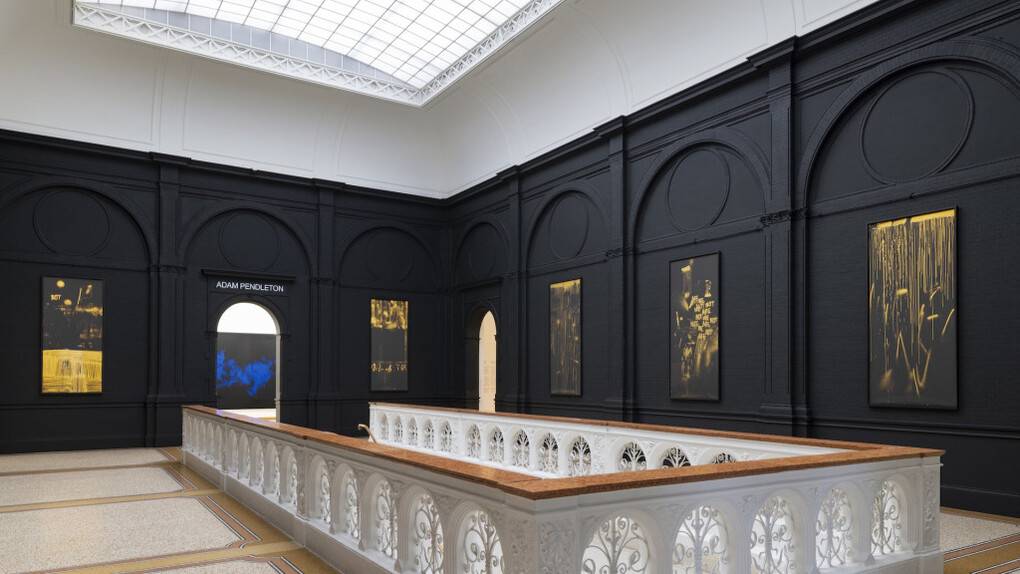
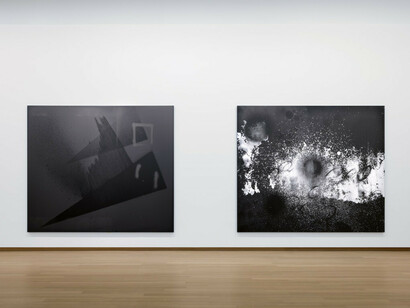
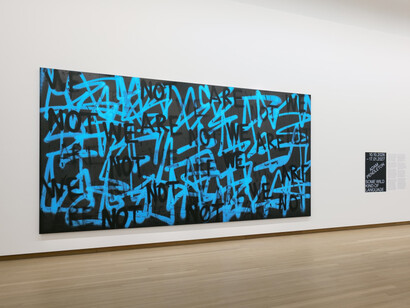
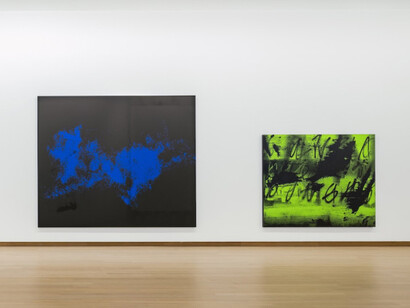
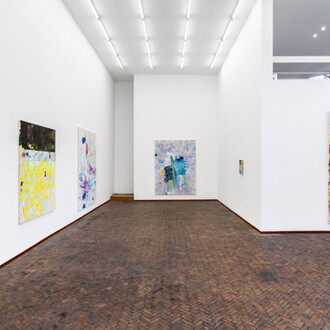
Some wild kind of language is Adam Pendleton’s first museum exhibition in the Netherlands, and features ten paintings and eight large-scale drawings. The exhibition showcases Pendleton’s exploration of abstract forms. Many of the works are new and have never been shown before, making the exhibition a milestone in his body of work.
Black cube
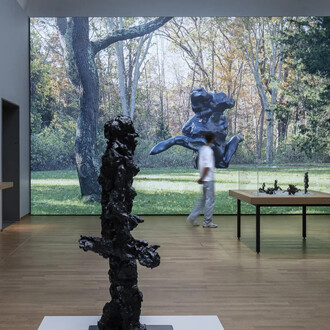
Installed within the central spaces of the museum's historic building, Some wild kind of language positions the Stedelijk's architecture and collection as active components of the exhibition. In the iconic staircase of the museum's 1895 building, Pendleton engages one of its most historically significant spaces. In 1938, curator Willem Sandberg painted the staircase's dark-colored brick walls white to establish one of the earliest "white cubes," a transformation he later extended throughout the museum after becoming director in 1945. Pendleton transforms the staircase into a "black cube" for the presentation of a new body of work: eight monumental Basis drawings. These are the largest drawings Pendleton has completed to date.
Made with gold ink on matte black paper, they introduce gold not simply as a color but as a material that oscillates between illumination and opacity, presence and disappearance. Through gesture, repetition, and accumulation, each drawing functions as an active record of process, generating a shifting field of attention. Installed within the staircase's architectural niches, the works respond directly to the scale and rhythm of the historic space.
Process
Pendleton's painting process begins on paper, where he explores the full breadth of mark-making. He layers paint, spray paint, ink, and watercolor, integrating graffiti-like marks, fragmentary text, and geometric forms, often through stenciling techniques. These works on paper are documented and subsequently layered through a screen-printing process that deliberately moves between—and generatively conflates—the manual and the mechanical, rethinking how paintings can be made through successive stages of translation and transformation. Across the exhibition, paintings and drawings unfold through a distilled layering of gesture, fragment, and form. Rather than centering on a single visual moment, Pendleton creates continuous, expansive fields—an "all-over" condition—that challenge conventional expectations of composition.
Histories of abstraction
Pendleton's paintings, installed in the IMC Gallery, also known as the Gallery of Honour, occupy an important position within the museum's historical and contemporary collections. Bringing together works of different scales—including a painting measuring nearly six meters wide—the exhibition creates an encounter between Pendleton's practice and the histories of Minimalism, Conceptual art, and post-war abstraction represented in the museum's collection. Pendleton's Black dada, days, and monumental We are not paintings can be understood both as a continuation of and a response to the large-scale works by artists such as Barnett Newman, Morris Louis, and other North American Color Field and Minimal painters that the Stedelijk historically presented in the same gallery.