English
 Español
 Français
 Deutsch
 Italiano
 Português
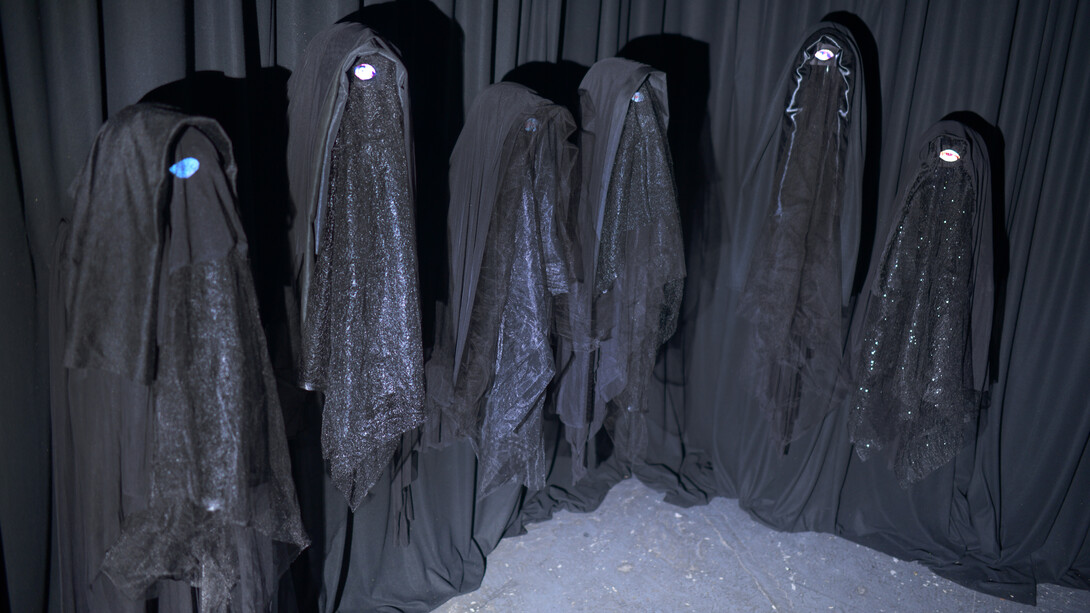
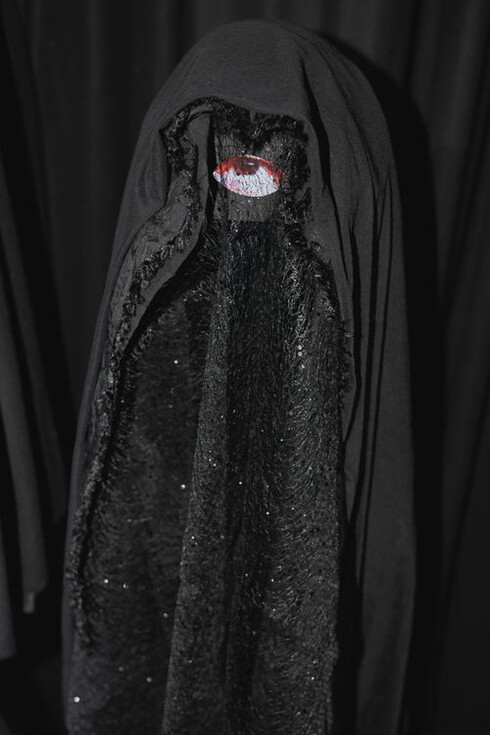
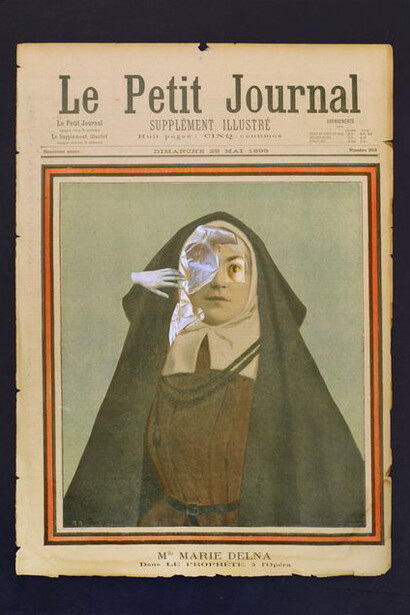
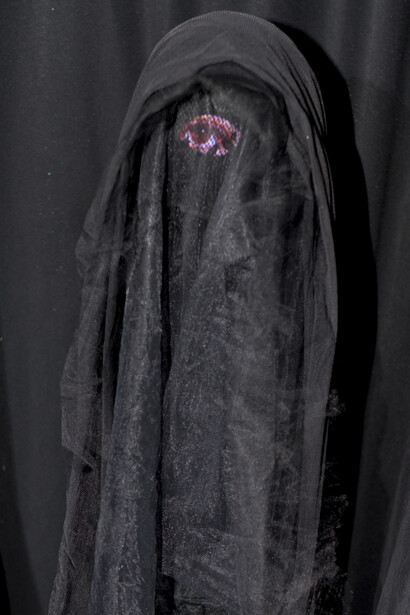
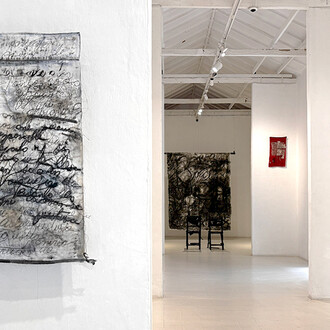
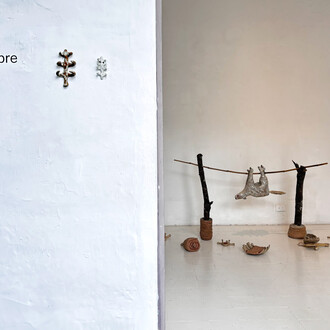
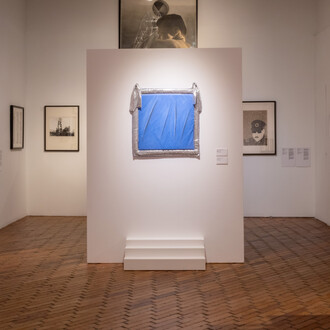
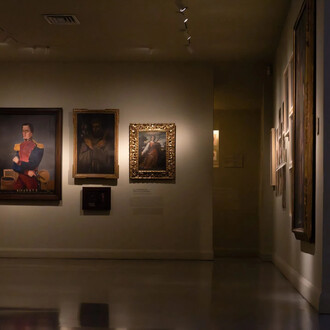
Drawing on the many images of Lima’s “tapada”—women veiled in mantillas that left barely one eye exposed—Leonel Castañeda Galeano confronts us with a question: Who is looking when we can barely see the face?
During the colonial period, this style of dress—which originated in the Muslim world and was incorporated into Spanish culture—reached the Americas and took on its own distinct characteristics in Lima. Its use, documented since the viceregal period, reached its peak between the 17th and 18th centuries and persisted throughout much of the 19th century, eventually becoming one of the city’s most iconic images.
The mantilla covered the head, shoulders, and much of the face, while a wide skirt covered the body and transformed her silhouette. The woman was present, but her identity remained veiled. Antonio de León Pinelo, a 17th-century Spanish jurist and writer, devoted a treatise to veils and the so-called Royal Decree on Veiled Women. In 1641, addressing the criticisms of those who sought to ban them, he wrote:
“The practice of women going veiled has reached such extremes that it has resulted in grave offenses against God and notable harm to the Republic, because in that state the father does not recognize his daughter, nor the husband his wife, nor the brother his sister, and they have the freedom, time, and place to do as they please [...].”
The fear expressed in this passage is not directed solely at a garment. What is unsettling is the possibility that a woman might go out, move about, and look around without her identity being immediately established. The cloak disrupted the usual forms of recognition and, with them, the relationships between those who looked and those who were looked at.
But the garment also had an ambiguous relationship with morality and desire. While the veil could be associated with the virtuous woman, the saint, or the woman who attended Mass with her head covered, the cloak could be linked to prostitution. The very act of covering oneself produced opposing meanings: the veil protected virtue; the cloak could fuel mystery, suspicion, and desire. It was not, however, an absolute difference. Both served the same purpose: to cover the body in order to make it appear differently.
The fabric did not make the body disappear; rather, it transformed it. The folds of the mantilla, the drape of the skirt, and, above all, that single visible eye turned the veiled woman into an intensely present figure. A vision of femininity that concealed itself in order to become more visible. The man could look without necessarily recognizing; the woman could observe without completely revealing who she was. The gaze thus ceased to belong exclusively to the man.
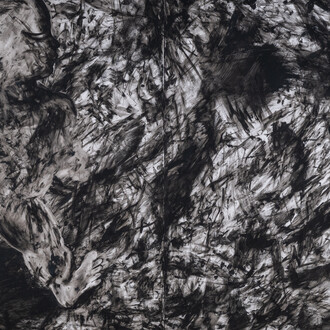
The power of the veiled woman lay in her folds. The fabric gathered, overlapped, and enveloped the body, concealing one surface after another. Each fold hid something and, at the same time, hinted at it. The less that could be seen, the more could be imagined. Concealment could even call into question the distinction between the feminine and the masculine. León Pinelo himself mentions “men dressed as women and veiled, unrecognizable,” who were accused of “great evils and sacrileges.” This statement suggests that the veil did not merely conceal the face: it could also alter the body’s appearance, making it possible for the wearer not to be recognized as either a man or a woman.
Although its use was questioned and suppressed through regulations and criticism, the women of Lima continued to wear the tapado for nearly three centuries. Their persistence reveals that it was not merely a fashion trend, but a way of inhabiting the city—of concealing oneself and also of observing.
Between the veil of the saint and the tapado of the woman associated with desire, between the feminine and the masculine, between the one who looks and the one who is looked at, Leonel Castañeda Galeano brings us back to that eye that remains open among the folds. An eye that looks at us and whose identity, like that of the woman in the tapado herself, remains hidden.
(Text by Sigrid Castañeda)