English
 Español
 Français
 Deutsch
 Italiano
 Português
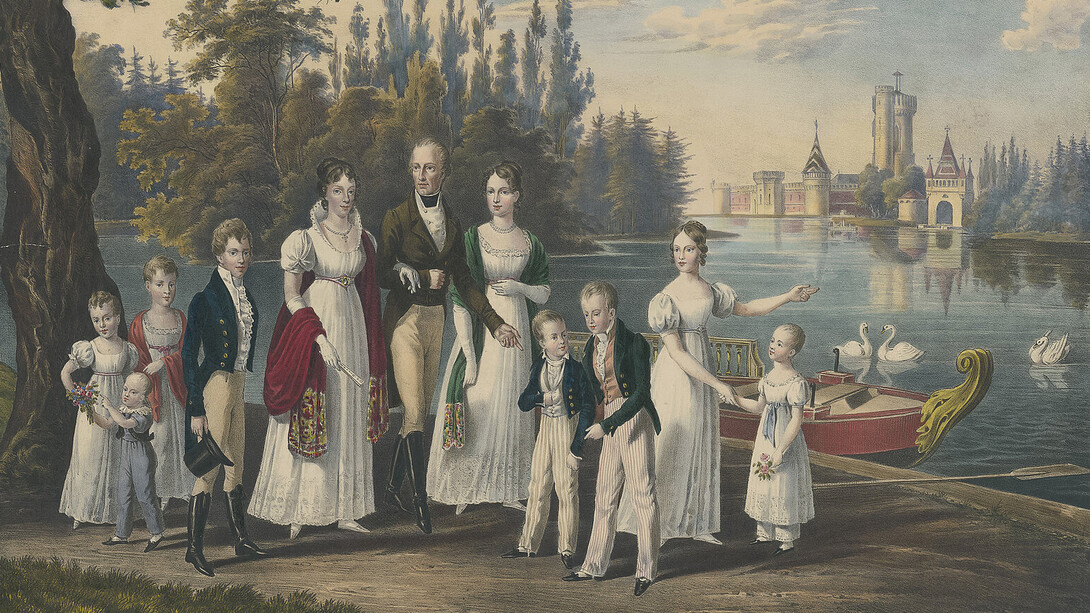
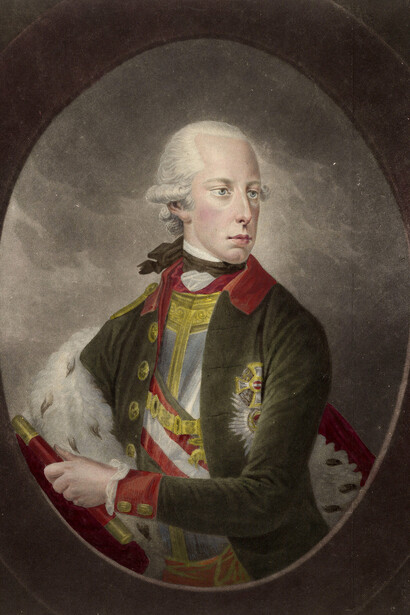
When people think of the Habsburg imperial family, they often picture audiences, court ceremonies and affairs of state. But how did the emperor, empress and their children live behind the walls of Vienna’s Hofburg Palace? Did they share family rituals, enjoy close relationships and express personal affection? These are the questions explored by the new exhibition at the State Hall, entitled The imperial family. Private life and duty at the court of Franz II/I, running from 19 November 2026 to 28 February 2027. It offers rare insights into the private family life of Emperor Francis II/I (1768–1835), his wife Empress Marie Therese (1772–1807) and their numerous children.
At the beginning of the 19th century, the ideal of bourgeois family life was characterised by domesticity, intimacy and emotional closeness between parents and children. However, the seemingly perfect, almost bourgeois family idyll depicted in contemporary representations of the imperial family was often a carefully staged image. Through unique personal objects, including letters, family gifts and drawings, the new exhibition at the State Hall reveals what life was really like for the imperial family, caught between constant dynastic pressure and the ever-present threat of war. It tells stories of love, education, expectations and loss, opening a window onto the private world of the former ruling family.
Between the nursery and the imperial throne
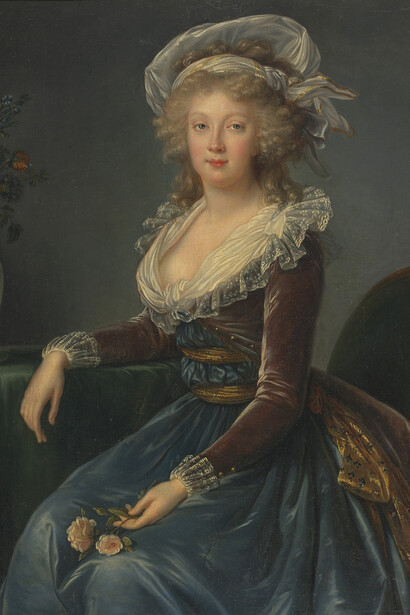
At the heart of the new exhibition is the imperial couple, Francis II/I and Marie Therese of Naples and Sicily. Although their marriage was arranged for political reasons, the two developed an exceptionally close relationship characterised by mutual affection. Numerous letters document a partnership that went far beyond courtly conventions, founded on shared interests, trust and emotional intimacy.
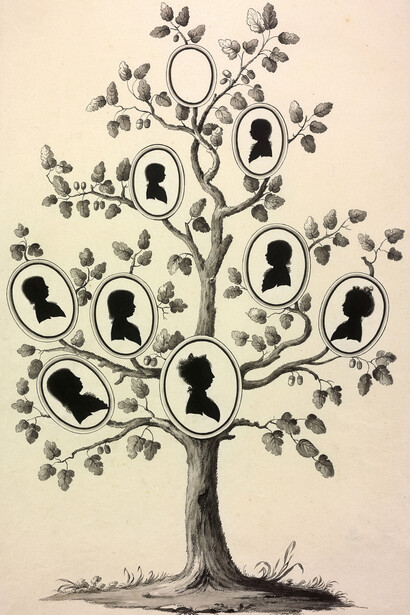
Their marriage, concluded in 1790, produced twelve children. From the time of her wedding until her death, Marie Therese was pregnant every year. The empress gave birth to eight daughters and four sons, only seven of whom lived to see their tenth birthday. A timeline in the exhibition illustrates the empress's pregnancies, showing that only a few months often passed between one birth and the beginning of the next pregnancy.
As soon as they were born, each child was assigned a small household of their own, headed by an Aja (governess). She became their most important caregiver, overseeing their first steps and language development and comforting them when they were ill. This arrangement also made it more difficult for close emotional bonds to develop between the children and their parents, whom they were only allowed to visit on certain occasions. As compensation, they were showered with toys, which were presented to them in their parents' names. The toy catalogues bearing handwritten annotations by the imperial couple are another highlight of the exhibition.
The exhibition also pays particular attention to the couple's children. Drawings, poems and writing exercises reveal how early the young archdukes and archduchesses were prepared for their future responsibilities. Particularly moving are the works dedicated to “dear Papa” by Crown Prince Ferdinand, which reveal his desire for recognition and his efforts to live up to his father's high expectations.
The story of the future Emperor Ferdinand is one of the exhibition's most touching chapters. The long-awaited heir to the throne was born with physical and intellectual disabilities. His mother's letters reveal the parents' concern, but also their unwavering determination to support their son and prepare him for his future role. The exhibition deliberately examines his life from a modern perspective, highlighting how social expectations shaped perceptions of his disabilities.
Between paintbrush, sheet music and crown
The Neapolitan-born empress, passionate about music, artistically gifted and deeply connected to nature, rarely conformed to the expectations of her time. She performed music herself, designed gifts, took an interest in garden design and often preferred private seclusion to the splendour of court life. Even during her numerous pregnancies and times of political crisis, Empress Marie Therese remained an active musician: she sang solo parts, rehearsed with choirs and orchestras, and brought a personal touch to every performance. Having received her musical training at the Neapolitan court, she distinguished herself in Vienna as a pianist, singer and organiser of private concerts. The scores by Joseph Weigl and Angelo Tarchi on display in the exhibition come from the imperial couple's private music collection, while a gouache by Matthias Schmutzer depicts the empress with musicians at the Old Castle in Laxenburg in 1802.
Empress Marie Therese was also known for her personal, lovingly crafted gifts, which she presented to family members in Vienna and Naples. Among the exhibition's most remarkable objects is an extraordinary set of nine heart-shaped gift boxes, covered in red morocco leather and designed to fit inside one another. The largest bears a miniature portrait of the empress, while the others display the names of eight of her children, decorated with forget-me-not motifs. Some of the floral arrangements are made partly from real hair. The boxes were an intimate family gift from the empress to her beloved husband, Emperor Francis II/I, and presumably contained small presents from the empress and their children. The first name inscribed on the smallest box suggests that they date from around 1805.
Between family happiness and loss
Alongside the challenges of everyday court life, the exhibition also recounts moments of happiness. Stays at Schönbrunn and Laxenburg gave the family opportunities to escape the strict demands of court ceremony. Marie Therese, who was particularly fond of games herself, played Kasperl (puppet theatre), Lotto and cards with the children, as well as bowling and dancing with them. The exhibition thus presents a surprisingly modern image of a ruling family seeking its own balance between courtly duty and the desire for family closeness.
However, the exhibition does not shy away from the darker aspects of family life. Marie Therese spent much of her adult life pregnant, gave birth to twelve children and died in 1807 at the age of just 34, only a few days after delivering her youngest child. One of the most moving objects on display is an unfinished drawing from her estate, which symbolises the sudden loss and the void her death left within the family.
Through documents rarely shown before and unique original objects, The imperial family. Private life and duty at the court of Franz II/I offers a fresh perspective on the Habsburgs. Rather than recounting grand political events, the exhibition tells a human story: one of parents and children, love and responsibility, expectations and disappointments. This is precisely what makes it so relevant today and gives it such emotional resonance.